Get your free personalized podcast brief
We scan new podcasts and send you the top 5 insights daily.
Facing an unreliable United States alongside adversarial actions from China and Russia, middle-power democracies are banding together for mutual defense. Snyder points to Canada's Mark Carney government connecting trade and security with the European Union and Ukraine. By deepening alliances among themselves, democratic nations aim to forge an economic bloc larger than any single superpower, mitigating their vulnerability to foreign aggression and erratic American trade policies.

Related Insights
The US trade war with Canada is backfiring by damaging American champions like Ford while compelling Canada to forge new alliances with the EU, India, and China. This inadvertently creates market openings for China's car industry to expand globally, undermining US economic and geopolitical standing.

While publicly announcing a trade truce with China, the Trump administration simultaneously signed deals with other Asian nations to diversify supply chains and bolster defense partnerships, effectively preparing for future confrontation with Beijing.
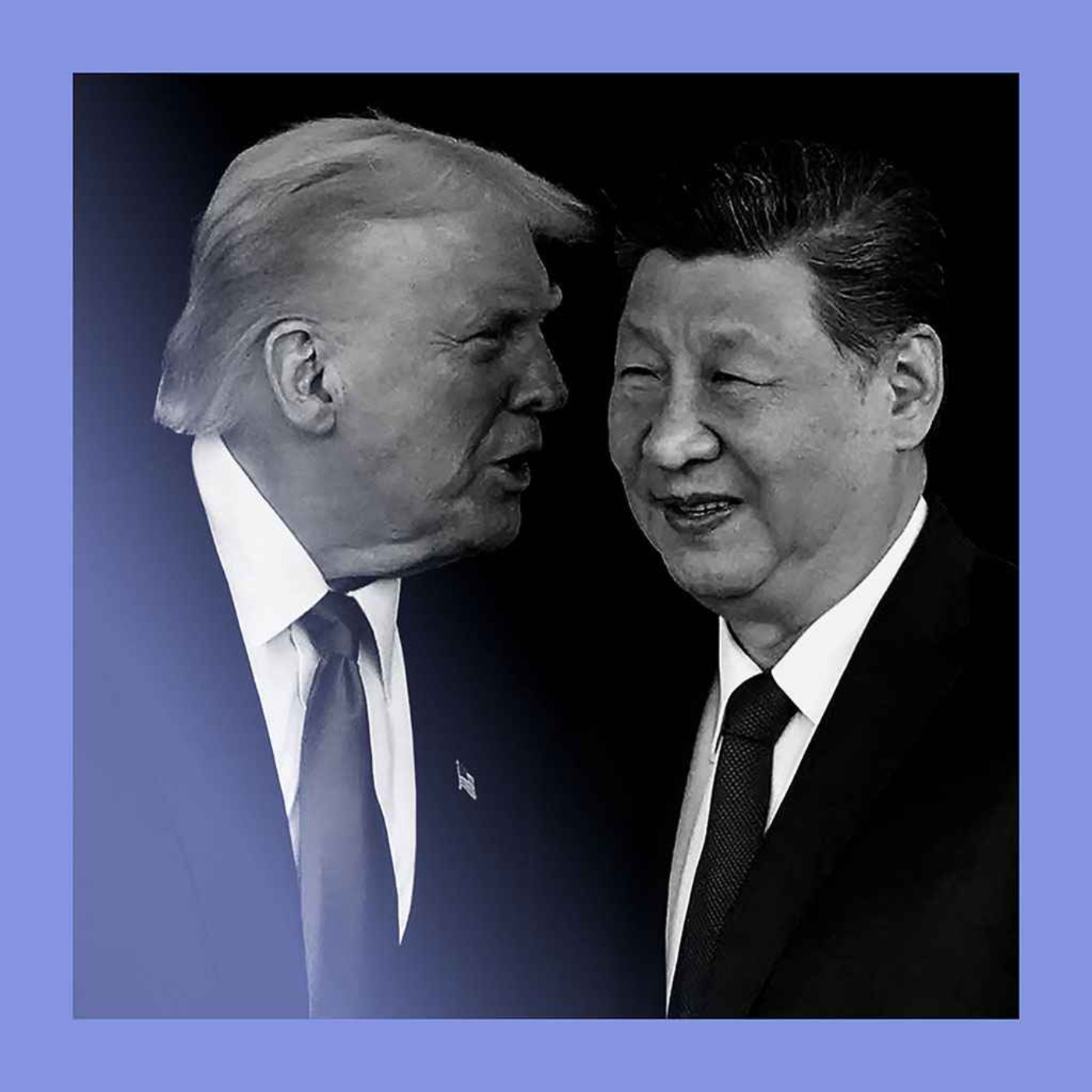
Leaders from the UK, Canada, and Germany are visiting China not for substantive deals, but as a symbolic hedge against Trump's unpredictable foreign policy. These trips allow 'middle powers' to signal diplomatic independence and explore economic diversification, even though their primary security and trade relationships remain firmly with the United States.

In response to America's predatory and unpredictable policies, allies are not just complaining; they are actively diversifying their economic relationships to reduce their vulnerability. This is seen in new trade deals like EU-Mercosur and Canada-Indonesia, which consciously bypass the US to build resilience.

Due to perceived US instability, traditional allies in Europe and Canada are proactively diversifying their partnerships. They are creating alternative trade and security networks (e.g., EU-India, Canada-EU) to reduce their dependence on the United States.

Many developing countries view Russia's invasion of Ukraine, while illegal, as an inevitable check on decades of unchecked US power and NATO expansion. Their memory of the "unipolar moment" is one of American imposition, making them quietly support a rebalancing of global power.
With the U.S. stepping back from its traditional leadership role, European countries are creating new, direct alliances to ensure their own security. A notable example is the emerging UK-Scandinavia-Baltic-Poland axis, which signals a fundamental shift in the continent's geopolitical architecture away from a singular reliance on Washington.

China has a prime opportunity to fracture the US-led alliance system but is failing due to its over-reliance on coercion and threats. This miscalculation is pushing countries across Europe and Asia back towards cooperation, creating an opening for alliance renewal.
Middle powers like India are not picking a side but are 'multi-aligned,' partnering with the US on tech, Russia on arms, and China on other initiatives. This creates a fluid, complex system of shifting, issue-specific coalitions rather than two fixed blocs.

The administration's aggressive, unilateral actions are pushing European nations toward strategic autonomy rather than cooperation. This alienates key partners and fundamentally undermines the 'Allied Scale' strategy of building a collective economic bloc to counter adversaries like China.
