Get your free personalized podcast brief
We scan new podcasts and send you the top 5 insights daily.
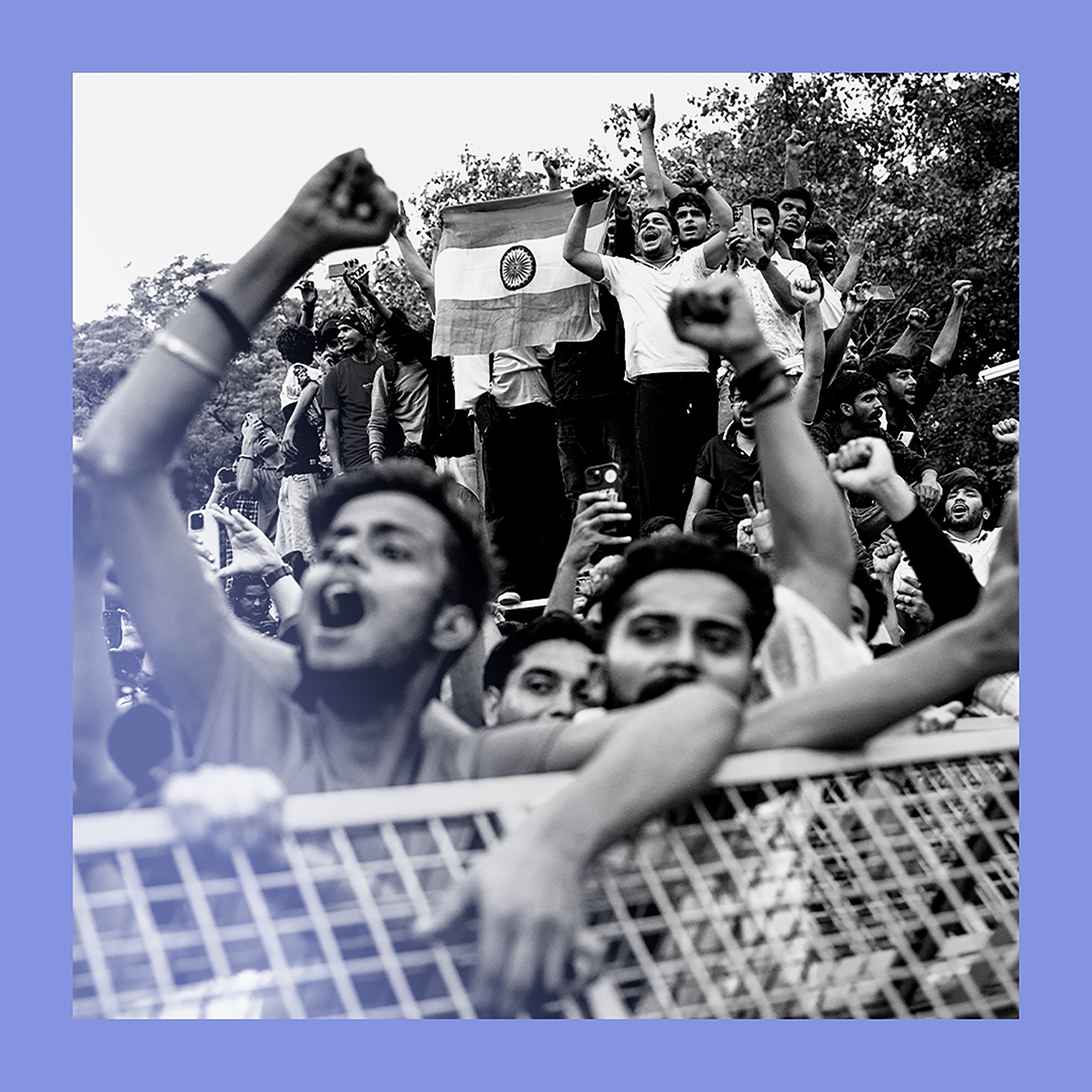
Facing a government that habitually brands critics as "anti-national," Indian youth protesters strategically employed patriotic symbols, such as clutching copies of the constitution and dressing as Gandhi. This tactic reframes their dissent as a patriotic duty to defend the country's future, making it significantly harder for authorities to discredit or suppress the movement.
Related Insights
A Russian influencer successfully criticized Putin by employing a classic Russian genre: the "petition to the good czar." This tactic frames dissent as an appeal from a loyal subject against bad officials, not the leader himself, providing a crucial layer of political protection in an authoritarian state.

The massive, peaceful 'No Kings' protests were framed not as anti-American, but as a pro-democracy movement. They represent a significant portion of the population actively pushing back against perceived threats to democratic norms and institutions, motivated by a desire to defend the country.

Waving a national flag is a direct political act with serious risks in authoritarian countries. Activists are instead using pop culture symbols, like the pirate flag from the anime 'One Piece', to protest. This makes their message more ambiguous, providing a layer of plausible deniability to dodge censorship and reduce personal risk.
The goal of nonviolent resistance is not to "melt the heart of the dictator" but to strategically create defections within their pillars of support. By growing large and diverse, a movement builds direct ties to elites in business, media, and security, systematically shredding their loyalty to the regime.

Citing Gandhi and the Civil Rights Movement, the most successful long-term protest strategies rely on peaceful non-resistance. Active resistance, even when justified, often escalates violence and cedes the moral high ground, making it a less effective tool for systemic change compared to disciplined, peaceful protest.

The primary value of protests isn't just cinematic outrage; it's serving as a gateway for deeper organizing. Demonstrations allow individuals to connect with the groups that form the backbone of sustained political action, creating lasting, though often unseen, infrastructure.

Historically, Indian political change was driven by powerful street movements led by towering figures like Gandhi or Modi. The new 'Cockroach Party' protest, however, is helmed by a communications consultant who accidentally started it with internet memes. This signals a shift from charismatic, top-down leadership to more decentralized, digitally-born activism.
What began as a single satirical tweet comparing India's jobless youth to cockroaches morphed into a massive protest movement with millions of followers. This trajectory shows that seemingly frivolous online content can serve as a potent rallying point for deep-seated public grievances, ultimately leading to significant political consequences like a cabinet minister's resignation.
The Brazilian national anthem has been co-opted by opposing political movements. In the 1990s, poor rural workers sang it to prevent police violence during protests. Decades later, supporters of right-wing president Jair Bolsonaro sang it during MAGA-style uprisings.

An Indian youth movement responded to Prime Minister Narendra Modi's attempts to placate them not with anger, but with mocking online tutorials on how to create better viral videos. This use of humor and digital savvy bypasses state-controlled media and effectively dismantles a leader's carefully managed, authoritarian image, proving ridicule can be a powerful form of dissent.