Get your free personalized podcast brief
We scan new podcasts and send you the top 5 insights daily.
What began as a single satirical tweet comparing India's jobless youth to cockroaches morphed into a massive protest movement with millions of followers. This trajectory shows that seemingly frivolous online content can serve as a potent rallying point for deep-seated public grievances, ultimately leading to significant political consequences like a cabinet minister's resignation.
Related Insights
A non-political influencer known for cosmetics revealed a major shift in Russian public mood by voicing common grievances against Putin. Her video's viral success suggests that dissatisfaction, once confined to a minority, is now becoming mainstream among the previously silent majority.

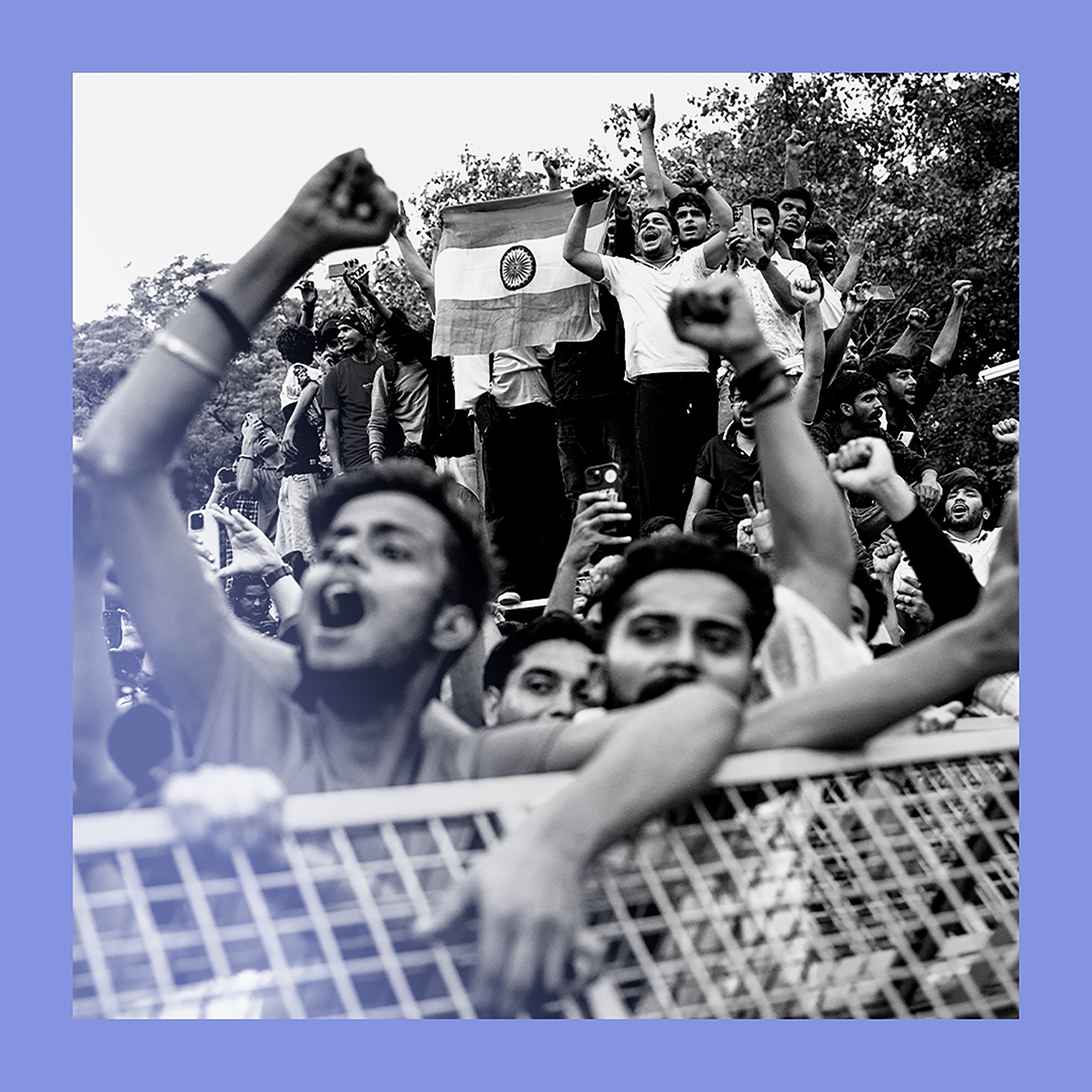
Initially a joke, India's 'Cockroach People's Party' attracted millions of followers online. However, its first major physical protest was surprisingly small, with only a few thousand attendees. This demonstrates a critical gap between viral social media engagement and the organizational capacity needed for effective, large-scale street movements.

The phenomenon of "irony poisoning" describes how users initially share extreme ideas as jokes to provoke others ("shitposting"). Over time, this repeated ironic engagement leads them to internalize and genuinely adopt the once-feigned beliefs.

Events become viral memes that dominate attention for about 2.5 days before a new "current thing" replaces them. This rapid, emotionally charged cycle makes long-term political forecasting impossible, as an election will turn on the meme of that day, not on past events.

Analyzing the memetic activity of niche online groups, like teenage eco-anarchists in 2018, serves as an "early detection" system for forecasting larger political narratives and cultural shifts, as their fringe concerns often scale to mass audiences.
Historically, Indian political change was driven by powerful street movements led by towering figures like Gandhi or Modi. The new 'Cockroach Party' protest, however, is helmed by a communications consultant who accidentally started it with internet memes. This signals a shift from charismatic, top-down leadership to more decentralized, digitally-born activism.
Faced with an incessant, angry user during a political backlash, the social media team's response "Sue, you're shouting at tea" ended the direct confrontation. It became a viral meme, shifting the public conversation from anger to humor.

For an event to become a "current thing," its truth or objective importance is less relevant than its ability to activate outrage and facilitate tribal conflict. The perfect viral story allows people to form "moral tribes" and "go to war" online, using the event as a proxy for a larger ideological battle.
An Indian youth movement responded to Prime Minister Narendra Modi's attempts to placate them not with anger, but with mocking online tutorials on how to create better viral videos. This use of humor and digital savvy bypasses state-controlled media and effectively dismantles a leader's carefully managed, authoritarian image, proving ridicule can be a powerful form of dissent.
Facing a government that habitually brands critics as "anti-national," Indian youth protesters strategically employed patriotic symbols, such as clutching copies of the constitution and dressing as Gandhi. This tactic reframes their dissent as a patriotic duty to defend the country's future, making it significantly harder for authorities to discredit or suppress the movement.