Get your free personalized podcast brief
We scan new podcasts and send you the top 5 insights daily.
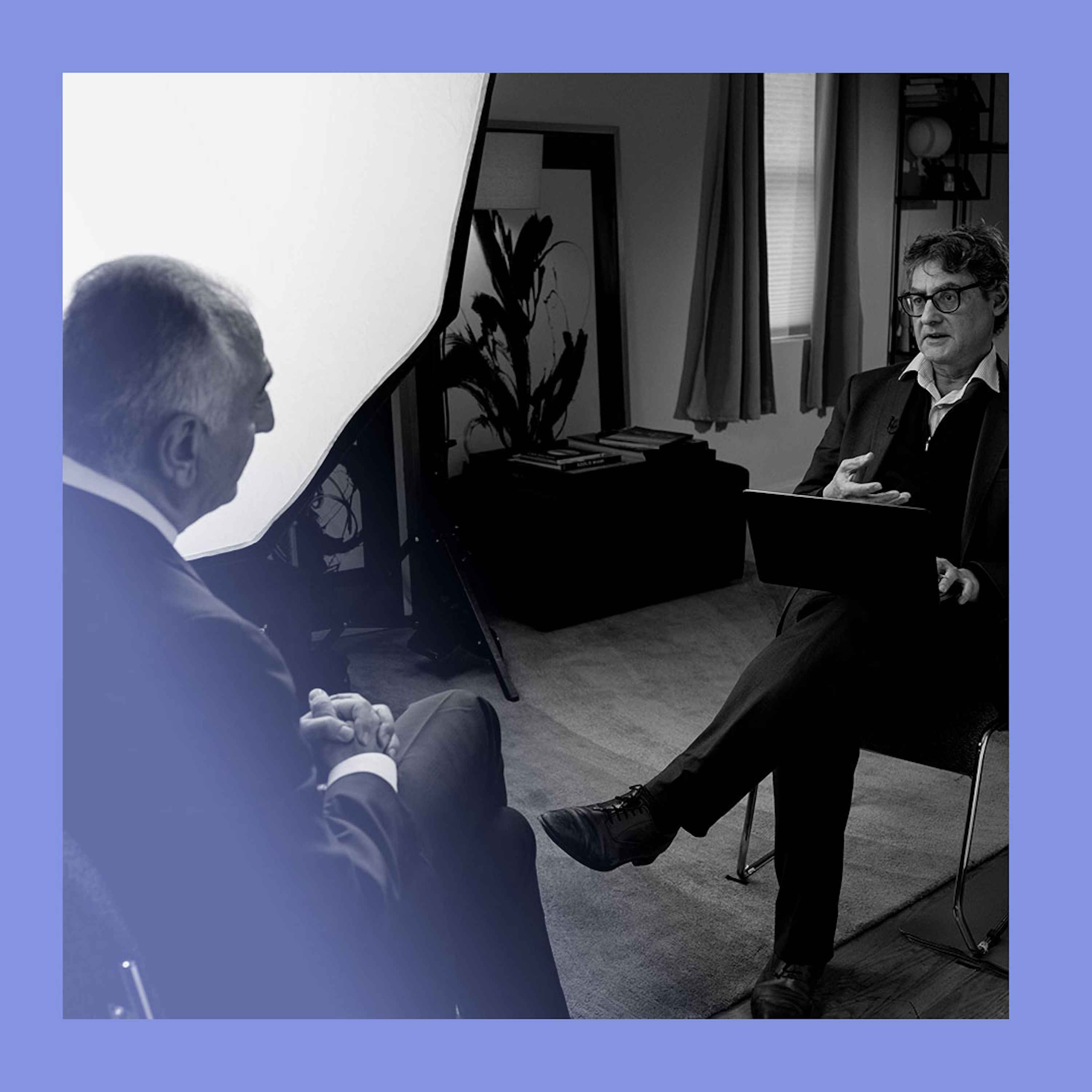
Prince Reza Pahlavi frames Iran's transition in economic terms, arguing it's the 21st century's most significant untapped market. He estimates a democratic Iran could generate one trillion dollars for the U.S. market alone in the first decade through reconstruction, investment, and trade.

Related Insights
Reza Pahlavi, the exiled son of the last Shah, has become a legitimate political figure. This surprising resurgence is not organic but driven by a decade of well-produced, mysteriously-funded satellite TV documentaries romanticizing the pre-revolution era for Iran's large, young population.

Protests in Iran, if they disrupt the regime, could halt cheap oil flows to China. This would force China to buy from more expensive, US-friendly markets, strengthening the US dollar's global dominance and isolating anti-Western powers without direct US intervention.

Young Iranians, with no memory of the Shah's era, embrace a romanticized vision of pre-1979 Iran's social freedoms and global standing. This nostalgia, combined with the regime's suppression of internal leaders, has elevated Reza Pahlavi as a symbolic, default leader for a nationalist reclamation.

Historical data since World War II shows that when authoritarian regimes fall, they lead to a stable democracy only about 20% of the time. The most common outcome—in over 80% of cases—is the replacement of one authoritarian system with another, a sobering statistic for post-regime change planning in countries like Iran.

Shervin Peshavar uses the economic success of the small Iranian diaspora—who have created trillions in value at companies like Uber, Google, and eBay—as a proxy for the immense potential of Iran's 93 million people. This analogy frames a free Iran as an impending economic and innovation superpower.
Beyond geopolitics, transforming Iran into a stable, pro-West trading partner could unlock vast oil and gas reserves and unleash entrepreneurial talent. This would stabilize global energy prices, providing an economic upside that is a powerful, often overlooked, aspect of the conflict.

Reza Pahlavi's strategy is not based on domestic uprising alone. He believes protestors are "sacrificial lambs" who cannot succeed without direct American military intervention, framing them as a "fort waiting for the cavalry." This dependence makes his plan vulnerable to US political shifts.
The stock market's stable reaction to the war in Iran suggests investors are pricing in a moderate "base case" scenario. This outcome, termed "regime change light," assumes a change in leadership without a complete institutional overhaul, thereby posing less long-term economic risk than a full-scale forever war.

The primary US motivation for the conflict with Iran is not nuclear weapons or ideology, but the need to secure $2 trillion in pledged investments from Gulf states into America's critical AI infrastructure and economy.

Unlike the de-Ba'athification in Iraq, the proposed transition for Iran includes a path for members of the current military and bureaucracy. Those who did not commit atrocities will be offered roles or retirement, a strategy designed to ensure stability and prevent a power vacuum.