Get your free personalized podcast brief
We scan new podcasts and send you the top 5 insights daily.
Shervin Peshavar uses the economic success of the small Iranian diaspora—who have created trillions in value at companies like Uber, Google, and eBay—as a proxy for the immense potential of Iran's 93 million people. This analogy frames a free Iran as an impending economic and innovation superpower.

Related Insights
Andreessen argues that Silicon Valley's core strength is not any specific technology, but its unique ecosystem for recycling talent and capital from previous cycles into new ones. This creates the critical mass and enthusiasm needed for each technological revolution, like AI, to take off.

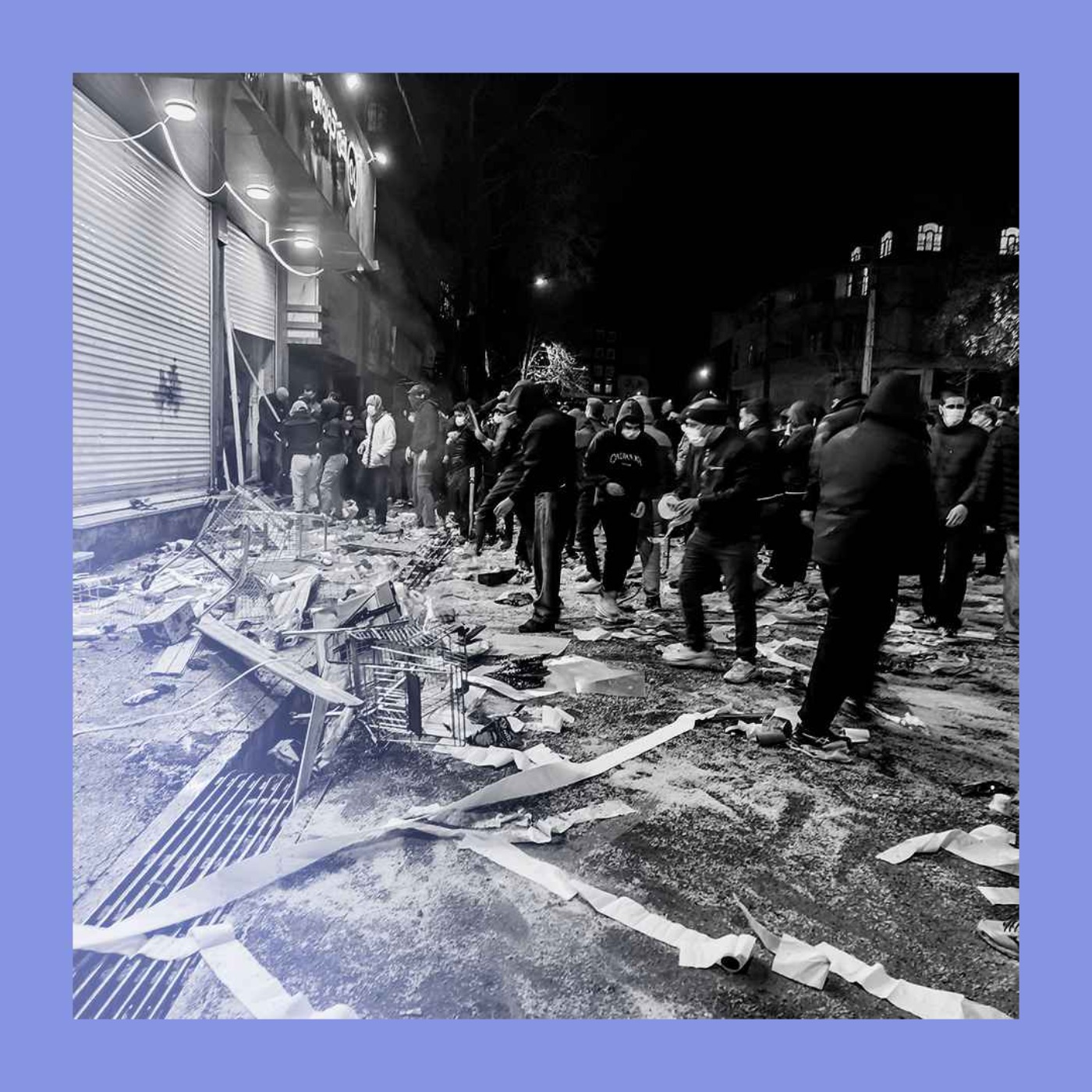
The recent unrest originated with merchants in Tehran's Grand Bazaar, a group that prioritizes stability. Their protests highlight the crisis's economic roots: inability to access hard currency for imports, rampant inflation, and collapsing consumer demand, making business untenable for even multi-million dollar traders.

UAE Minister Omar Al Olama argues that AI can level the playing field for smaller countries. By dramatically boosting productivity and intelligence, nations with smaller populations can achieve an impact and economic output disproportionate to their size, earning them a seat at the global table.

Beyond geopolitics, transforming Iran into a stable, pro-West trading partner could unlock vast oil and gas reserves and unleash entrepreneurial talent. This would stabilize global energy prices, providing an economic upside that is a powerful, often overlooked, aspect of the conflict.

Shervin Peshavar frames the modern fight for a democratic Iran within a 2,500-year historical context. He connects the principles of human rights from Persian king Cyrus the Great to the American Declaration of Independence via Thomas Jefferson, arguing the current movement continues this ancient legacy.
The primary US motivation for the conflict with Iran is not nuclear weapons or ideology, but the need to secure $2 trillion in pledged investments from Gulf states into America's critical AI infrastructure and economy.

Unlike established powers that focus on regulation, growth-oriented nations like the UAE and El Salvador are using pro-tech policies as a core competitive strategy. They are creating favorable laws for crypto, DAOs, and digital nomads to attract global talent and capital.
The U.S. generates 25% of global GDP and holds 45% of science Nobel prizes with under 5% of the world's population. This is not an accident but a direct outcome of a system prioritizing individual liberty. This freedom acts as a gravitational pull for global talent and enables the 'permissionless innovation' that drives economic and scientific breakthroughs.

While US sanctions are a factor, the Iranian currency's freefall is largely due to structural corruption. The economy is dominated by the military and clerical foundations, a political-economic model that stifles growth and fuels public anger—a problem sanctions relief alone cannot solve.
Prince Reza Pahlavi frames Iran's transition in economic terms, arguing it's the 21st century's most significant untapped market. He estimates a democratic Iran could generate one trillion dollars for the U.S. market alone in the first decade through reconstruction, investment, and trade.