Get your free personalized podcast brief
We scan new podcasts and send you the top 5 insights daily.
Microsoft is launching a new, more expensive Office 365 bundle that includes its AI Copilot. This move aims to drive AI adoption and revenue but simultaneously flies in the face of ongoing antitrust probes by the FTC and others, which are specifically investigating Microsoft's bundling practices as anti-competitive.

Related Insights
Microsoft's deal with OpenAI includes a powerful exclusivity clause. If a third-party company wants to do a deep, custom integration or model training with OpenAI, that workload must be hosted on Azure, effectively funneling major enterprise AI deals through Microsoft's cloud.
Investments in OpenAI from giants like Amazon and Microsoft are strategic moves to embed the AI leader within their ecosystems. This is evidenced by deals requiring OpenAI to use the investors' proprietary processors and cloud infrastructure, securing technological dependency.

Microsoft is not solely reliant on its OpenAI partnership. It actively integrates competitor models, such as Anthropic's, into its Copilot products to handle specific workloads where they perform better, like complex Excel tasks. This pragmatic "best tool for the job" approach diversifies its AI capabilities.

Widespread user complaints suggest Microsoft's Copilot is underperforming, yet the company continues to bundle it and raise prices. This is a classic incumbent strategy: leveraging a locked-in customer base to extract value from a subpar product rather than competing on quality and user experience, creating an opening for more agile competitors.

Microsoft's strategy of renting its Azure cloud to AI leaders like OpenAI is akin to Rome paying barbarians at the gate. They are funding the very entities that will inevitably build products to disrupt their core Office and Windows software businesses, creating a fatal strategic conflict.

Despite its market position, Microsoft Copilot has failed to capture user enthusiasm. This creates a strategic vulnerability. A competitor who delivers a superior natural language interface for productivity tasks could disrupt Microsoft's dominance, potentially reducing it to a "data center company."
Before investing in new third-party AI tools, organizations should maximize their existing Microsoft stack. Using Copilot reduces software bloat, protects intellectual property by keeping data in-house, and leverages the integrated nature of Microsoft 365 for tasks like call analysis from Teams recordings.

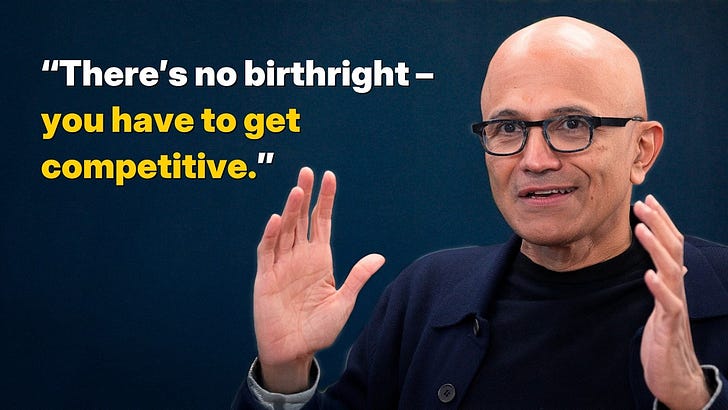
Beyond the equity stake and Azure revenue, Satya Nadella highlights a core strategic benefit: royalty-free access to OpenAI's IP. For Microsoft, this is equivalent to having a "frontier model for free" to deeply integrate across its entire product suite, providing a massive competitive advantage without incremental licensing costs.

Excel's market dominance stems from Microsoft's strategy of bundling it into the non-negotiable Microsoft Office suite. This made it impossible for enterprise customers to purchase software à la carte, effectively locking out competitors and making individual user preference irrelevant.

While Microsoft's Office suite provides a strong user base, its ownership of the Windows operating system is the real moat against competitors like Anthropic's Co-work (currently Mac-only). This "home turf" advantage allows for deeper, native integration, making it easier to build powerful AI agents that can organize files and orchestrate tasks across the entire user desktop.