Get your free personalized podcast brief
We scan new podcasts and send you the top 5 insights daily.
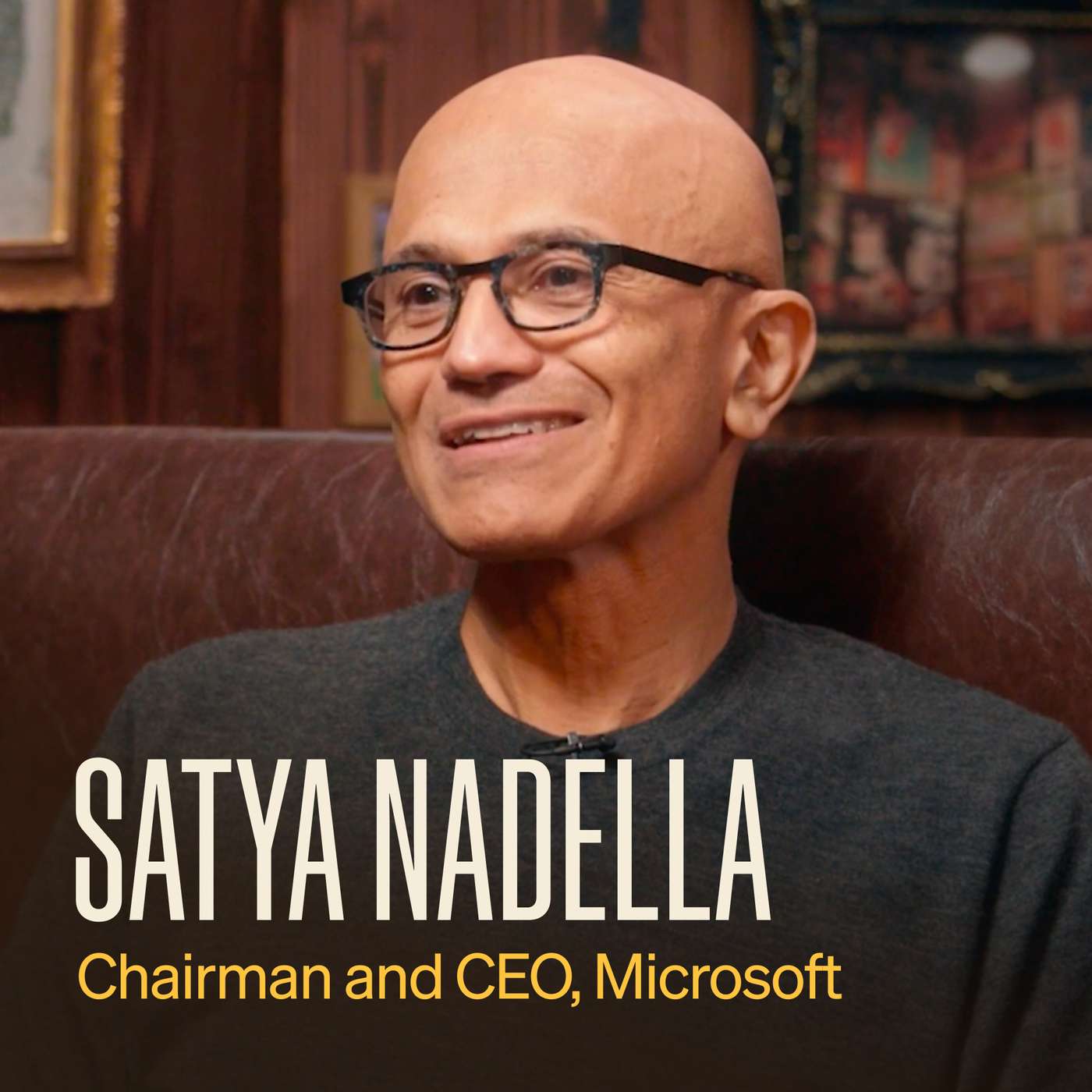
Beyond the equity stake and Azure revenue, Satya Nadella highlights a core strategic benefit: royalty-free access to OpenAI's IP. For Microsoft, this is equivalent to having a "frontier model for free" to deeply integrate across its entire product suite, providing a massive competitive advantage without incremental licensing costs.

Related Insights
Tech giants like Google and Meta are positioned to offer their premium AI models for free, leveraging their massive ad-based business models. This strategy aims to cut off OpenAI's primary revenue stream from $20/month subscriptions. For incumbents, subsidizing AI is a strategic play to acquire users and boost market capitalization.
Despite public drama, OpenAI's restructuring settled based on each party's leverage. Microsoft got a 10x return, the foundation was massively capitalized, and employees gained liquidity. This pragmatic outcome, which clears the path for an IPO, proves that calculated deal-making ultimately prevails over controversy.
Satya Nadella suggests a fundamental shift in enterprise software monetization. As autonomous AI agents become prevalent, the value unit will move from the human user ("per seat") to the AI itself. "Agents are the new seats," signaling a future where companies pay for automated tasks and outcomes, not just software access for employees.
Microsoft's earnings report revealed a $3.1 billion quarterly loss from its 27% OpenAI stake, implying OpenAI's total losses could approach $40-50 billion annually. This massive cash burn underscores the extreme cost of frontier AI development and the immense pressure to generate revenue ahead of a potential IPO.
Satya Nadella reveals that Microsoft prioritizes building a flexible, "fungible" cloud infrastructure over catering to every demand of its largest AI customer, OpenAI. This involves strategically denying requests for massive, dedicated data centers to ensure capacity remains balanced for other customers and Microsoft's own high-margin products.
OpenAI is launching an AI-powered jobs platform and a massive certification program. This move positions them as a direct competitor to LinkedIn, which is owned by their primary investor and partner, Microsoft, creating a fascinating and tense "coopetition" dynamic.
Satya Nadella reveals that the initial billion-dollar investment in OpenAI was not an easy sell. He had to convince a skeptical board, including a hesitant Bill Gates, about the unconventional structure and uncertain outcome. This highlights that even visionary bets require navigating significant internal debate and political capital.
Despite its massive user base, OpenAI's position is precarious. It lacks true network effects, strong feature lock-in, and control over its cost base since it relies on Microsoft's infrastructure. Its long-term defensibility depends on rapidly building product ecosystems and its own infrastructure advantages.

The concept of "sovereignty" is evolving from data location to model ownership. A company's ultimate competitive moat will be its proprietary foundation model, which embeds tacit knowledge and institutional memory, making the firm more efficient than the open market.
Disney is licensing its IP to OpenAI, avoiding the "Napster trap" where music labels sued file-sharing services into bankruptcy but lost control of the streaming market. By partnering, Disney shapes the use of its IP in AI and benefits financially, rather than fighting a losing legal battle against technology's advance.