Get your free personalized podcast brief
We scan new podcasts and send you the top 5 insights daily.
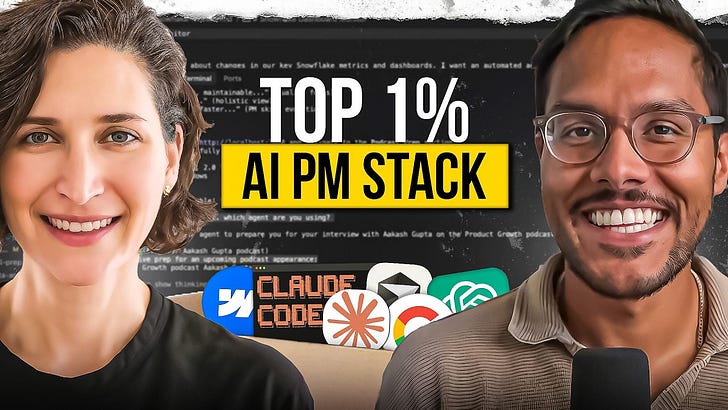
Unable to secure budget for a human chief of staff, Webflow's CPO built her own using AI agents. This system automates complex, recurring tasks like podcast research and data prep, demonstrating how executives can use AI to gain significant personal leverage without increasing headcount.

Related Insights
AI transforms the Executive Assistant role from tactical execution to strategic system design. By automating repetitive tasks, EAs can focus on higher-leverage activities like building AI agents, culture-reinforcement tools, and scalable feedback systems for the entire organization.
Business owners are overwhelmed by AI terminology. A consultant can create a personalized GPT ecosystem using their unique preferences, goals, and workflows. This service turns an executive's operational knowledge into valuable intellectual property, packaged as custom system prompts and GPTs they can use daily.

Webflow's CPO uses a custom set of AI agents built with Claude and Cursor to analyze her calendar for delegation opportunities and triage her inbox by archiving junk, flagging important emails, and drafting replies. This offloads significant cognitive and administrative load from the executive.
Generic use cases fail to persuade leadership. To get genuine AI investment, build a custom tool that solves a specific, tangible pain point for an executive. An example is an 'AI board member' trained on past feedback to critique board decks before a meeting, making the value undeniable.

Instead of relying on one-off prompts, professionals can now rapidly build a collection of interconnected internal AI applications. This "personal software stack" can manage everything from investments and content creation to data analysis, creating a bespoke productivity system.

An Executive Assistant at Zapier built an AI agent that automates her weekly meeting prep. The agent researches external attendees, checks the CRM and internal comms for context, and delivers a digest and tasks. This saves hours of manual work and ensures thorough preparation.
Instead of traditional IT roles focused on software, an AI Ops person focuses on identifying and automating workflows. They work with teams to eliminate busy work and return hundreds of hours, shifting employees from performing tasks to directing AI.
Unlike typical AI coding assistants that act as pair programmers, Codex's cloud agents allow a single founder to operate like a CEO. You can delegate concurrent tasks—coding, marketing, product roadmapping—to different AI 'employees', maximizing productivity even while you sleep.

The paradigm shift with AI agents is from "tools to click buttons in" (like CRMs) to autonomous systems that work for you in the background. This is a new form of productivity, akin to delegating tasks to a team member rather than just using a better tool yourself.
A custom AI system named Marilyn, built by the CMO and one engineer, has become the central nervous system for Wiz's GTM team. It answers complex questions on competition, product docs, and strategy, even translating content for global teams. This demonstrates the immense ROI of building custom internal AI tools.