Get your free personalized podcast brief
We scan new podcasts and send you the top 5 insights daily.
To safely deploy a powerful AI agent, create clear guardrails. SaaStr distinguishes between tasks the agent can perform autonomously (pulling data, generating ideas) and actions that require human approval (sending a mass email). This two-layer approach builds trust and prevents potentially costly mistakes.

Related Insights
Use a two-axis framework to determine if a human-in-the-loop is needed. If the AI is highly competent and the task is low-stakes (e.g., internal competitor tracking), full autonomy is fine. For high-stakes tasks (e.g., customer emails), human review is essential, even if the AI is good.

Instead of forcing full autonomy, the AI agent allows teams to start with human approvals at key stages. This 'human-in-the-loop' model builds trust and enables organizations to incrementally automate complex support workflows as they grow more confident in the system's reliability.
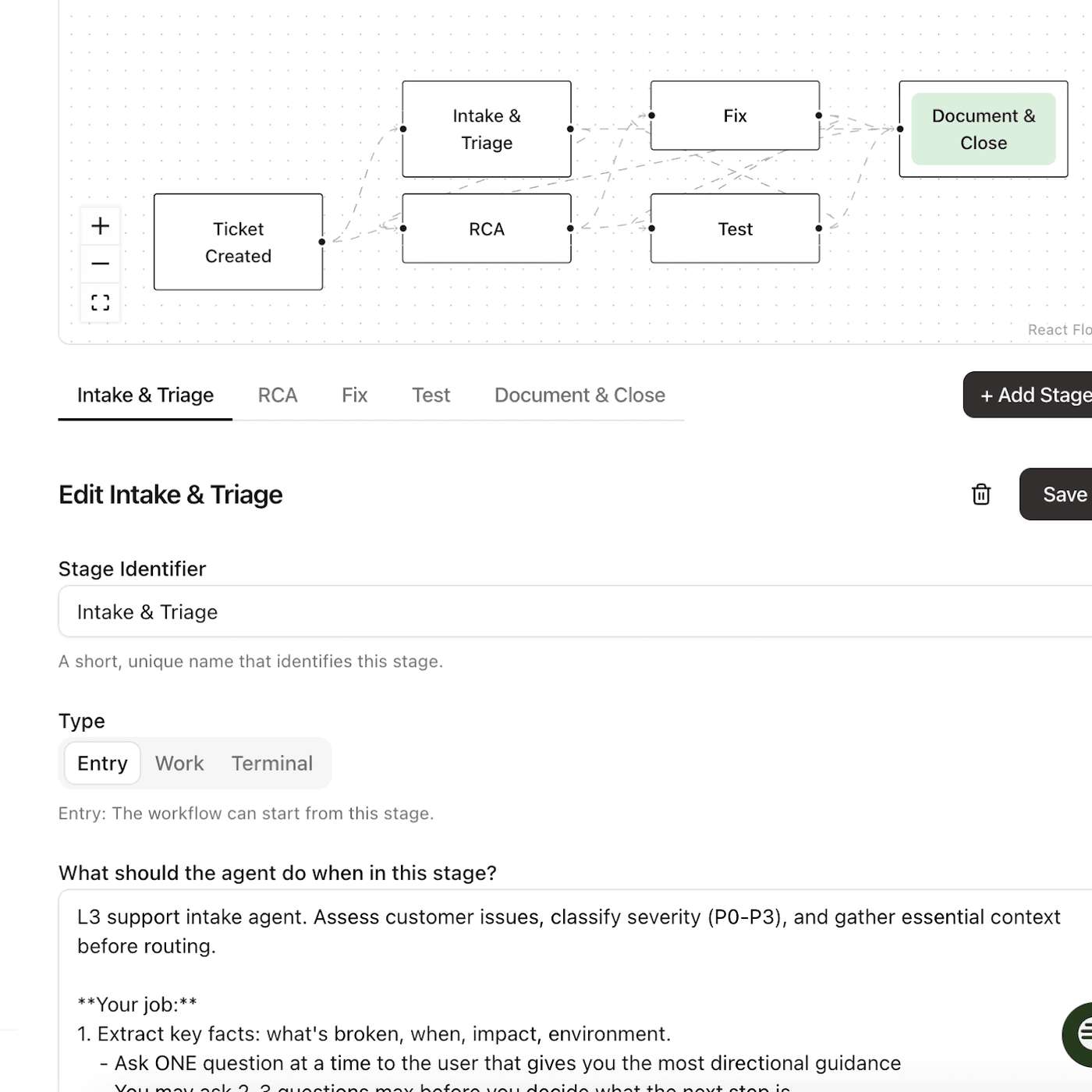
The key to creating effective and reliable AI workflows is distinguishing between tasks AI excels at (mechanical, repetitive actions) and those it struggles with (judgment, nuanced decisions). Focus on automating the mechanical parts first to build a valuable and trustworthy product.

To overcome user distrust of AI agents having access to personal data, the adoption path must be gradual. The AI should first provide suggestions for the user to approve (e.g., draft emails). Only after consistently proving its reliability and allowing users to learn its boundaries can trust be established for autonomous action.

To prevent malicious attacks, a founder configured his AI agent to require manual approval via Telegram before executing any task requested by an external party. This simple human-in-the-loop system acts as a crucial security backstop for agents with access to sensitive data and platforms.

Marketers mistakenly believe implementing AI means full automation. Instead, design "human-in-the-loop" workflows. Have an AI score a lead and draft an email, but then send that draft to a human for final approval via a Slack message with "approve/reject" buttons. This balances efficiency with critical human oversight.
Instead of a binary human-in-the-loop decision, enterprises should use an "autonomy budget" for agents. Actions are classified by risk (e.g., irreversibility, financial impact) to determine the level of freedom, creating a spectrum from full autonomy to required human approval, avoiding agents becoming expensive suggestion boxes.

To balance power and safety, Serval uses two distinct agents. An "Admin Agent" helps IT build and approve workflows with specific permissions. A separate "Help Desk Agent" for end-users can only execute these pre-vetted tools, allowing it to "run wild" within a secure, pre-defined sandbox.
For complex, high-stakes tasks like booking executive guests, avoid full automation initially. Instead, implement a 'human in the loop' workflow where the AI handles research and suggestions, but requires human confirmation before executing key actions, building trust over time.
The concept of "human-in-the-loop" is often misapplied. To effectively manage autonomous AI agents, companies must map the agent's entire workflow and insert mandatory human approval at critical decision points, not just as a final check or initial hand-off.
