Get your free personalized podcast brief
We scan new podcasts and send you the top 5 insights daily.
Mayfield's Naveen Chaddha uses a dual approach for AI investing. A "prepared mind" seeks painkillers for known enterprise pain points (e.g., in the data layer). An "open mind" is required for emergent categories like new models or developer tools, where preconceived notions are a hindrance and listening is key.

Related Insights
When evaluating AI startups, don't just consider the current product landscape. Instead, visualize the future state of giants like OpenAI as multi-trillion dollar companies. Their "sphere of influence" will be vast. The best opportunities are "second-order" companies operating in niches these giants are unlikely to touch.

As platforms like AlphaSense automate the grunt work of research, the advantage is no longer in finding information. The new "alpha" for investors comes from asking better, more creative questions, identifying cross-industry trends, and being more adept at prompting the AI to uncover non-obvious connections.

During a major technology shift like AI, the most valuable initial opportunities are often the simplest. Founders should resist solving complex problems immediately and instead focus on the "low-hanging fruit." Defensibility can be built later, after capitalizing on the obvious, easy wins.
Don't treat AI as merely a product feature or a productivity tool. Moonpig's tech chief views it as a fundamental infrastructure shift, like the electrical grid. Leaders should focus on fostering an adaptable mindset for systemic change, rather than fixating on today's specific AI applications.

The true challenge of AI for many businesses isn't mastering the technology. It's shifting the entire organization from a predictable "delivery" mindset to an "innovation" one that is capable of managing rapid experimentation and uncertainty—a muscle many established companies haven't yet built.

During a fundamental technology shift like the current AI wave, traditional market size analysis is pointless because new markets and behaviors are being created. Investors should de-emphasize TAM and instead bet on founders who have a clear, convicted vision for how the world will change.
Instead of betting on which AI models or applications will win, Karmel Capital focuses on the infrastructure layer (neocloud companies). This "pick and shovel" strategy provides exposure to the entire ecosystem's growth with lower valuations and less risk, as infrastructure is essential regardless of who wins at the top layers.

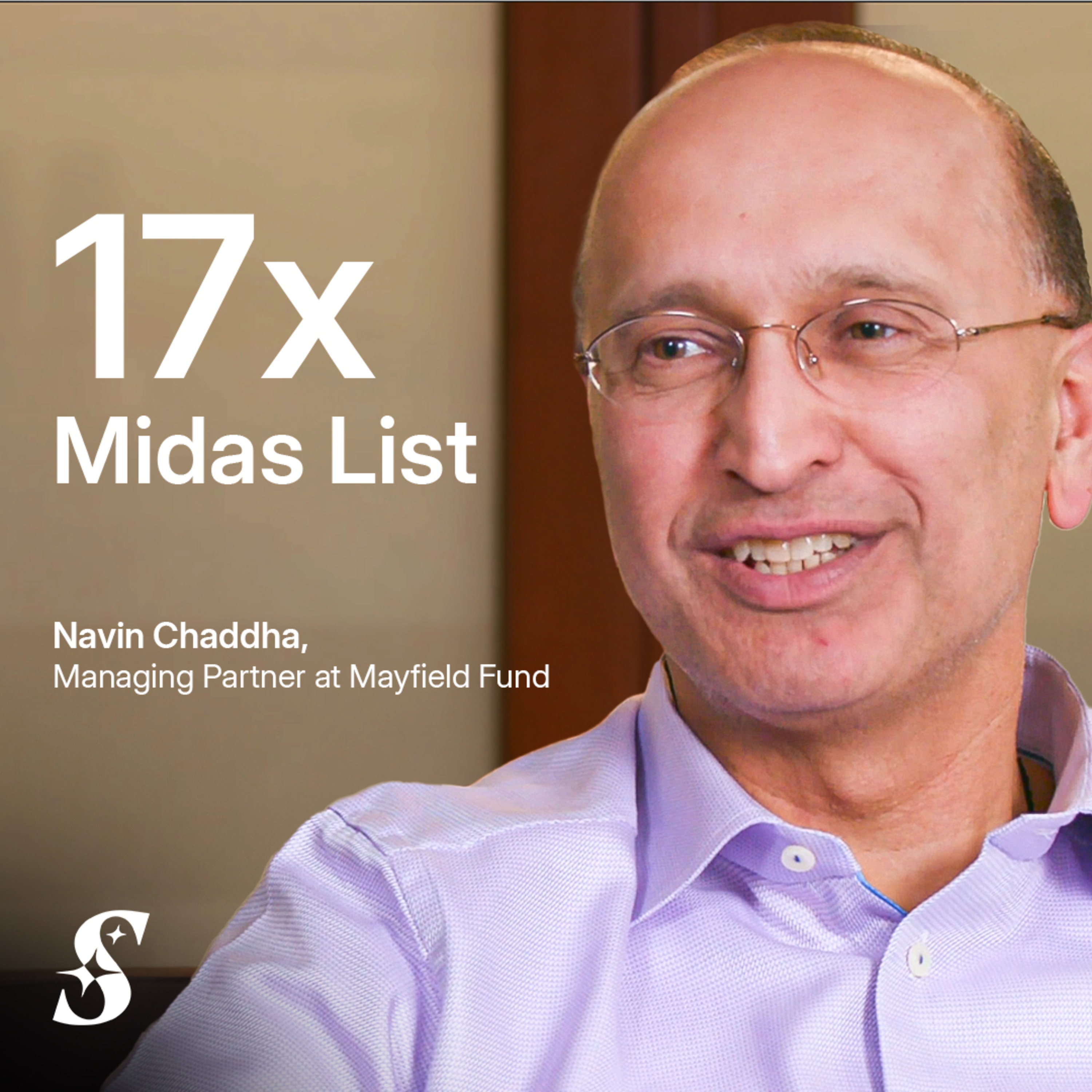
Veteran VC Navin Chaddha argues that AI's impact is an order of magnitude greater than previous tech waves. This is because AI's conversational interfaces democratize creation for billions, while its ability to reason and act provides a second 10x force multiplier, resulting in a 100x total opportunity.
Permira's AI strategy uses a clear framework: invest in the 'picks and shovels' of compute (data centers) and in applications with unique, proprietary data sets. They deliberately avoid the hyper-competitive model layer, viewing it as a scale game best left to venture capital and strategic giants.

Investing in startups directly adjacent to OpenAI is risky, as they will inevitably build those features. A smarter strategy is backing "second-order effect" companies applying AI to niche, unsexy industries that are outside the core focus of top AI researchers.