Get your free personalized podcast brief
We scan new podcasts and send you the top 5 insights daily.
Movements like Serbia's Otpor perfected "dilemma actions," which use humor and theatrics to force authorities into a lose-lose situation. Any response—ignoring the act, making arrests, or even seizing an inanimate object—makes the regime appear absurd, illegitimate, and weak, thereby eroding its power.

Related Insights
Authoritarian leaders who publicly mock or dismiss threats risk triggering a military response driven by personal pride. Venezuelan President Maduro's televised dancing was reportedly perceived by the Trump administration as calling their bluff, demonstrating how avoiding the appearance of being a 'chump' can become a primary motivator for military action.
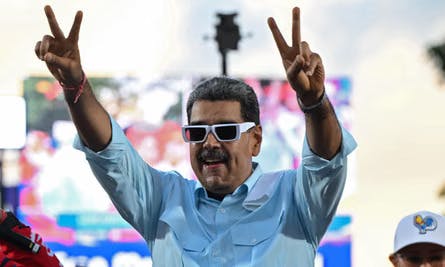
Historically, figures like Hitler were initially dismissed as buffoons. This perceived lack of seriousness is a strategic tactic, not a flaw. It disarms civil opponents who can't operate in that space, captures constant media attention, and causes observers to fatally underestimate the true threat. The defense to "take him seriously, not literally" is a modern manifestation of this pattern.
Waving a national flag is a direct political act with serious risks in authoritarian countries. Activists are instead using pop culture symbols, like the pirate flag from the anime 'One Piece', to protest. This makes their message more ambiguous, providing a layer of plausible deniability to dodge censorship and reduce personal risk.

Directly attacking a charismatic leader can backfire due to personal loyalty. A more effective political strategy is to target their key advisors. Removing controversial figures can weaken the leader's power structure, as it is easier to build consensus against "bad actors" than the principal.

The goal of nonviolent resistance is not to "melt the heart of the dictator" but to strategically create defections within their pillars of support. By growing large and diverse, a movement builds direct ties to elites in business, media, and security, systematically shredding their loyalty to the regime.
Contrary to their image of strength, authoritarian figures often rely on bluff and "anticipatory obedience." When confronted with direct, organized resistance, they frequently lack a follow-up plan and retreat, revealing their inherent fragility and dependence on their opposition's inaction.

Jane Fonda argues that defeating an authoritarian regime requires weakening its "pillars of support" like finance, military, and art. This is achieved through strategic noncompliance—strikes, boycotts, and mass actions that hit the economy—rather than traditional protests, which are less effective against entrenched power.

According to Jane Fonda, authoritarian leaders thrive on an image of being impermeable and inevitable. Humor and ridicule are powerful weapons against this because they expose weakness and humanity, which authoritarians cannot tolerate. A comic making fun of a dictator shatters the carefully constructed facade of invincibility.
Salman Rushdie posits that humor is more than just entertainment; it is a potent tool against oppression. He observes that dictators and narrow-minded individuals are characteristically humorless and that satire can provoke them more effectively than direct criticism, making it a crucial element in the struggle for free expression.
Engaging controversial figures through a comedic lens serves as a powerful humanizing agent. It punctures their self-serious persona and tests their ability to laugh at the absurdity of their own position. This can disarm audiences who expect confrontation and instead reveal a more relatable, self-aware individual.
