Get your free personalized podcast brief
We scan new podcasts and send you the top 5 insights daily.
To avoid costly and slow aerospace-grade components, Northwood hires top engineers to adapt standard, high-volume cellular parts for space applications. This unconventional approach mitigates supply chain risks, reduces costs, and accelerates development timelines.

Related Insights
To avoid one- to two-year lead times and prohibitive costs for critical composite overwrapped pressure vessels (COPVs), Impulse Space brought the entire manufacturing process in-house. This gives them direct control over the cost, quality, and supply of a major spacecraft mass component.
Identifying the defense industrial base as "rotted out," Mock Industries is taking a bottom-up approach. Instead of just building platforms, it vertically integrates to produce high-performance subsystems (radars, engines) and sells them to other primes, aiming to fix the entire ecosystem.

The push to build defense systems in America reveals that critical sub-components, like rocket motors or high-powered amplifiers, are no longer manufactured domestically at scale. This forces new defense companies to vertically integrate and build their own factories, essentially rebuilding parts of the industrial base themselves.

Citing the space industry's cost-plus contracting culture, Impulse Space adopted extreme vertical integration to gain control over cost, schedule, and quality. This move is a direct response to the unreliability of traditional aerospace vendors, who are often slow and overpriced.

Instead of using million-dollar aerospace computers, Zipline implements safety concepts like redundant flight computers by engineering solutions with components from the smartphone supply chain. This allows them to achieve comparable safety levels at a fraction of the cost and with much faster development cycles.

Northwood cut ground station deployment time from 3 years to 3 months. They achieved this by vertically integrating the entire value chain—antenna R&D, land procurement, construction, and software APIs. This holistic approach aligns incentives and enables system-level optimization impossible with siloed vendors.

Instead of building large, single-purpose parabolic dishes, Northwood creates modular, flexible ground stations. This architecture allows them to serve a wide variety of missions and adapt to new use cases as they emerge, effectively operating as an 'index for space.'
Boom Supersonic accelerates development by manufacturing its own parts. This shrinks the iteration cycle for a component like a turbine blade from 6-9 months (via an external supplier) to just 24 hours. This rapid feedback loop liberates engineers from "analysis paralysis" and allows them to move faster.

Zipline had to build its own components because the market only offered two extremes: cheap, unreliable consumer drone parts or prohibitively expensive military-grade systems. This "automotive grade" gap for reliable, cost-effective components forced them to vertically integrate to achieve their performance and cost goals.
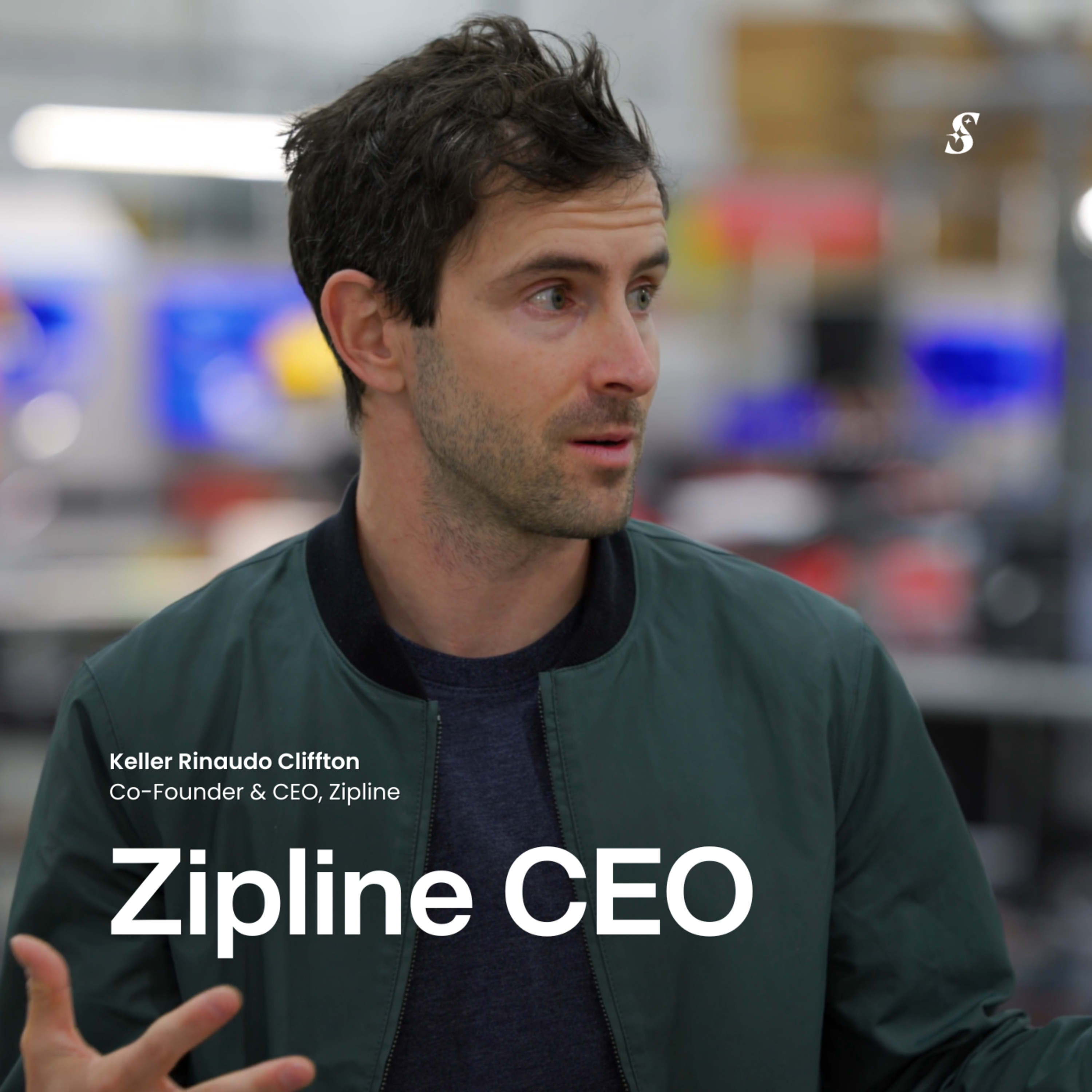
Figure designs nearly every component of its robots in-house, from motors to batteries. This extreme vertical integration, though costly upfront, prevents being at the mercy of third-party vendor timelines, code problems, or supply chain issues, enabling faster iteration and deeper system control.