Get your free personalized podcast brief
We scan new podcasts and send you the top 5 insights daily.
Contrary to the narrative of AI-driven layoffs, ambitious leaders are not asking "How do I replace people?" They are asking "How do I destroy my competition?" The goal is industry dominance and massive growth, with efficiency being a secondary benefit, not the primary driver.

Related Insights
Wharton Professor Ethan Malek argues that during a technological revolution, using efficiency gains to fire people is a mistake. The winning strategy is to treat AI as a capacity gain, empowering existing teams to innovate and create new advantages that were previously impossible.
The true disruption from AI is not a single bot replacing a single worker. It's the immense leverage granted to individuals who can deploy thousands of autonomous AI agents. This creates a massive multiplication of productivity and economic power for a select few, fundamentally altering labor market dynamics from one-to-one replacement to one-to-many amplification.
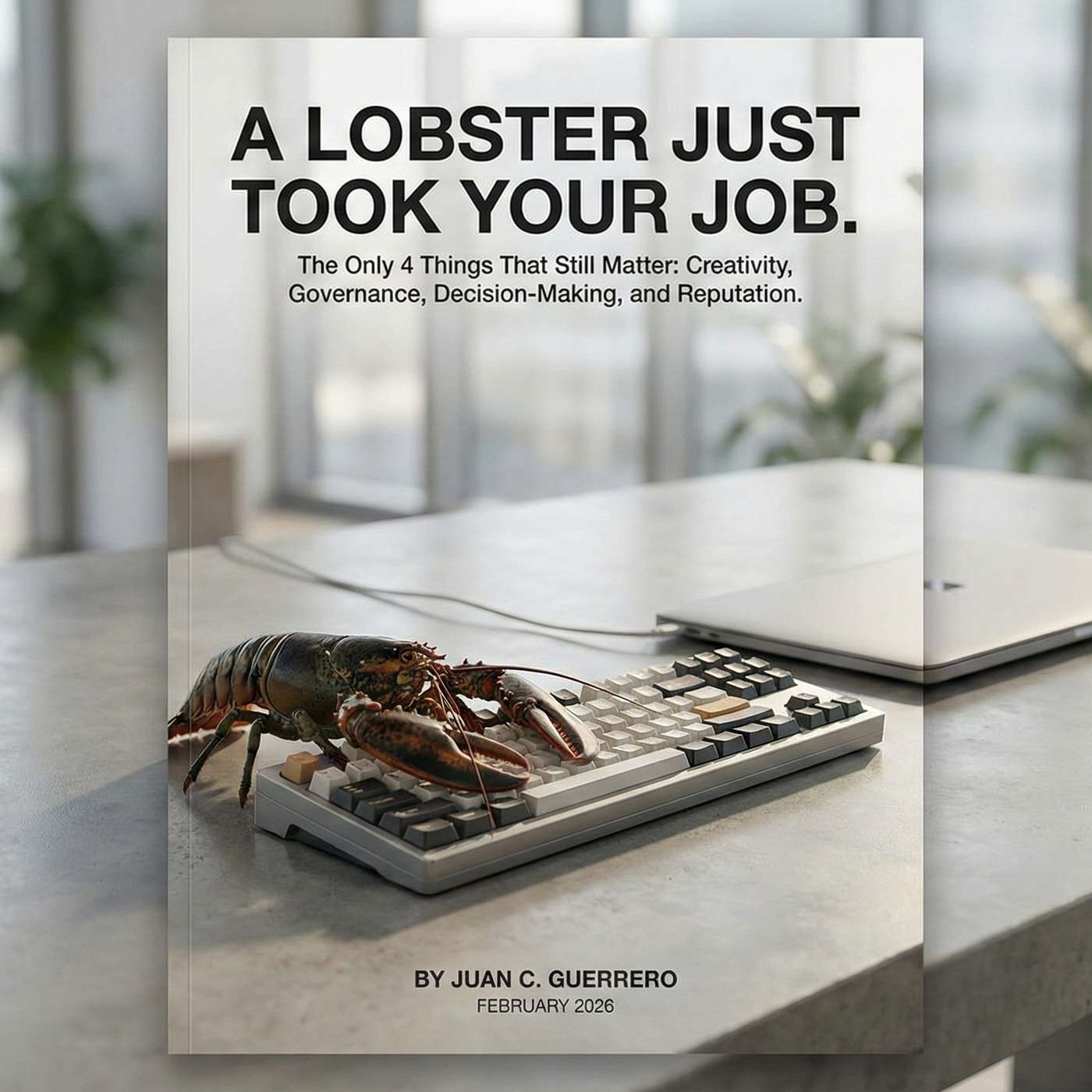
The narrative of AI replacing jobs is misleading. The real threat is competitive displacement. Professionals will be put out of business not by AI itself, but by more agile competitors who master AI tools to become faster, smarter, and more efficient.

The idea that AI leads to job cuts misses the competitive dynamic. Since all companies have access to AI, efficiency gains will be reinvested to out-compete rivals, not just pocketed as profit. This escalates competition, turning AI adoption into a strategic imperative for survival and growth.

Fears of AI-driven mass unemployment overlook basic capitalism. Any company that fires staff to boost margins will be out-competed by a rival that uses AI to empower its workforce for greater output and market share, ensuring AI augments jobs rather than eliminates them.

AI acts as a force multiplier for individuals who learn to leverage it, allowing them to achieve the output of a much larger team. The threat isn't the technology itself, but competitors who adopt it faster to gain a significant advantage.
While AI-driven efficiency is an obvious first step, it often results in workforce reduction if company growth is flat. True differentiation and sustainable advantage come from using AI for innovation—creating new products, markets, and business models to fuel growth.

The narrative "AI will take your job" is misleading. The reality is companies will replace employees who refuse to adopt AI with those who can leverage it for massive productivity gains. Non-adoption is a career-limiting choice.
Wharton Professor Ethan Malek argues that firms using AI for efficiency gains by firing staff are misreading the moment. In a technological revolution, the smarter move is to view AI as a capacity gain—using the freed-up human potential to innovate, gain new advantages, and outmaneuver competitors.
When tech leaders like Jack Dorsey cite AI for layoffs, it may obscure a deeper motive: a relentless race for market dominance where societal impacts like job displacement and reskilling are deprioritized. The focus is on winning, with worker welfare often becoming collateral damage.