Get your free personalized podcast brief
We scan new podcasts and send you the top 5 insights daily.
Instead of being constrained by a predefined Total Addressable Market (TAM), Square believes great products create new markets, making the potential almost infinite. To maintain focus within this vast space, they use a strategic "forcing function"—their "neighborhood network" concept—to guide product decisions.

Related Insights
The static size of a Total Addressable Market (TAM) is a misleading metric for big ideas. A better evaluation framework focuses on two questions: Will the product's innovation cause the existing TAM to grow multiple times over? Can the company layer on additional, new TAMs over its lifetime?

Square's product development is guided by the principle that "a seller should never outgrow Square." This forces them to build a platform that serves businesses from their first sale at a farmer's market all the way to operating in a large stadium, continuously adding capabilities to manage growing complexity.

Initial data suggested the market for design tools was too small to build a large business. Figma's founders bet on the trend that design was becoming a key business differentiator, which would force the market to expand. They focused on building for the trend, not the existing TAM.

The conversation around Ideal Customer Profile (ICP) has evolved beyond simple refinement. With newly accessible data, companies are fundamentally re-evaluating their Total Addressable Market (TAM), challenging long-held assumptions about who their potential customers are and how big the opportunity is.

Successful AI products like Gamma and Cursor don't just add a feature; they create so much value they can charge orders of magnitude more than legacy alternatives. This massive Total Addressable Market (TAM) expansion, not a simple price bump, is the engine of their explosive growth.

Analysts often mistakenly constrain a disruptor's potential to the size of the existing market it's replacing (e.g., valuing Uber based on the taxi market). Truly disruptive products create entirely new behaviors and expand the total addressable market (TAM) by orders of magnitude, a key insight for valuing high-growth companies.

Shopify's evolution shows that initial TAM estimates can be conservative. By strategically expanding into adjacent "horizons" like payments, companies can "add a zero" to their market opportunity. This justifies long-term growth and high valuations, a lesson Bessemer now applies to its portfolio.

Companies like Amazon (from books to cloud) and Intuitive Surgical (from one specific surgery to many) became massive winners by creating new markets, not just conquering existing ones. Investors should prioritize businesses with the innovative capacity to expand their TAM, as initial market sizes are often misleadingly small.

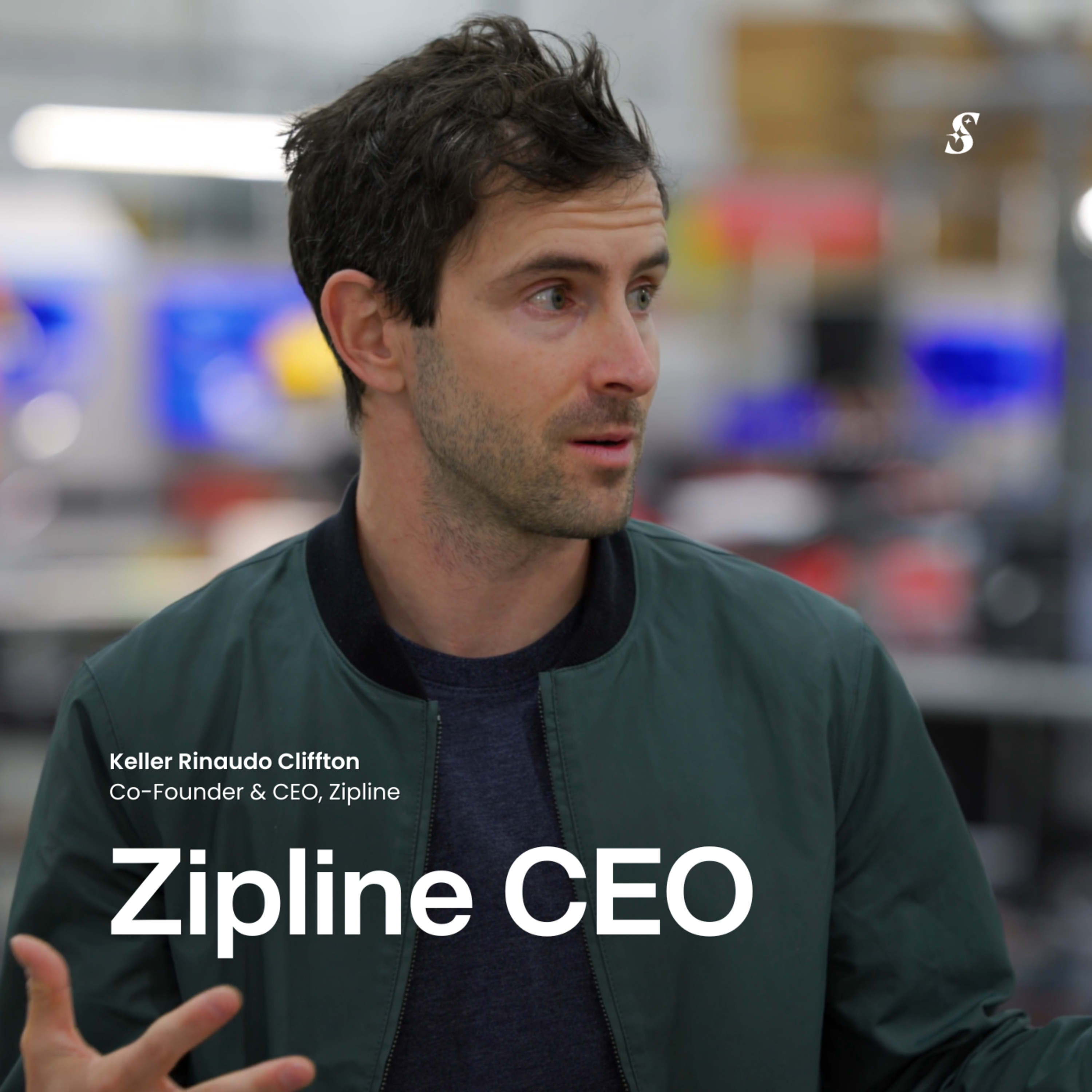
Zipline found that making delivery 10x faster and more convenient didn't just win customers from existing apps. It fundamentally changed user behavior, increasing order frequency so dramatically that they project the total addressable market is actually 10 times larger than currently estimated.
When evaluating revolutionary ideas, traditional Total Addressable Market (TAM) analysis is useless. VCs should instead bet on founders with a "world-bending vision" capable of inducing a new market, not just capturing an existing one. Have the humility to admit you can't predict market size and instead back the visionary founder.