Get your free personalized podcast brief
We scan new podcasts and send you the top 5 insights daily.
The most reliable indicator of a Catholic parish's health is how often it offers confession. Contrary to intuition, demand doesn't drive supply; rather, when priests make confession more available (e.g., daily instead of by appointment), the 'lines just start to form,' signaling a thriving community. It's the number one signal of vitality.

Related Insights
We cannot generate the necessary self-compassion to recover from our mistakes alone. We require an external, trusted person to act as a confessor who can acknowledge our faults while affirming our good intentions, a function historically served by religion.

A documented rise in Google searches for 'church' over 'OnlyFans' signals a societal shift away from nihilism towards a search for community and meaning. This trend is a response to decades of what the hosts call 'slop' culture and growing economic precarity, leading people to seek stronger value systems.

The great cathedral-building boom was fueled by the theological innovation of Purgatory. This intermediate afterlife state, which could be shortened by prayers, created a massive market where nobles funded religious institutions in exchange for masses to save their souls, driving immense construction.
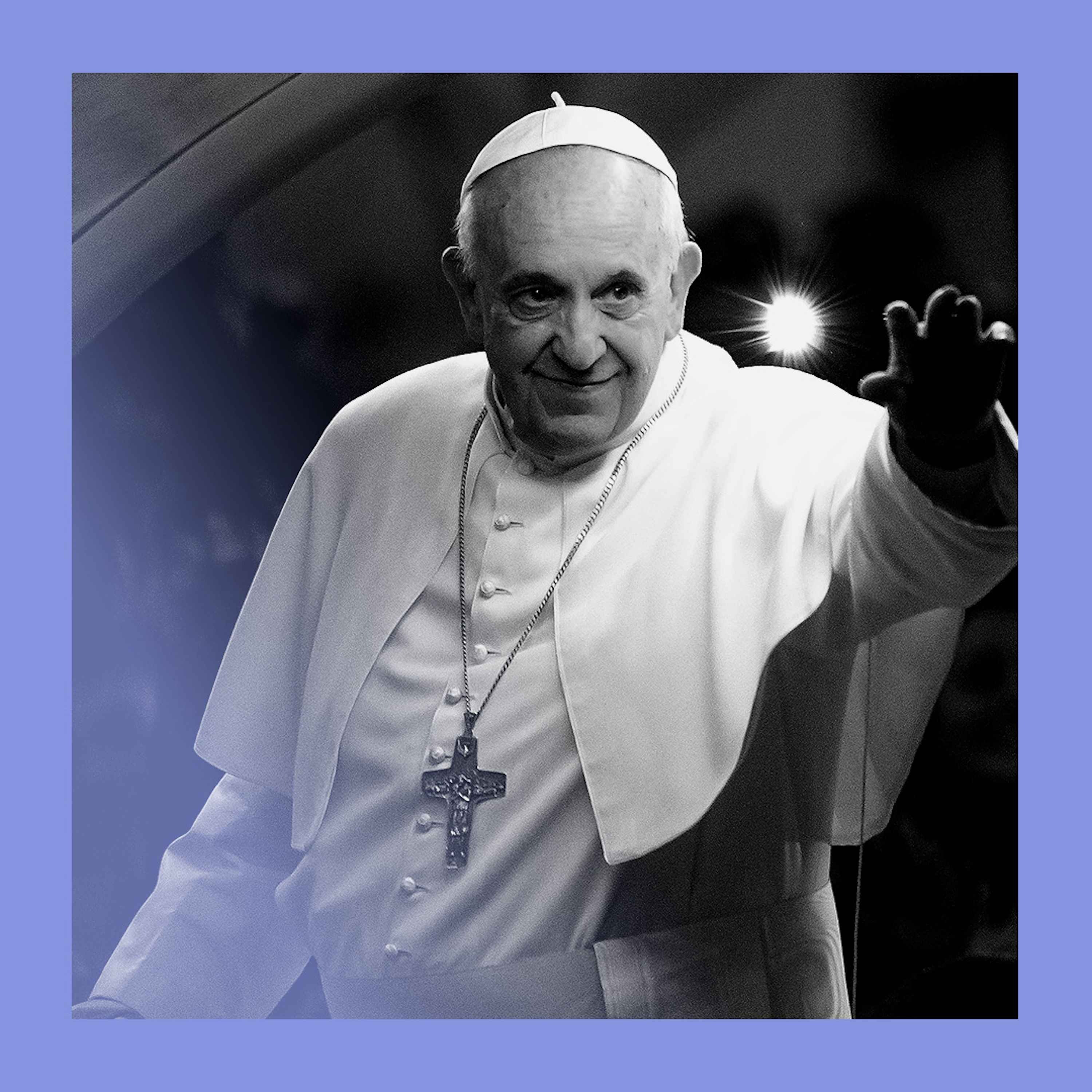
While some speculated Pope Francis's reformist energy was atonement for his past during Argentina's dirty war, it was more likely driven by a forward-looking goal. His primary motivation was to transform the public image of the Catholic Church from a troubled, rigid institution into a welcoming "place of mercy for everybody," a mission he embodied daily.
Counterintuitively, people who identify as "spiritual but not religious" exhibit higher rates of anxiety and depression than those who are religious, agnostic, or atheistic. This suggests they may lack the beneficial structure and community that organized religion provides.
Contrary to popular belief, the number one causal factor for a long and healthy life is not wealth, genetics, or physical habits. It's the strength of one's social fabric, including relationships with friends, family, and even casual daily interactions with strangers in the community.

Mandatory celibacy for Western clergy wasn't an early Christian rule. It arose in the 11th-12th centuries from a new theological emphasis on the Eucharist. The belief that priests physically handled Christ's body and blood created a powerful demand for their absolute sexual purity.
Longitudinal research shows that adolescents who consider their spiritual life highly important have an 80% reduced risk of addiction onset compared to peers. This striking statistic highlights spirituality as a powerful, yet often overlooked, protective factor in public and mental health strategies for young people.

The 'Religious Order Study' found that nuns with the physical brain pathology of Alzheimer's often showed no cognitive symptoms. Their highly social and mentally engaging lives built up a 'cognitive reserve' of new neural pathways that compensated for the degenerating tissue.

The Catholic Church systematically dismantled large, kin-based clans in Europe by banning cousin marriage and promoting independent households. This breakdown of traditional safety nets forced people to form voluntary associations (like guilds and towns) based on individual merit and trust, laying the groundwork for Western individualism.
