Get your free personalized podcast brief
We scan new podcasts and send you the top 5 insights daily.
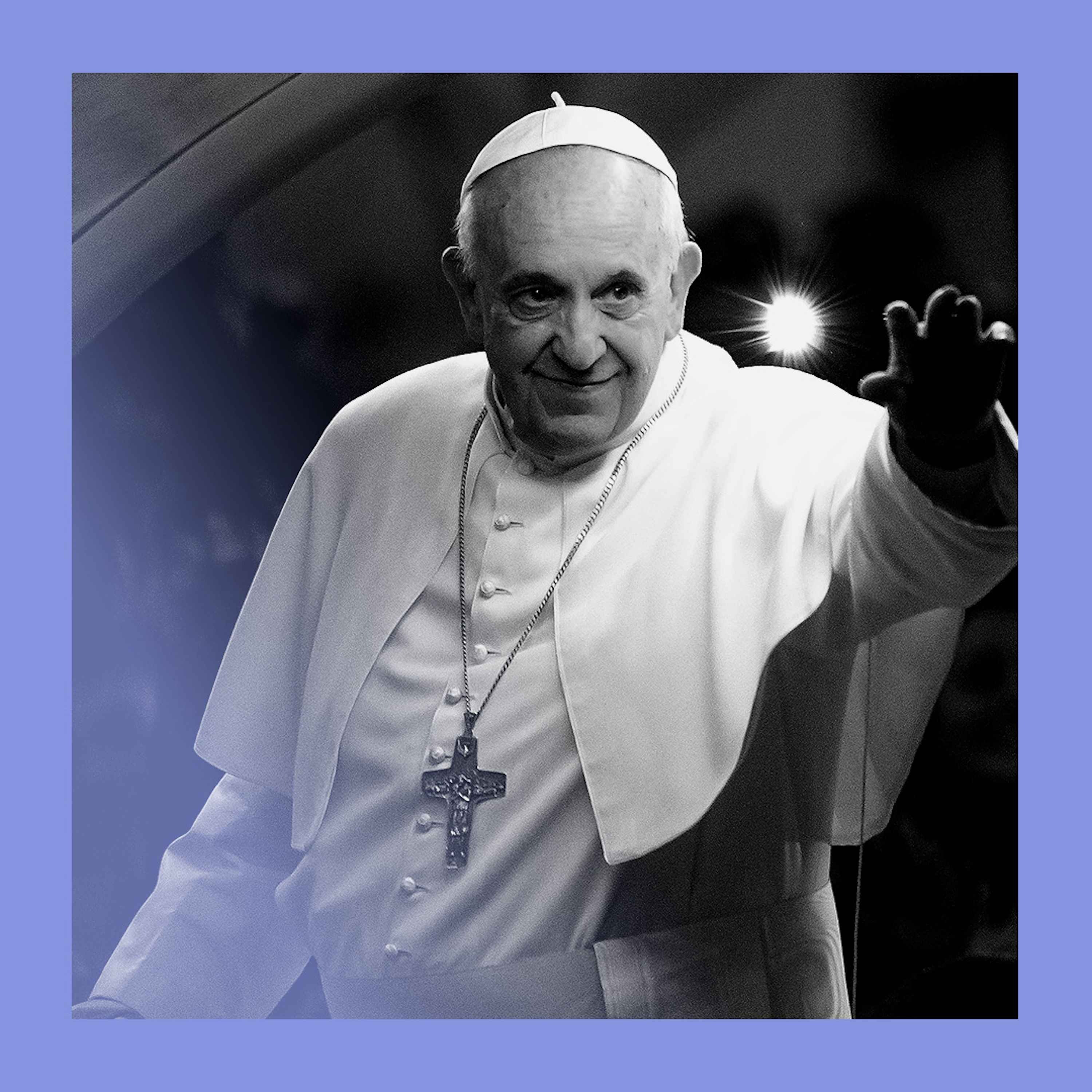
While some speculated Pope Francis's reformist energy was atonement for his past during Argentina's dirty war, it was more likely driven by a forward-looking goal. His primary motivation was to transform the public image of the Catholic Church from a troubled, rigid institution into a welcoming "place of mercy for everybody," a mission he embodied daily.
Related Insights
We cannot generate the necessary self-compassion to recover from our mistakes alone. We require an external, trusted person to act as a confessor who can acknowledge our faults while affirming our good intentions, a function historically served by religion.

One of Jesus' "New Ten Commandments" was to show mercy without expecting thanks, repentance, or any social outcome. It is an emotional act of grace to be exercised "simply for its own sake." This reframes mercy not as a transactional tool for improving others, but as an intrinsic good.

The Church has a tradition of embracing technological progress, from monks copying books to using the printing press and radio. The slow adoption of the internet is seen as an exception they are now trying to correct with AI.

Jesus' proposed revolution was entirely internal: a fight against greed, cruelty, and prejudice within each individual. He taught that by changing themselves, his followers would change the world. This focus on personal transformation over structural reform is a profound model for creating lasting cultural change.
Many believe once trust is lost, it's gone forever. However, it can be rebuilt. The process requires transparently admitting the mistake and, crucially, following up with tangible actions that prove the organization has changed its ways. A mere apology is insufficient; you must 'walk the walk'.
Early versions of Catholic AI struggled to apply core doctrines to users' personal problems. The team realized that papal homilies are distillations of complex theology for everyday life, providing a perfect dataset for teaching the model how to generalize from first principles.
Jesus actively concealed his healings, preferring followers be persuaded by the logic and truth of his teachings rather than being swayed by supernatural displays. He detested being seen as a "holy magician," believing true faith is built on understanding, not spectacle, a key lesson for leaders building authentic movements.
In an era defined by tribalism, the idea of "love of mankind as a whole" was not a common concept. Jesus' teaching to love every person as a neighbor was a revolutionary act that transcended race, nation, and social class, making his message one of the first truly universalist philosophies.
This theological model offers a three-part structure for leadership: the Prophet speaks truth, the Priest shows mercy, and the King provides direction. Leaders should consciously develop all three aspects to avoid imbalances, such as being all "take the hill" without caring for the team.

With pronouncements on AI's impact on human dignity, Pope Leo XIV is framing the technology as a critical religious and ethical issue. This matters because the Pope influences the beliefs of 1.4 billion Catholics worldwide, making the Vatican a powerful force in the societal debate over AI's trajectory and regulation.