Get your free personalized podcast brief
We scan new podcasts and send you the top 5 insights daily.
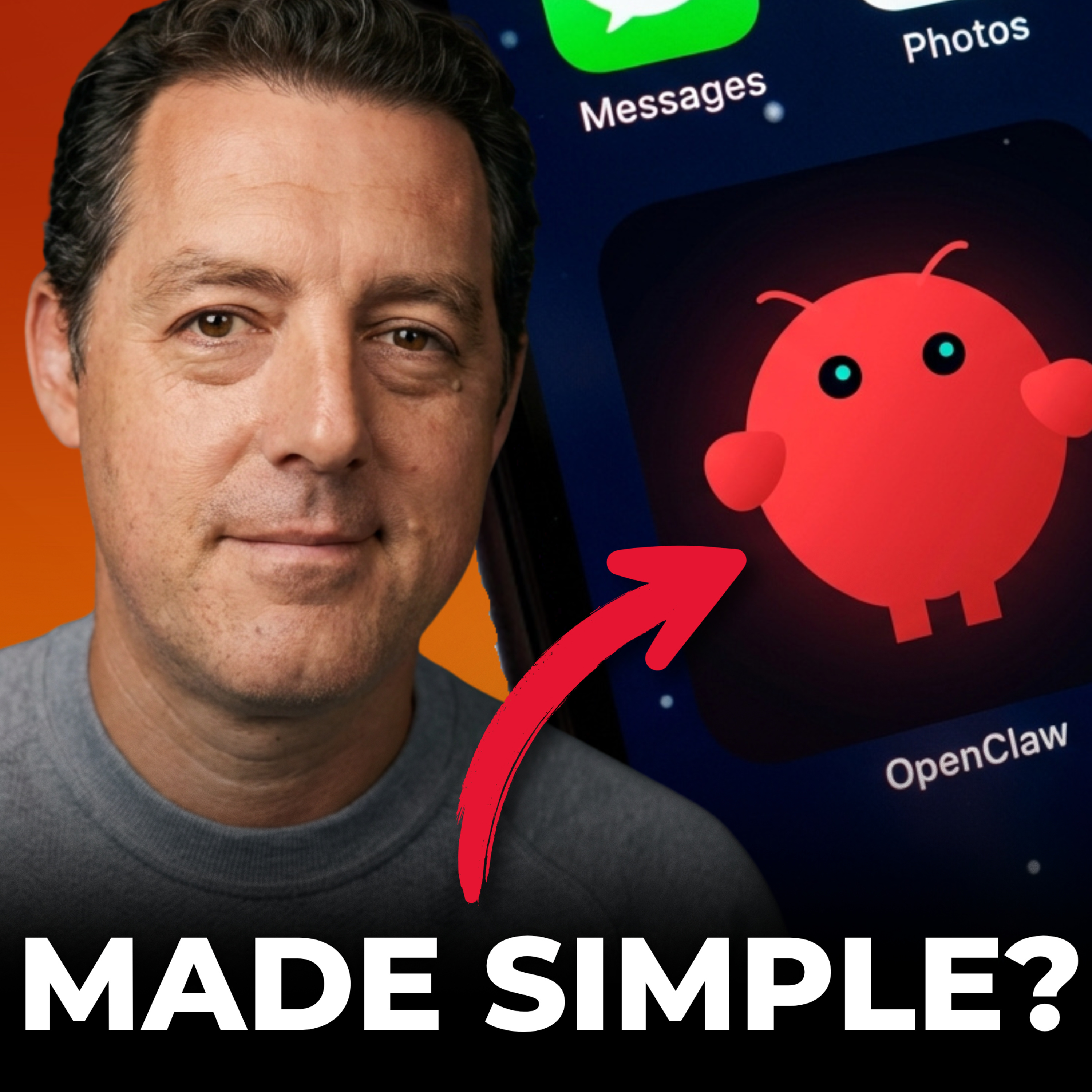
The rollout of NVIDIA's NemoClaw agent revealed significant user friction. Mainstream adoption is hampered by the need for extensive hand-holding, guided use-case demonstrations, and specialized, expensive hardware, indicating that ease-of-setup is a major hurdle for personal AI.

Related Insights
While polished products from Anthropic and Notion make agentic AI more accessible, the host argues against skipping the complex setup of OpenClaw. The difficult process provides a deeper, hands-on education in the underlying primitives of agentic AI (like scheduling and remote access) before they are abstracted away by user-friendly commercial interfaces.

For AI agents requiring deep, nuanced training, the 'self-service' model is currently ineffective. These complex tools still demand significant, hands-on human expertise for successful deployment and management. Don't fall for vendors promising a cheap, self-trainable solution for sophisticated tasks.

Most users don't want abstract tools like 'agents' or 'connectors.' Successful AI products for the mainstream must solve specific, acute pain points and provide a 'golden path' to a solution. Selling a general platform to non-technical users often fails because it requires them to imagine the use case.
Despite access to state-of-the-art models, most ChatGPT users defaulted to older versions. The cognitive load of using a "model picker" and uncertainty about speed/quality trade-offs were bigger barriers than price. Automating this choice is key to driving mass adoption of advanced AI reasoning.

Despite the power of new AI agents, the primary barrier to adoption is human resistance to changing established workflows. People are comfortable with existing processes, even inefficient ones, making it incredibly difficult for even technologically superior systems to gain traction.

Anthropic's Cowork isn't a technological leap over Claude Code; it's a UI and marketing shift. This demonstrates that the primary barrier to mass AI adoption isn't model power, but productization. An intuitive UI is critical to unlock powerful tools for the 99% of users who won't use a command line.
While tech enthusiasts focus on powerful but complex agents like OpenClaw, Meta's Manus is gaining traction by offering a simplified, code-free version. This suggests mass-market adoption for AI agents hinges on ease of use and accessibility, not just technical capability.

The technical friction of setting up AI agents creates a market for dedicated hardware solutions that abstract away complexity, much like Sonos did for home audio, making powerful AI accessible to non-technical users.

The primary hurdle for potential AI agent users isn't the technical setup; it's the inability to imagine what to do with the tool. Even technically proficient individuals get stuck on the "what can I do with this?" question, indicating that mainstream adoption requires clear, relatable examples and blueprints, not just easier installation.
The familiar UI and visual feedback of a local machine like a Mac Mini make troubleshooting AI agent setups significantly easier for beginners compared to abstract, command-line heavy cloud environments like AWS EC2.