Get your free personalized podcast brief
We scan new podcasts and send you the top 5 insights daily.
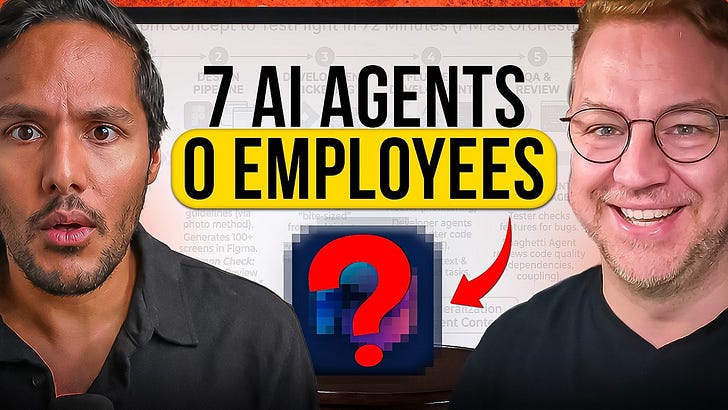
Gabor Meyer replicates a real-world software team by creating specialized AI agents for roles like CTO, System Analyst, and Designer. This structured approach, rather than using a single generalist AI, produces a higher quality, maintainable end product.
Related Insights
Developers are moving beyond the 'AI assistant' metaphor, building collections of specialized agents that function like employees in a digital organization, complete with roles like CEO. This trend explores the limits of autonomous AI coordination and minimal human involvement.
![Agent Building Trends [Operator Bonus Episode] thumbnail](https://d3t3ozftmdmh3i.cloudfront.net/staging/podcast_uploaded_nologo/41472609/41472609-1752234663609-8665756a468e5.jpg)
To build a useful multi-agent AI system, model the agents after your existing human team. Create specialized agents for distinct roles like 'approvals,' 'document drafting,' or 'administration' to replicate and automate a proven workflow, rather than designing a monolithic, abstract AI.
When each employee has a personal AI agent, the agents naturally adopt the specializations of their human counterparts. The head of growth's agent becomes the go-to expert on growth metrics, creating a parallel organization of specialized bots that mirrors the human org chart.

Building a single, all-purpose AI is like hiring one person for every company role. To maximize accuracy and creativity, build multiple custom GPTs, each trained for a specific function like copywriting or operations, and have them collaborate.

The strategy for a one-person AI-powered business isn't a single 'do-everything' agent. Instead, it's creating a team of specialized agents in different 'channels'—one for lead gen, one for blog content, one for analytics—mirroring a company's departmental structure.

The next evolution for autonomous agents is the ability to form "agentic teams." This involves creating specialized agents for different tasks (e.g., research, content creation) that can hand off work to one another, moving beyond a single user-to-agent relationship towards a system of collaborating AIs.

Separating AI agents into distinct roles (e.g., a technical expert and a customer-facing communicator) mirrors real-world team specializations. This allows for tailored configurations, like different 'temperature' settings for creativity versus accuracy, improving overall performance and preventing role confusion.
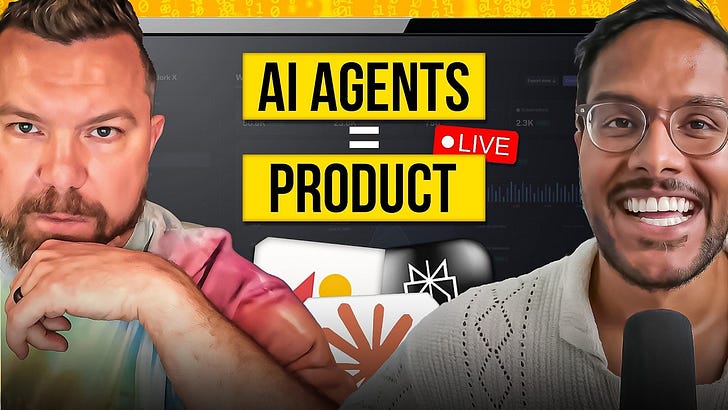
Instead of relying on a single, all-purpose coding agent, the most effective workflow involves using different agents for their specific strengths. For example, using the 'Friday' agent for UI tasks, 'Charlie' for code reviews, and 'Claude Code' for research and backend logic.

A single AI agent attempting multiple complex tasks produces mediocre results. The more effective paradigm is creating a team of specialized agents, each dedicated to a single task, mimicking a human team structure and avoiding context overload.
Instead of creating one monolithic "Ultron" agent, build a team of specialized agents (e.g., Chief of Staff, Content). This parallels existing business mental models, making the system easier for humans to understand, manage, and scale.