Get your free personalized podcast brief
We scan new podcasts and send you the top 5 insights daily.
During the GameStop saga, Robinhood's near-collapse revealed a critical lesson: acquiring millions of users in a few years doesn't build true brand equity. Unlike a 40-year-old company, they had no reservoir of trust to draw upon when crisis hit, putting the entire enterprise at risk.

Related Insights
While public crises like the GameStop frenzy are intense, they are acute. A prolonged market downturn is a "slow burn" that grinds down morale and tests a leader's resilience over hundreds of days, making it the more difficult challenge.

During the GameStop saga, Robinhood's factual explanation of a risk management decision was drowned out by the more compelling, false narrative of hedge fund collusion. This shows that in a crisis, a captivating story, true or not, will always beat dry facts in the court of public opinion.

In an ironic twist, Robinhood's own growth strategy contributed to the GameStop crisis. By giving away free shares of GameStop to new users in 2020, it seeded a massive retail investor base in the very stock that would later cause an unprecedented operational and reputational crisis for the company.
In the 2020-2022 era of cheap capital, brands could afford to "move fast and break things." Now, with tighter funding and a more complicated marketing mix, a solid brand strategy is a foundational requirement for survival, not a later-stage luxury.

Vlad Tenev identifies a key strategic challenge: growing with existing customers by adding complexity, while remaining attractive to new ones. He warns against becoming a "generational company" that only serves its initial user base, as this inevitably leads to decline when the next generation chooses other platforms.
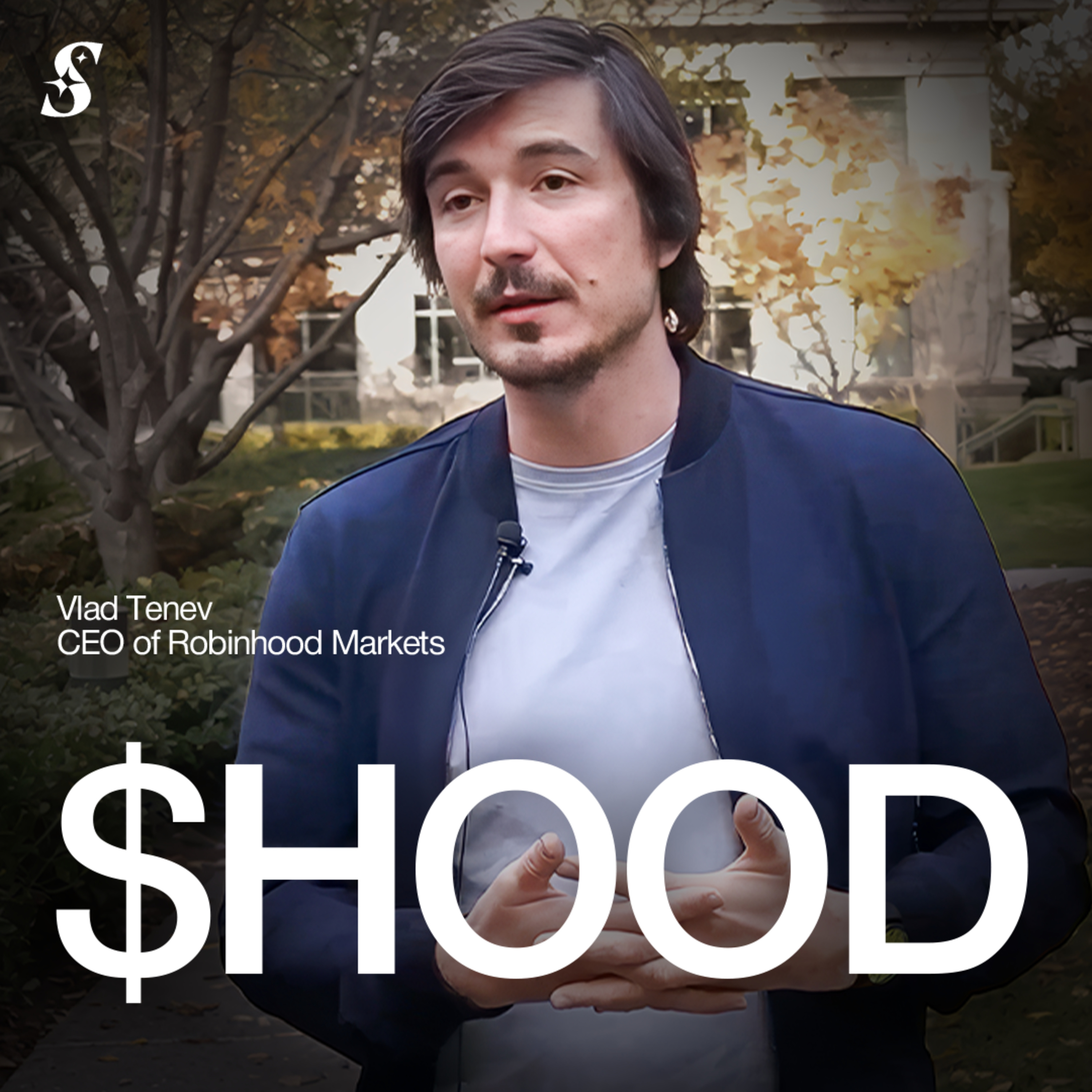
When Robinhood started receiving negative press, the team initially panicked. CEO Vlad Tenev's key learning was that this shift is inevitable for successful companies. He now advises founders to view negative press as a sign of relevance and to avoid overreacting, as few issues are truly existential.

CEO Vlad Tenev considers 2022 the "refounding" of Robinhood. The business model strategically shifted from catering primarily to first-time investors to focusing on more sophisticated, resilient active traders. This pivot drove a 5x increase in product velocity (from one to five major new products per year) and built a more cycle-agnostic business.
![Robinhood: Mobile First, Margins Later - [Business Breakdowns, EP.233] thumbnail](https://megaphone.imgix.net/podcasts/943e2e96-b60b-11f0-9176-5bf614c23973/image/074f062475dc76689adfc59319a4e04d.jpg?ixlib=rails-4.3.1&max-w=3000&max-h=3000&fit=crop&auto=format,compress)
Large brands are falling into the trap of "small brand envy," trying to replicate the playbooks of agile D2C startups. This is a flawed strategy, as the tactics required to maintain market leadership are fundamentally different from those used for initial growth.

Trust can be destroyed in a single day, but rebuilding it is a multi-year process with no shortcuts. The primary driver of recovery is not a PR campaign but a consistent, long-term track record of shipping product and addressing user complaints. There are very few "spikes upward" in regaining brand trust.

Robinhood CEO Vlad Tenev found the 2022 market downturn harder than the acute GameStop crisis. A short, intense fire (GameStop) is often easier to manage than a prolonged, grinding headwind that slowly erodes morale and requires a fundamental strategy rethink.