Get your free personalized podcast brief
We scan new podcasts and send you the top 5 insights daily.
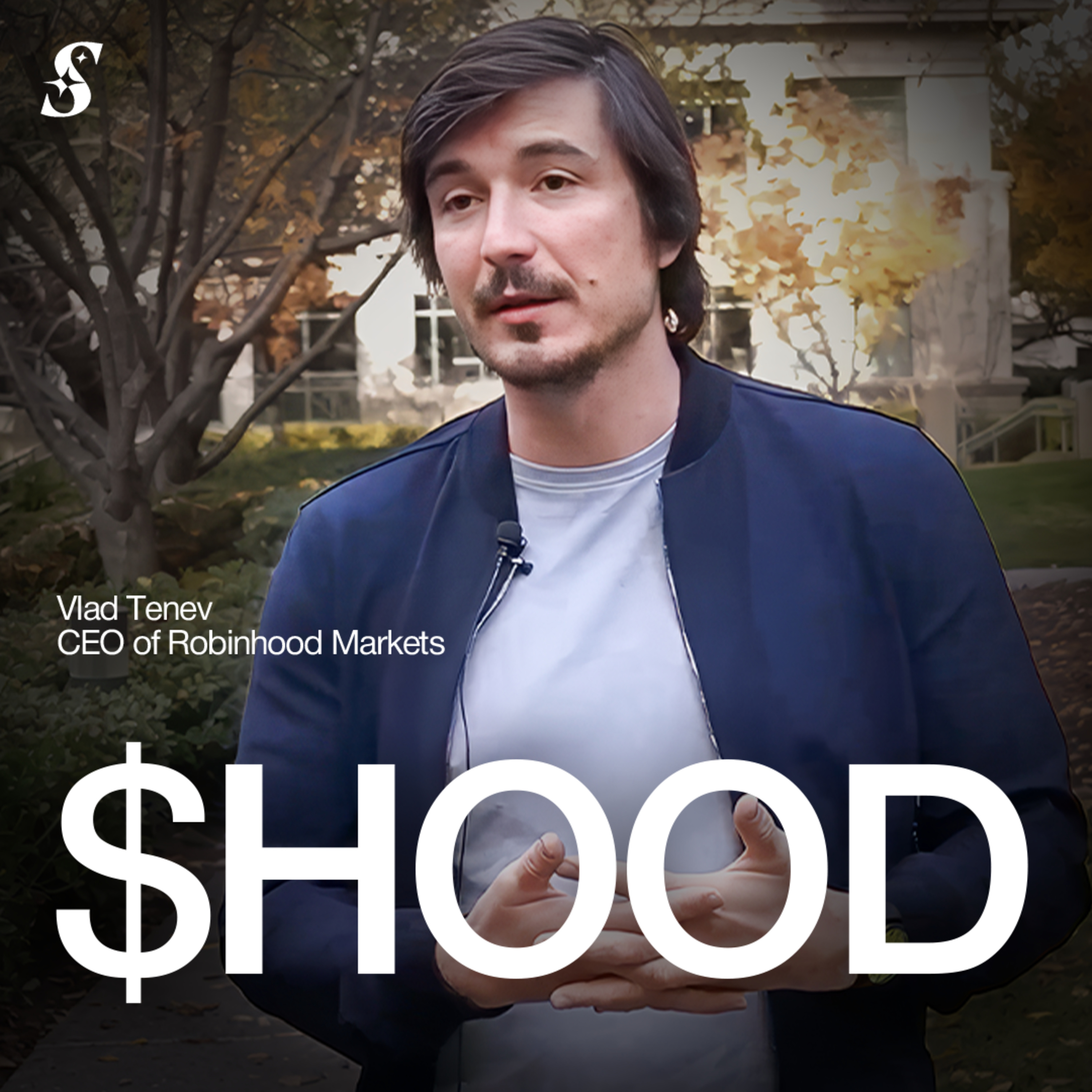
Vlad Tenev identifies a key strategic challenge: growing with existing customers by adding complexity, while remaining attractive to new ones. He warns against becoming a "generational company" that only serves its initial user base, as this inevitably leads to decline when the next generation chooses other platforms.
Related Insights
Despite later becoming a major player in crypto trading, Robinhood's CEO in 2017 viewed the space as a "different thing" with "different emphases." This serves as a powerful reminder for founders that markets evolve and today's academic curiosity can become tomorrow's core business line.

Robinhood's CEO contrasts the COVID-era retail trading craze, driven by 'ephemeral' theses like nostalgia, with today's more 'meaningful' activity. He observes that current retail investors are focused on substantive tech waves like AI, backing companies with real revenue, indicating a market maturation.
Unlike platforms attracting novice traders who often lose money and churn, IBKR's target is the sophisticated investor. This creates a natural growth funnel where successful traders "graduate" from simpler platforms like Robinhood, seeking IBKR's lower costs and advanced features as their needs and capital grow.
Robinhood's CEO Vlad Tenev reveals their strategy for maintaining design quality is to place the best craftspeople in leadership roles, rather than people who are just good managers. This ensures the leaders have trusted taste and keeps the focus on high-quality work, even during meetings.

Robinhood's average customer is 35, while Schwab's is ~55. With a projected $80 trillion intergenerational wealth transfer starting, Robinhood is uniquely positioned to capture these assets as its younger, digitally-native user base inherits wealth from parents who use legacy brokerages. This creates a massive, decades-long growth runway.
![Robinhood: Mobile First, Margins Later - [Business Breakdowns, EP.233] thumbnail](https://megaphone.imgix.net/podcasts/943e2e96-b60b-11f0-9176-5bf614c23973/image/074f062475dc76689adfc59319a4e04d.jpg?ixlib=rails-4.3.1&max-w=3000&max-h=3000&fit=crop&auto=format,compress)
Robinhood strategically expanded from a trading-focused, cyclical business into one with 11 revenue lines over $100M each. This pivot to a more diversified, "all-weather" model was a direct response to the risk of rising interest rates and market downturns, ensuring resilience beyond bull markets.
The values and tradeoffs that help a startup achieve initial growth (e.g., "move fast, break things") become liabilities with a large user base. Rapid growth requires revisiting core principles to focus on stability and trust.

The user journey isn't a linear progression from active trading to passive investing. Instead, as customers' wealth grows, they create distinct mental "buckets" for different goals (e.g., retirement, speculation). This requires financial platforms to offer a multi-product suite to capture total wallet share.

CEO Vlad Tenev considers 2022 the "refounding" of Robinhood. The business model strategically shifted from catering primarily to first-time investors to focusing on more sophisticated, resilient active traders. This pivot drove a 5x increase in product velocity (from one to five major new products per year) and built a more cycle-agnostic business.
Robinhood discovered a counter-intuitive marketing approach: older customers are attracted to the "cool, new thing," while younger, Gen Z customers respond more strongly to messages of stability and longevity. This inversion challenges traditional assumptions about generational marketing in finance.