Get your free personalized podcast brief
We scan new podcasts and send you the top 5 insights daily.
In an ironic twist, Robinhood's own growth strategy contributed to the GameStop crisis. By giving away free shares of GameStop to new users in 2020, it seeded a massive retail investor base in the very stock that would later cause an unprecedented operational and reputational crisis for the company.

Related Insights
Robinhood's strategy is not just to offer prediction markets as a standalone product. They serve as a top-of-funnel acquisition channel, attracting new, gaming-oriented users who can then be introduced to more stable, long-term products like retirement accounts and banking services.

Melvin Capital went from a top hedge fund to down 50% in two weeks because they underestimated the collective power of retail investors on platforms like Reddit. This event introduced a new, unpredictable risk factor into institutional investing, driven by online community sentiment.
While Coinbase's stock is tied to volatile crypto prices, Robinhood's shares tripled by diversifying and aggressively launching new products. Its prediction markets, launched in late 2024, capitalized on a favorable regulatory environment and became the company's fastest-growing business line in its history.

Robinhood amassed nearly a million users before launch without a marketing team. Their key tactic was a gamified waitlist where users could see their position in line and jump ahead by referring friends, creating a powerful and cost-free viral acquisition loop.

Robinhood's zero-commission model was viable because it sidestepped the massive customer acquisition costs (CAC) of its competitors. In 2016, incumbents like E-Trade were spending over $1,000 per customer on marketing, while Robinhood's viral growth made its CAC effectively zero.
During the GameStop saga, Robinhood's factual explanation of a risk management decision was drowned out by the more compelling, false narrative of hedge fund collusion. This shows that in a crisis, a captivating story, true or not, will always beat dry facts in the court of public opinion.
The recipe for a modern meme stock has two core ingredients: a troubled financial situation and deep nostalgia value. This combination, seen in companies like GameStop and Bed Bath & Beyond, creates the emotional pull needed for retail investors to rally behind a failing brand, turning it into a speculative asset.

Vlad Tenev identifies a key strategic challenge: growing with existing customers by adding complexity, while remaining attractive to new ones. He warns against becoming a "generational company" that only serves its initial user base, as this inevitably leads to decline when the next generation chooses other platforms.
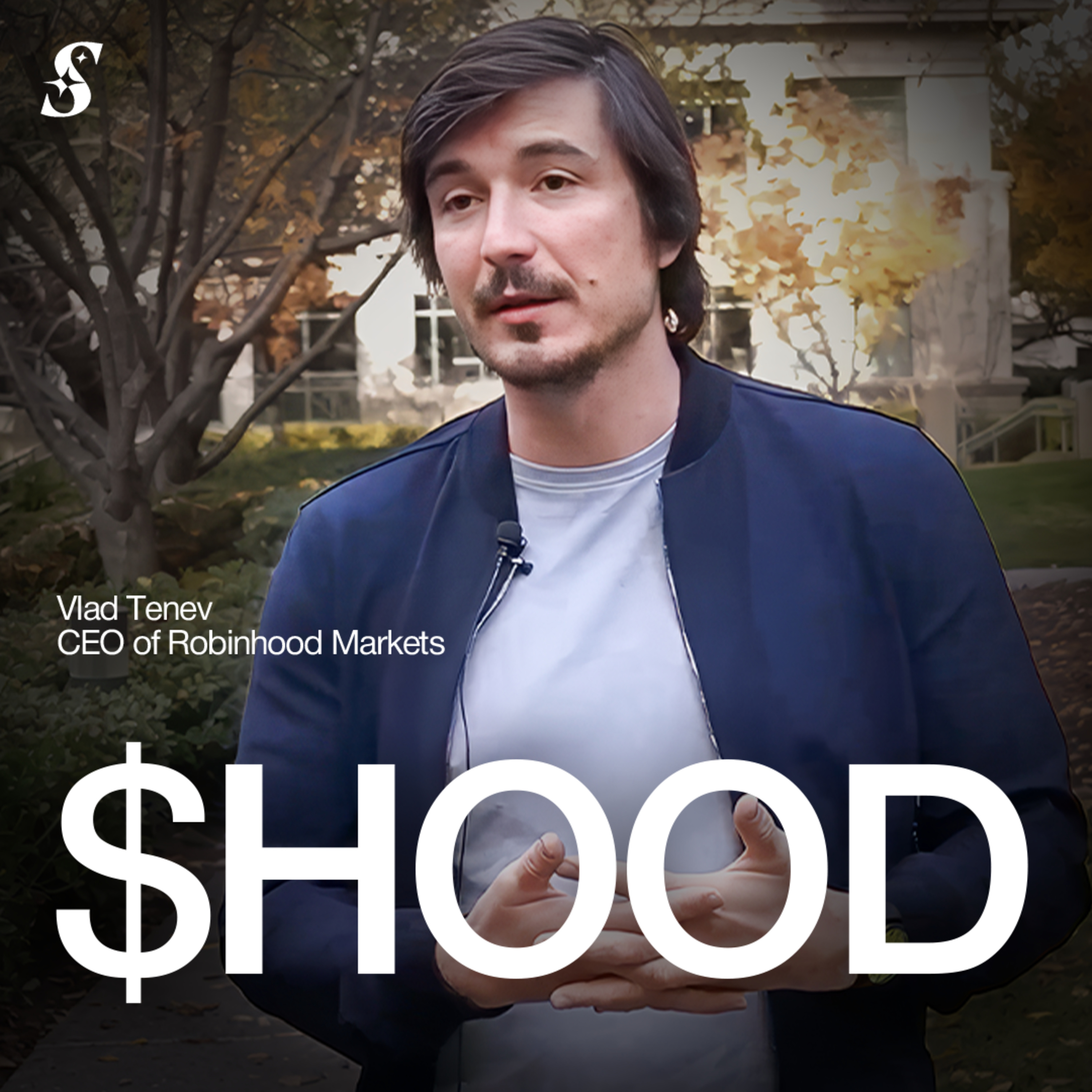
CEO Vlad Tenev considers 2022 the "refounding" of Robinhood. The business model strategically shifted from catering primarily to first-time investors to focusing on more sophisticated, resilient active traders. This pivot drove a 5x increase in product velocity (from one to five major new products per year) and built a more cycle-agnostic business.
![Robinhood: Mobile First, Margins Later - [Business Breakdowns, EP.233] thumbnail](https://megaphone.imgix.net/podcasts/943e2e96-b60b-11f0-9176-5bf614c23973/image/074f062475dc76689adfc59319a4e04d.jpg?ixlib=rails-4.3.1&max-w=3000&max-h=3000&fit=crop&auto=format,compress)
By creating a publicly traded fund of private startup stocks, Robinhood is opening the insulated world of private market valuations to retail investor sentiment. The fund's stock price could trade at a significant premium or discount to its underlying asset value, mirroring the behavior of meme stocks and creating valuation distortions.
