Get your free personalized podcast brief
We scan new podcasts and send you the top 5 insights daily.
Filippo Gori highlights the necessity of adapting leadership styles across regions. He contrasts London's understated communication, where things are implied, with New York's direct, "no mincing words" approach, emphasizing that a one-size-fits-all style is ineffective for global management.

Related Insights
An effective CEO maintains a consistent core philosophy but tailors the emotional and subjective components of the message for different audiences (e.g., engineering, sales, investors). This context-switching ensures everyone can hear and internalize the message in a way that resonates with them personally.
![Wolfgang Hammer - The Power of Story - [Invest Like the Best, EP.447] thumbnail](https://megaphone.imgix.net/podcasts/adaa55e4-bead-11f0-a5d6-a799713dc0a0/image/a76713c3a8fb2abf443f9164703734c5.jpg?ixlib=rails-4.3.1&max-w=3000&max-h=3000&fit=crop&auto=format,compress)
When managing teams across different cultures (e.g., US, Taiwan, Japan), a leader can bypass complex cultural frameworks by simply asking each person, 'What's the best way for me to deliver feedback to you?' This personalizes communication, eliminates guesswork, and demonstrates respect.

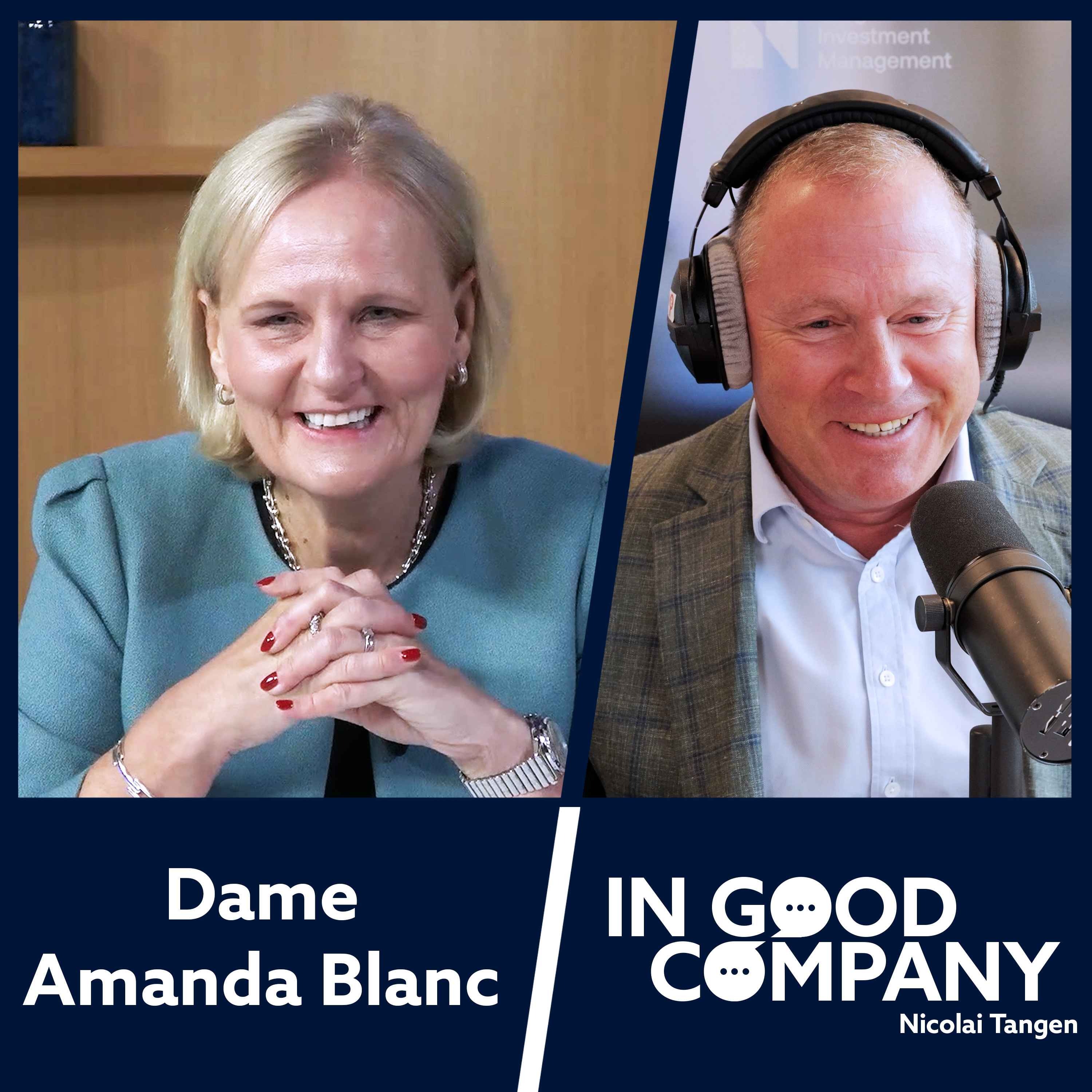
Amanda Blanc reconciles directness with the UK's typically non-confrontational business culture by emphasizing the need to be 'honest, but do it in a nice way.' Instead of bluntness or evasion, she uses constructive framing like, 'What could we do better?' This provides clarity and saves time without creating a harsh environment.
Avoid committing to a single leadership style. Instead, view different approaches (e.g., empathetic vs. autocratic) as tools in a toolkit. A skilled leader knows which tool is appropriate for a given situation, even if it's not their default preference.
An executive who moved from Chicago to Tokyo felt like an imposter and considered changing his leadership style. The best advice he received was the opposite: lean in *more* to who you are. Authenticity is a universal language that transcends cultural and professional barriers.

Effective leadership isn't about one fixed style. It’s about accurately reading a situation and adapting your approach—whether to be directive, empathetic, or demanding. Great leaders know that leading senior executives requires a different approach than managing new graduates.

When transitioning between companies, even within the same industry, don't assume shared vocabulary. At Pinterest, the speaker found Facebook's ad terminology (e.g., "pacing") differed from Google's ("budget throttle"). Effective leadership requires first acclimatizing to the new environment's language.

When a big-picture leader communicates with a detail-oriented team, friction is inevitable. Recognizing this as a clash of communication styles—not a personal failing or lack of competence—is the first step. Adaptation, rather than frustration, becomes the solution.

Filippo Gori emphasizes that Asia is not a single market. He describes it as a collection of diverse countries that happen to share a time zone, highlighting the vast differences in business culture between nations like Japan and Australia, which require different approaches.
To effectively lead multicultural teams, be authentic, as people can sense fakeness. However, you must adapt your communication delivery for different cultural contexts. Understanding nuances—like why a team in Japan might be silent on a call—is crucial for building trust and avoiding misinterpretation.
