Get your free personalized podcast brief
We scan new podcasts and send you the top 5 insights daily.
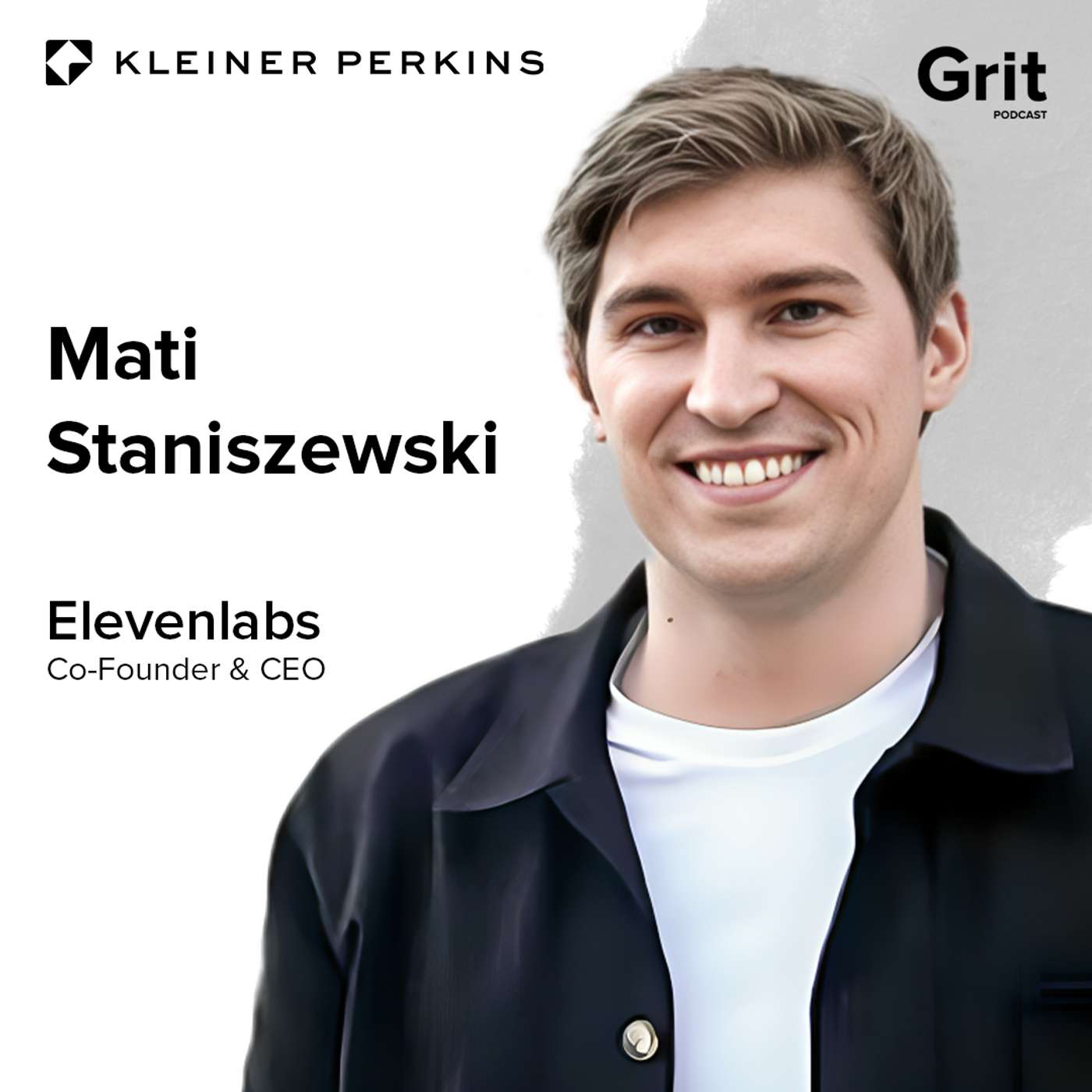
CEO Mati Staniszewski co-founded ElevenLabs after being frustrated by the Polish practice of dubbing foreign films with a single, monotonous voice. This hyper-specific, personal pain point became the catalyst for building a leading AI voice company, proving that massive opportunities can hide in niche problems.
Related Insights
When evaluating AI startups, don't just consider the current product landscape. Instead, visualize the future state of giants like OpenAI as multi-trillion dollar companies. Their "sphere of influence" will be vast. The best opportunities are "second-order" companies operating in niches these giants are unlikely to touch.

Contrary to the belief that deep-tech startups should be purely technical, ElevenLabs prioritized distribution early. Their first 10 hires included 3 people focused on go-to-market and growth, enabling both self-serve and sales-led motions from the start alongside foundational research.
By starting before the ChatGPT boom, ElevenLabs secured two key advantages: less competition for top research talent, allowing them to hire "true missionaries," and a crucial head start to develop their technology before the market became saturated with competitors.
ElevenLabs' defense against giants isn't just a better text-to-speech model. Their strategy focuses on building deep, workflow-specific platforms for agents and creatives. This includes features like CRM integrations and collaboration tools, creating a sticky application layer that a foundational model alone cannot replicate.
While customer feedback is vital for identifying problems (e.g., 40% of 911 calls are non-urgent), customers rarely envision the best solution (e.g., an AI voice agent). A founder's role is to absorb the problem, then push for the technologically superior solution, even if it initially faces resistance.

The company's founding insight stemmed from the poor quality of Polish movie dubbing, where one monotone voice narrates all characters. This specific, local pain point highlighted a universal desire for emotionally authentic, context-aware voice technology, proving that niche frustrations can unlock billion-dollar opportunities.

While large language models are a game of scale, ElevenLabs argues that specialized AI domains like audio are won through architectural breakthroughs. The key is not massive compute but a small pool of elite researchers (estimated at 50-100 globally). This focus on talent and novel model design allows a smaller company to outperform tech giants.
To avoid choosing between deep research and product development, ElevenLabs organizes teams into problem-focused "labs." Each lab, a mix of researchers, engineers, and operators, tackles a specific problem (e.g., voice or agents), sequencing deep research first before building a product layer on top. This structure allows for both foundational breakthroughs and market-facing execution.
To solve the problem that enterprise customers don't know how to choose a "good" voice, ElevenLabs created the role of a "voice sommelier." This expert voice coach works with clients to find the right voice for their brand and use case, effectively productizing the subjective process of voice selection and turning it into a sales asset.