Contrary to the belief that deep-tech startups should be purely technical, ElevenLabs prioritized distribution early. Their first 10 hires included 3 people focused on go-to-market and growth, enabling both self-serve and sales-led motions from the start alongside foundational research.
While many pursue human-indistinguishable AI, ElevenLabs' CEO argues this misses the point for use cases like customer support. Users prioritize fast, accurate resolutions over a perfectly "human" interaction, making the uncanny valley a secondary concern to core functionality.
ElevenLabs' CEO predicts AI won't enable a single prompt-to-movie process soon. Instead, it will create a collaborative "middle-to-middle" workflow, where AI assists with specific stages like drafting scripts or generating voice options, which humans then refine in an iterative loop.
ElevenLabs' defense against giants isn't just a better text-to-speech model. Their strategy focuses on building deep, workflow-specific platforms for agents and creatives. This includes features like CRM integrations and collaboration tools, creating a sticky application layer that a foundational model alone cannot replicate.
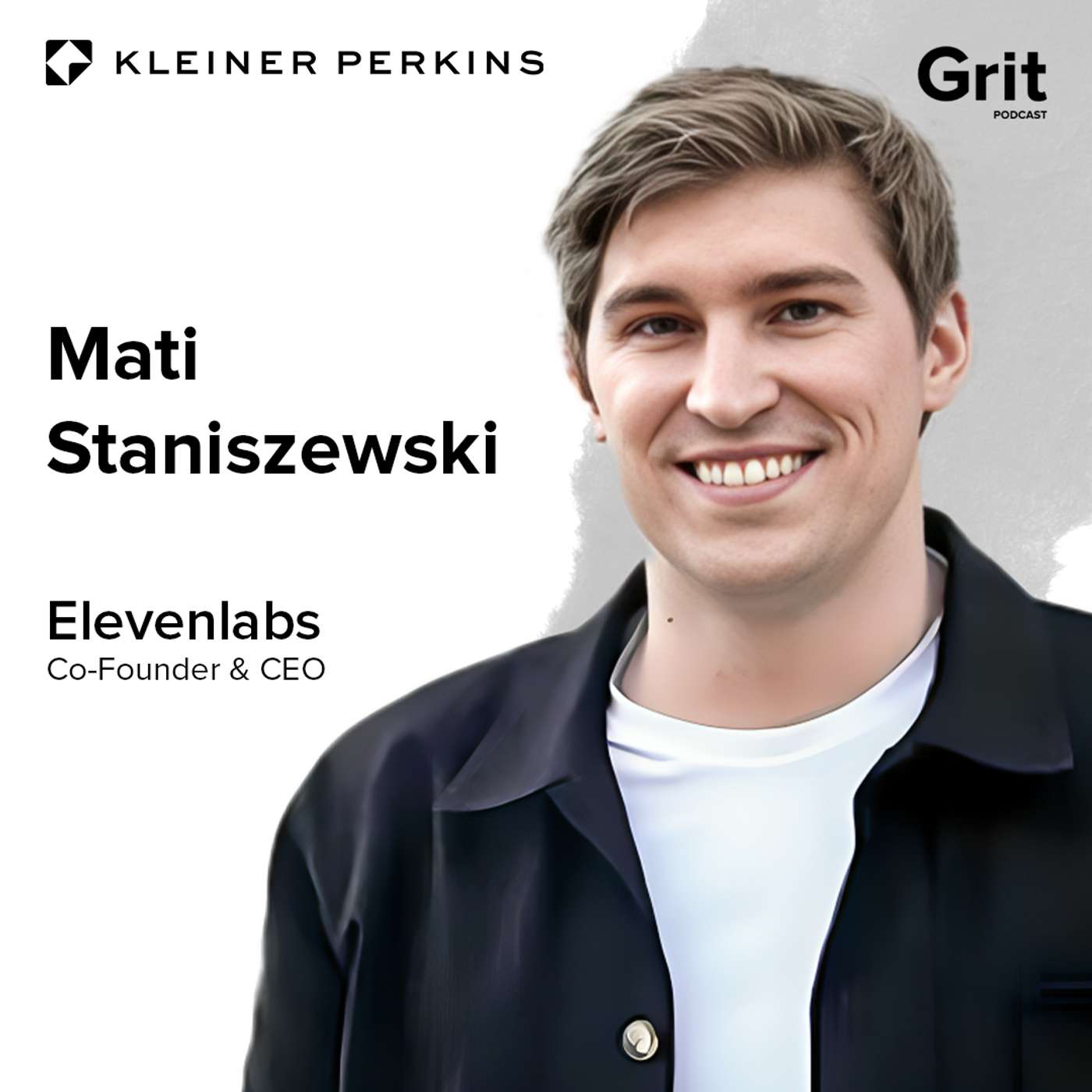
CEO Mati Staniszewski co-founded ElevenLabs after being frustrated by the Polish practice of dubbing foreign films with a single, monotonous voice. This hyper-specific, personal pain point became the catalyst for building a leading AI voice company, proving that massive opportunities can hide in niche problems.
By starting before the ChatGPT boom, ElevenLabs secured two key advantages: less competition for top research talent, allowing them to hire "true missionaries," and a crucial head start to develop their technology before the market became saturated with competitors.
ElevenLabs raised a $100M round entirely for employee secondaries. The CEO's rationale is that by allowing early team members to de-risk and realize financial gains, it solidifies their commitment to the company's multi-year mission rather than creating pressure for a quick exit.
The CEO of ElevenLabs recounts a negotiation where a research candidate wanted to maximize their cash compensation over three years. Their rationale: they believed AGI would arrive within that timeframe, rendering their own highly specialized job—and potentially all human jobs—obsolete.
A one-size-fits-all AI voice fails. For a Japanese healthcare client, ElevenLabs' agent used quick, short responses for younger callers but a calmer, slower style for older callers. This personalization of delivery, not just content, based on demographic context was critical for success.