Get your free personalized podcast brief
We scan new podcasts and send you the top 5 insights daily.
Latin America's strong legal commitment to national sovereignty and non-intervention was not an abstract ideal developed in a vacuum. It was a pragmatic and principled response, forged over centuries of living next to the United States as it expanded, conquered territory, and asserted its dominance across the hemisphere.

Related Insights
The U.S. has a historical pattern of turning its focus back to the Western Hemisphere after periods of global overreach or crisis, such as after the Great Depression, Vietnam, and the War on Terror. This retreat is a way to reassert power in its immediate sphere of influence when its global ambitions falter.
Theodore Roosevelt's 1904 corollary claiming "international police power" was often a reaction to "chronic wrongdoing" in Latin America. Ironically, this instability was frequently instigated by the predatory actions of U.S. banks, corporations, and mercenaries, forcing the U.S. government to intervene and settle problems that private American interests had created.
In 1933, FDR's "Good Neighbor Policy" reversed the interventionist stance of the Monroe Doctrine. By recognizing Latin American sovereignty, he built crucial goodwill and continental unity against rising fascism. This diplomatic move ultimately strengthened U.S. power by making it more efficient and securing regional allies for WWII.
The original Monroe Doctrine was a defensive policy born from a position of weakness relative to European powers. Reframing it today as a core U.S. foreign policy pillar represents a significant scaling down of American global ambition, not a return to greatness.

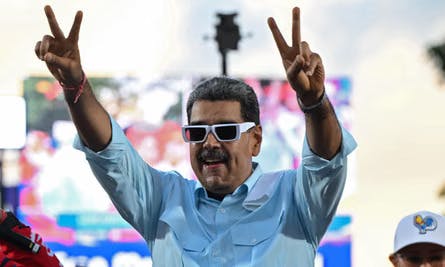
Despite the public focus on oil, the primary goal of removing Maduro was likely to demonstrate U.S. primacy in the Western Hemisphere. The action serves as a strong signal that the U.S. is willing to act aggressively to enforce its influence in the region.
The Western Hemisphere was the initial testing ground where the United States first learned to project its financial, cultural, and military power beyond its own borders. This experience in Latin America was central to the U.S. developing its identity and capabilities as an overseas power.
Initially just a few cautious paragraphs in an 1823 State of the Union address, the "Monroe Doctrine" was never voted on or ratified. It was only elevated to the status of a formal doctrine decades later through political interpretation and gradual incorporation into customary law, driven by assertions of U.S. power.
The conflict is not primarily about oil or drugs, but a strategic move to reassert U.S. dominance in the Western Hemisphere. As China solidifies its influence in the East, the U.S. is 'drawing a line' to counter China's partnerships (like with Venezuela) in its own sphere of influence.
Rather than a set of absolute rules, international law acts as a "moral venue" where principles are created and contested through power relations. It provides a normative framework that allows weaker nations to argue their case and defend themselves against the unilateral actions of more powerful countries.
The administration's aggressive posture in Latin America is framed not by traditional security interests but by a desire to curb migration. This reflects a core white nationalist belief that demographic shifts pose an existential threat to the US, making immigration control a primary national security objective, viewing Venezuela as an exporter of people, not oil.