Get your free personalized podcast brief
We scan new podcasts and send you the top 5 insights daily.
Contrary to expectations of a high-tech war, the conflict in Ukraine demonstrates enduring principles of warfare. The superiority of defense over offense, the difficulty of breakthroughs without air power, and the tendency toward attrition are all classic lessons that would be recognizable to strategists from past major conflicts.

Related Insights
The Ukrainian conflict demonstrates the power of a fast, iterative cycle: deploy technology, see if it works, and adapt quickly. This agile approach, common in startups but alien to traditional defense, is essential for the U.S. to maintain its technological edge and avoid being outpaced.

The conflict in Ukraine exposed the vulnerability of expensive, "exquisite" military platforms (like tanks) to inexpensive technologies (like drones). This has shifted defense priorities toward cheap, mass-producible, "attritable" systems. This fundamental change in product and economics creates a massive opportunity for startups to innovate outside the traditional defense prime model.
Contrary to popular hope, a scenario where Ukraine fully expels Russia and regains all territory is a 'total fantasy.' Based on historical precedent, the war has only two realistic outcomes: a Ukrainian collapse under sustained pressure or a compromise peace that grants Russia de facto control of some territory.

Despite advancements in AI, cyber, and air power, the fundamental nature of warfare remains unchanged. To defend, protect, and secure territory for civilization, a physical presence is non-negotiable. You cannot achieve enduring effects from a distance; you must put "young men in the dirt."

Ukraine's most realistic theory of success is not reclaiming all territory militarily, but leveraging its advantages to stabilize the front and inflict unsustainable casualties and economic costs on Russia. This strategy aims to make the war so futile for Moscow that it forces a favorable negotiated settlement.

Despite perceived advantages, Russia's military performance in 2025 was poor. It achieved only incremental gains at the cost of soaring casualties, pushing their manpower losses beyond recruitment rates. This trend suggests that time is increasingly working against Moscow's ability to sustain offensive operations.
Advanced sensors, drones, and satellites make it nearly impossible for either side in the Ukraine war to concentrate large forces without being immediately detected and destroyed. This technological shift enforces a static, sluggish front line characterized by small, dismounted infantry movements.
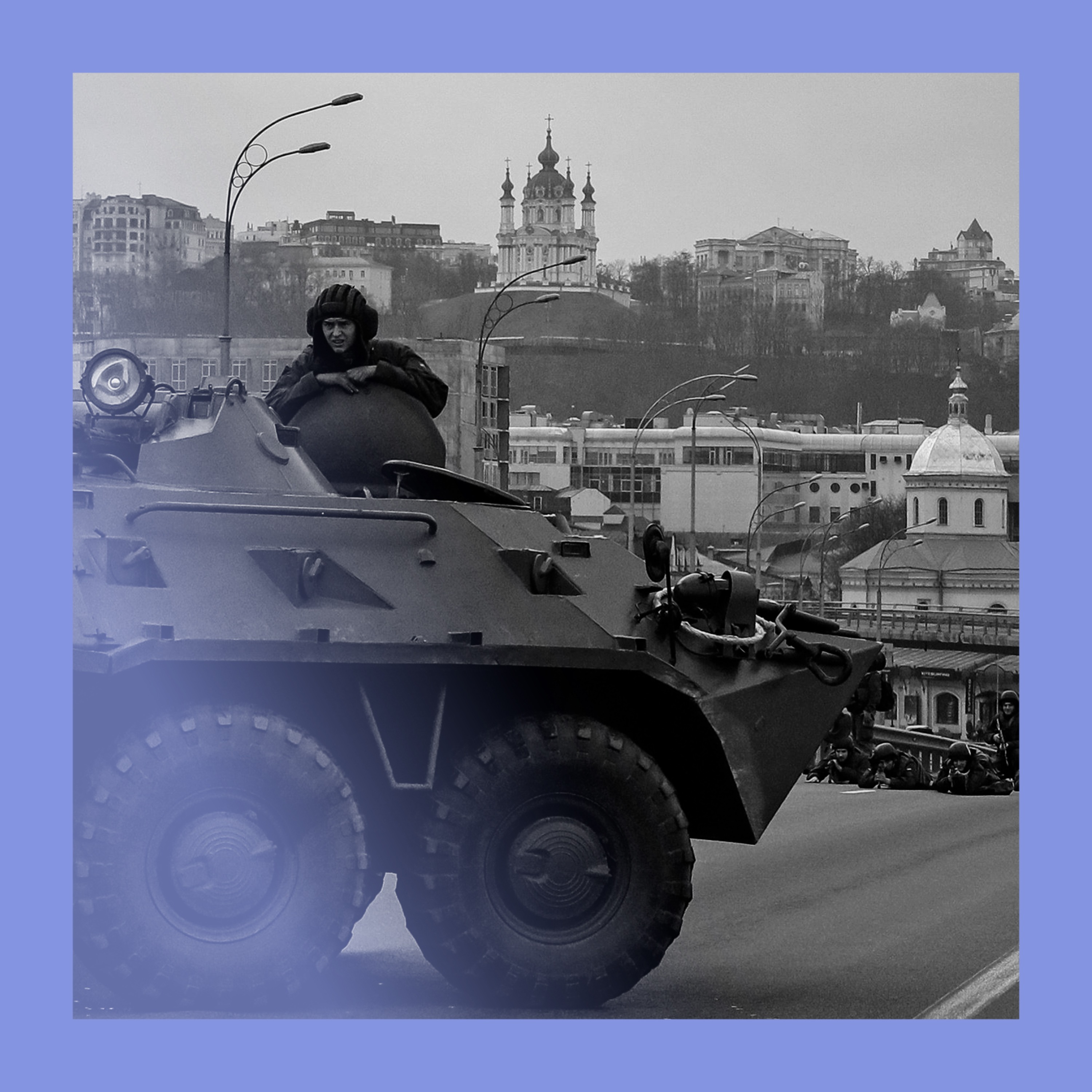
The effectiveness of Ukrainian defense technology comes from its ability to dramatically lower the 'cost per shot' by orders of magnitude compared to legacy systems. This demonstrates that financial efficiency and adaptability, not just advanced features, are decisive on the modern battlefield.

The US military's 30-year strategy, born from the Gulf War, of relying on small numbers of technologically superior weapons is flawed. The war in Ukraine demonstrates that protracted, industrial-scale conflicts are won by mass and production volume, not just technological sophistication.

Before the 2022 invasion, Russia seemed invincible after small-scale successes. However, the large-scale Ukraine war revealed a critical weakness: a complete lack of logistics. As military professionals know, logistics—maintenance, supply lines, support crews—are what enable major wars. Russia's failure in this area proved its military is not a true great power machine.