Get your free personalized podcast brief
We scan new podcasts and send you the top 5 insights daily.
Instead of competing in the high-risk race to build autonomous vehicles, Uber is creating the ecosystem around them. By offering services like insurance, data, and fleet support to all AV companies, Uber positions itself to profit regardless of which car manufacturer wins.

Related Insights
After a fatal accident with its own AV program, Uber pivoted. Instead of building cars, its long-term strategy is to be the essential demand-generation platform for every AV manufacturer, aiming to maximize the utilization and revenue of any "box with wheels" from any company.

Autonomous vehicle technology will likely become a commodity layer, with most manufacturers providing their cars to existing ride-sharing networks like Uber and Lyft. Only a few companies like Tesla have the brand and scale to pursue a vertically-integrated, closed-network strategy.
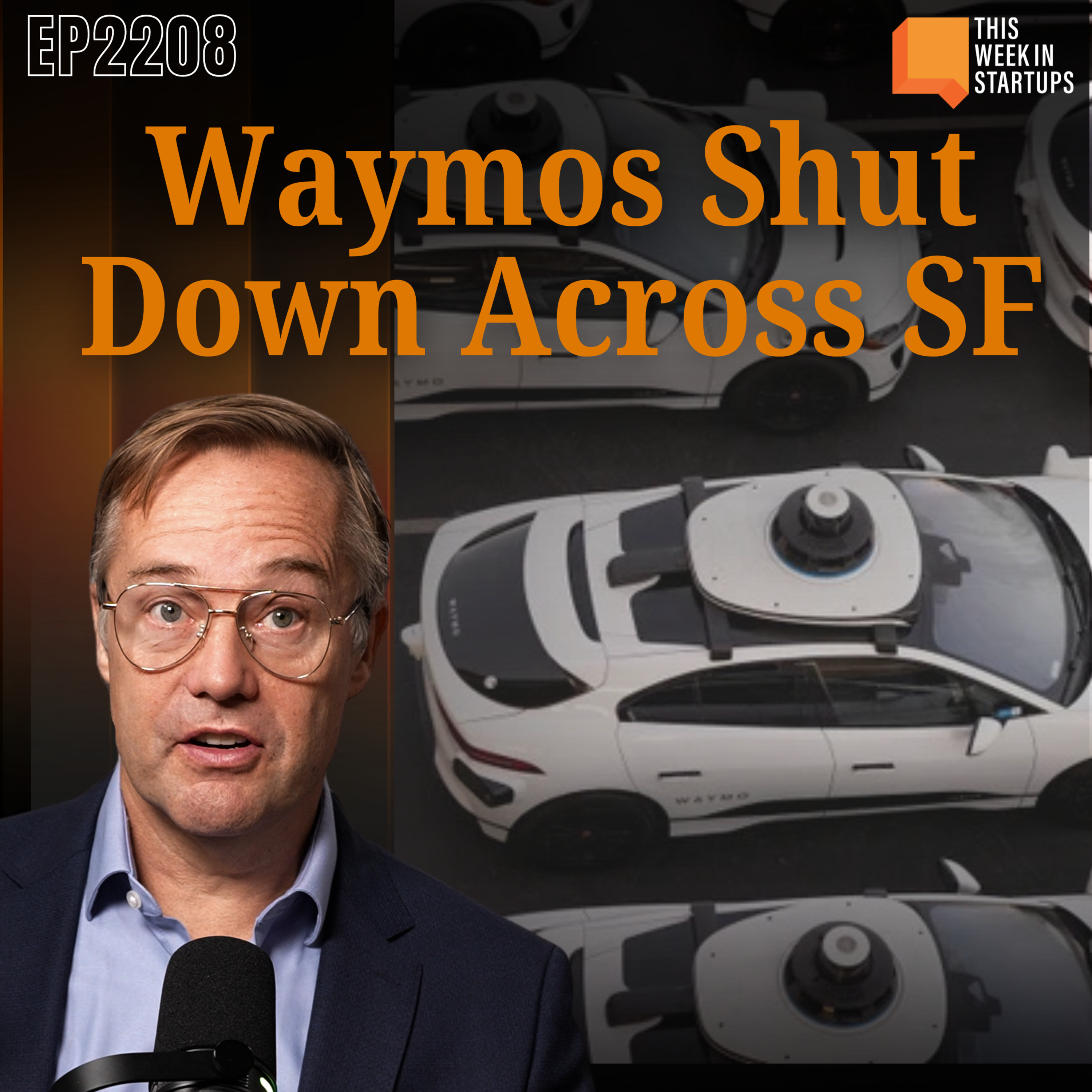
After selling its internal self-driving unit, Uber has successfully re-entered the market by becoming a network orchestrator instead of a builder. By partnering with Nvidia for the hardware/cloud stack and various carmakers, Uber leverages its massive user base and data to create a powerful ecosystem without bearing all the R&D costs.

To encourage OEMs like Lucid to build autonomous vehicles, Uber plans to make offtake commitments and even purchase some cars itself. This strategic, short-term investment aims to prove the economic model and build market confidence.

The market's bear case on Uber centers on the threat from autonomous vehicles (AVs). The contrarian view is that Uber will thrive by becoming the essential hybrid network. AV fleets alone won't be able to satisfy peak demand, forcing them to partner with Uber's existing driver network to provide a complete service.

Instead of building its own AV tech or committing to one exclusive partner, Lyft is embracing a 'polyamorous' approach by working with multiple AV companies like Waymo, May Mobility, and Baidu. This de-risks their strategy, positioning them as an open platform that can integrate the best technology as it emerges, rather than betting on a single winner.

Uber has no intention of owning massive AV fleets. Instead, it plans to prove the revenue model for robo-taxis and then enable financial institutions and private equity firms to purchase and operate the fleets on its platform, similar to how REITs own hotels managed by Marriott.
AV companies naturally start in dense, wealthy areas. Uber sees an opportunity to solve this inequality by leveraging its existing supply and demand data in underserved areas. This allows it to make AV operations economically viable in transportation deserts, accelerating equitable access to the technology.
CEO David Risher describes Lyft's autonomous vehicle strategy as "polyamorous." Instead of betting on one technology partner, they are integrating with multiple AV companies like Waymo, May Mobility, and Baidu. This approach positions Lyft as the essential network for any AV provider to access riders, regardless of who builds the best car.
Contrary to the belief that AVs will simply replace human drivers, Uber is seeing markets with autonomous vehicles grow faster overall. The novelty of the product attracts a new customer segment, expanding the total addressable market rather than just substituting existing rides.
