By integrating Starlink satellite connectivity directly into its cars, Tesla can solve for internet outages that cripple competitors. This creates a powerful moat, ensuring its fleet remains operational and potentially creating a new licensable mesh network for other vehicles.
The reluctance to adopt always-on recording devices and in-home robots will fade as their life-saving applications become undeniable. The ability for a robot to monitor a baby's breathing and perform emergency procedures will ultimately outweigh privacy concerns, driving widespread adoption.
An analysis of AI model performance shows a 2-2.5x improvement in intelligence scores across all major players within the last year. This rapid advancement is leading to near-perfect scores on existing benchmarks, indicating a need for new, more challenging tests to measure future progress.
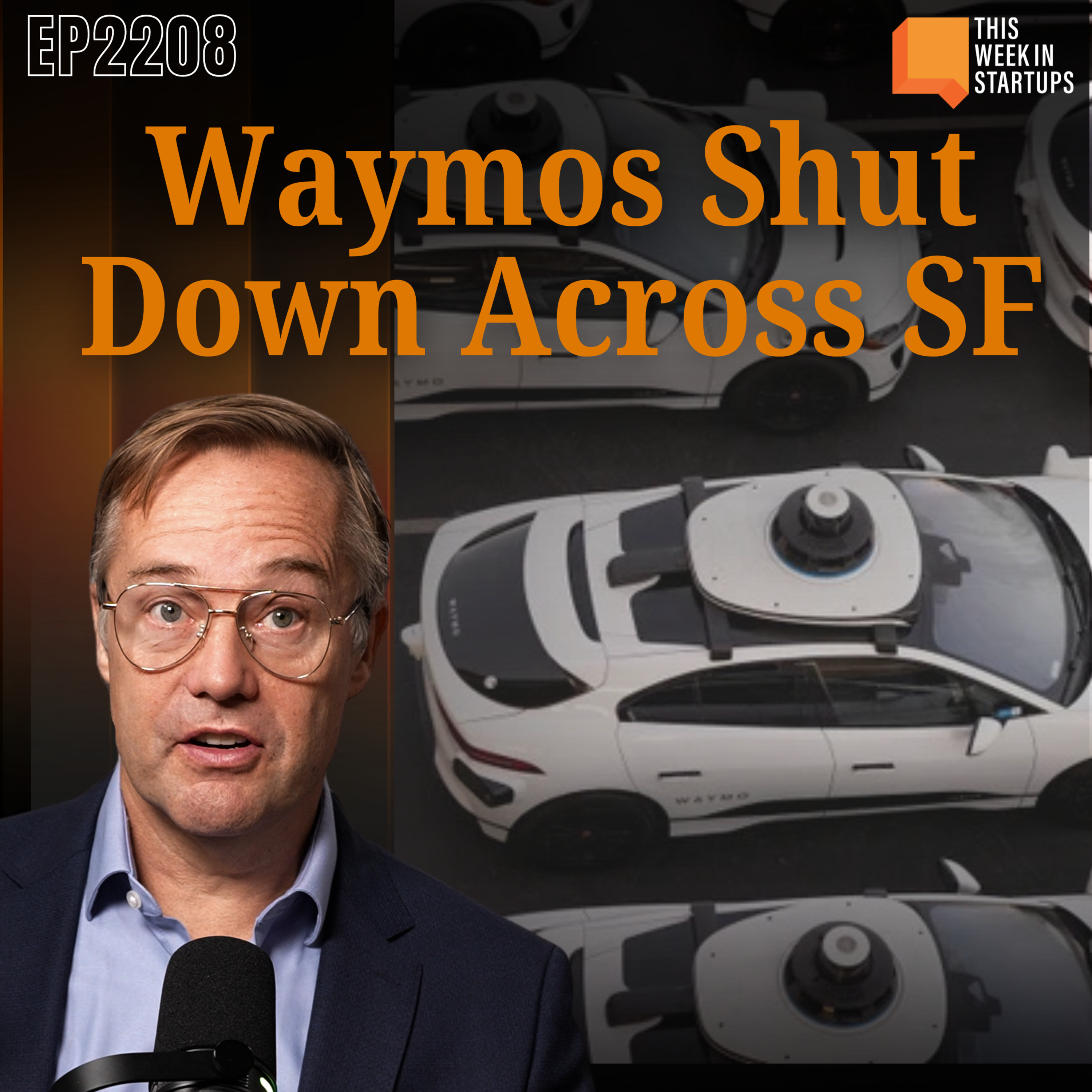
Waymo vehicles froze during a San Francisco power outage because traffic lights went dark, causing gridlock. This highlights the vulnerability of current AV systems to real-world infrastructure failures and the critical need for protocols to handle such "edge cases."
M&A activity is not constant; it ebbs and flows with the political climate. Administrations perceived as "anti-M&A" can significantly slow deals. Founders looking for a strategic acquisition should consider the current political cycle as a key factor in their exit timing.
Rapid advances in Tesla's Optimus robot suggest the company's ultimate focus is on humanoid robotics, not electric vehicles. This pivot could redefine Tesla's identity, making cars a footnote in its history, much like Sony's early products are forgotten in favor of its iconic consumer electronics.
Autonomous vehicle technology will likely become a commodity layer, with most manufacturers providing their cars to existing ride-sharing networks like Uber and Lyft. Only a few companies like Tesla have the brand and scale to pursue a vertically-integrated, closed-network strategy.
As tech giants like Google and Amazon assemble the key components of the autonomy stack (compute, software, connectivity), the real differentiator becomes the ability to manufacture cars at scale. Tesla's established manufacturing prowess is a massive advantage that others must acquire or build to compete.
Ad-tech startup Lumix provides ad-displaying delivery boxes to gig workers. Their business model is protected by labor laws that prevent platforms like DoorDash from providing such equipment themselves, as it would risk classifying their drivers as employees. This legal nuance creates a durable competitive advantage.
During a San Francisco power outage, Waymo's map-based cars failed while Teslas were reportedly unaffected. This suggests that end-to-end AI systems are less brittle and better at handling novel "edge cases" than more rigid, heuristic-based autonomous driving models.
As autonomous vehicles drop the per-mile cost of ride-sharing to under $1, it will become cheaper than owning a car. This price drop will induce massive demand, shifting most transportation to these networks and creating a market exponentially larger than the current industry.