Get your free personalized podcast brief
We scan new podcasts and send you the top 5 insights daily.
The market's bear case on Uber centers on the threat from autonomous vehicles (AVs). The contrarian view is that Uber will thrive by becoming the essential hybrid network. AV fleets alone won't be able to satisfy peak demand, forcing them to partner with Uber's existing driver network to provide a complete service.

Related Insights
After a fatal accident with its own AV program, Uber pivoted. Instead of building cars, its long-term strategy is to be the essential demand-generation platform for every AV manufacturer, aiming to maximize the utilization and revenue of any "box with wheels" from any company.

Autonomous vehicle technology will likely become a commodity layer, with most manufacturers providing their cars to existing ride-sharing networks like Uber and Lyft. Only a few companies like Tesla have the brand and scale to pursue a vertically-integrated, closed-network strategy.
After selling its internal self-driving unit, Uber has successfully re-entered the market by becoming a network orchestrator instead of a builder. By partnering with Nvidia for the hardware/cloud stack and various carmakers, Uber leverages its massive user base and data to create a powerful ecosystem without bearing all the R&D costs.

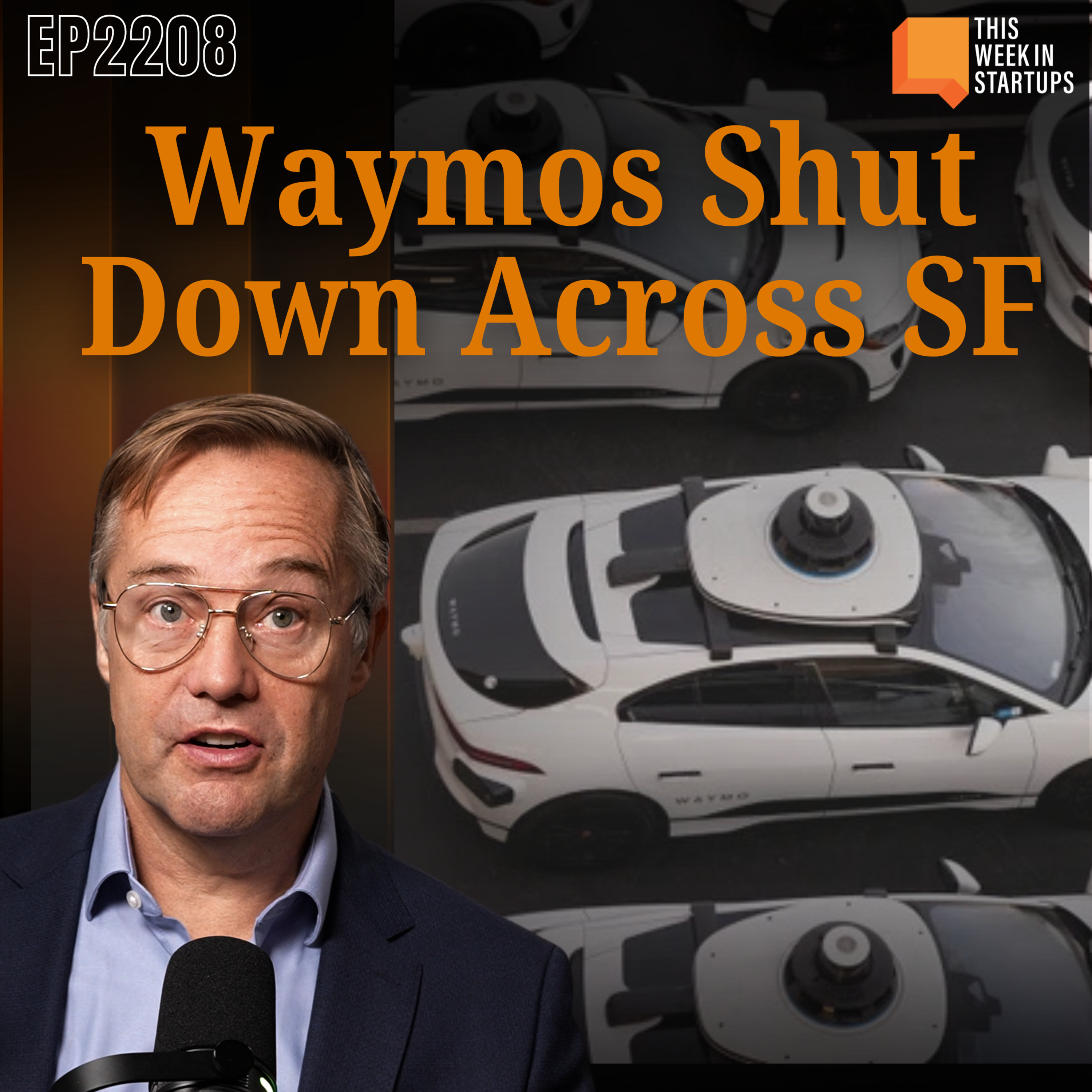
Despite partnerships, major AV players like Tesla and Waymo are building independent networks. This direct-to-consumer approach could relegate current rideshare leaders Uber and Lyft to a minor role in the autonomous future, capturing less than a third of the new market they currently dominate.

While many see autonomous vehicles as a threat to Uber's ride-hailing, its delivery segment may be more important and defensible. Automating last-mile delivery of goods from varied locations is significantly more complex and less economical than automating passenger transport, providing a durable moat.

ARK Invest projects an $8-10 trillion market for autonomous ride-hailing, dwarfing the current ~$60B market of Uber and Lyft. This isn't just about replacing drivers; it's about a 4x cost reduction per mile (from ~$1.10 to $0.25). This dramatic price drop will absorb the entire transportation market, not just the existing ride-hailing segment.

The transition to AVs won't be a sudden replacement of human drivers. Uber's CEO argues that for the next two decades, a hybrid network where humans and AVs coexist will be a more efficient and effective solution, allowing for a responsible transition while serving diverse customer preferences.
Uber has no intention of owning massive AV fleets. Instead, it plans to prove the revenue model for robo-taxis and then enable financial institutions and private equity firms to purchase and operate the fleets on its platform, similar to how REITs own hotels managed by Marriott.
AV companies naturally start in dense, wealthy areas. Uber sees an opportunity to solve this inequality by leveraging its existing supply and demand data in underserved areas. This allows it to make AV operations economically viable in transportation deserts, accelerating equitable access to the technology.
Dominant aggregator platforms are often misjudged as being vulnerable to technological disruption (e.g., Uber vs. robo-taxis). Their real strength lies in their network, allowing them to integrate and offer new technologies from various providers, thus becoming beneficiaries rather than victims of innovation.
