Get your free personalized podcast brief
We scan new podcasts and send you the top 5 insights daily.
Contrary to the belief that AVs will simply replace human drivers, Uber is seeing markets with autonomous vehicles grow faster overall. The novelty of the product attracts a new customer segment, expanding the total addressable market rather than just substituting existing rides.

Related Insights
As autonomous vehicles drop the per-mile cost of ride-sharing to under $1, it will become cheaper than owning a car. This price drop will induce massive demand, shifting most transportation to these networks and creating a market exponentially larger than the current industry.
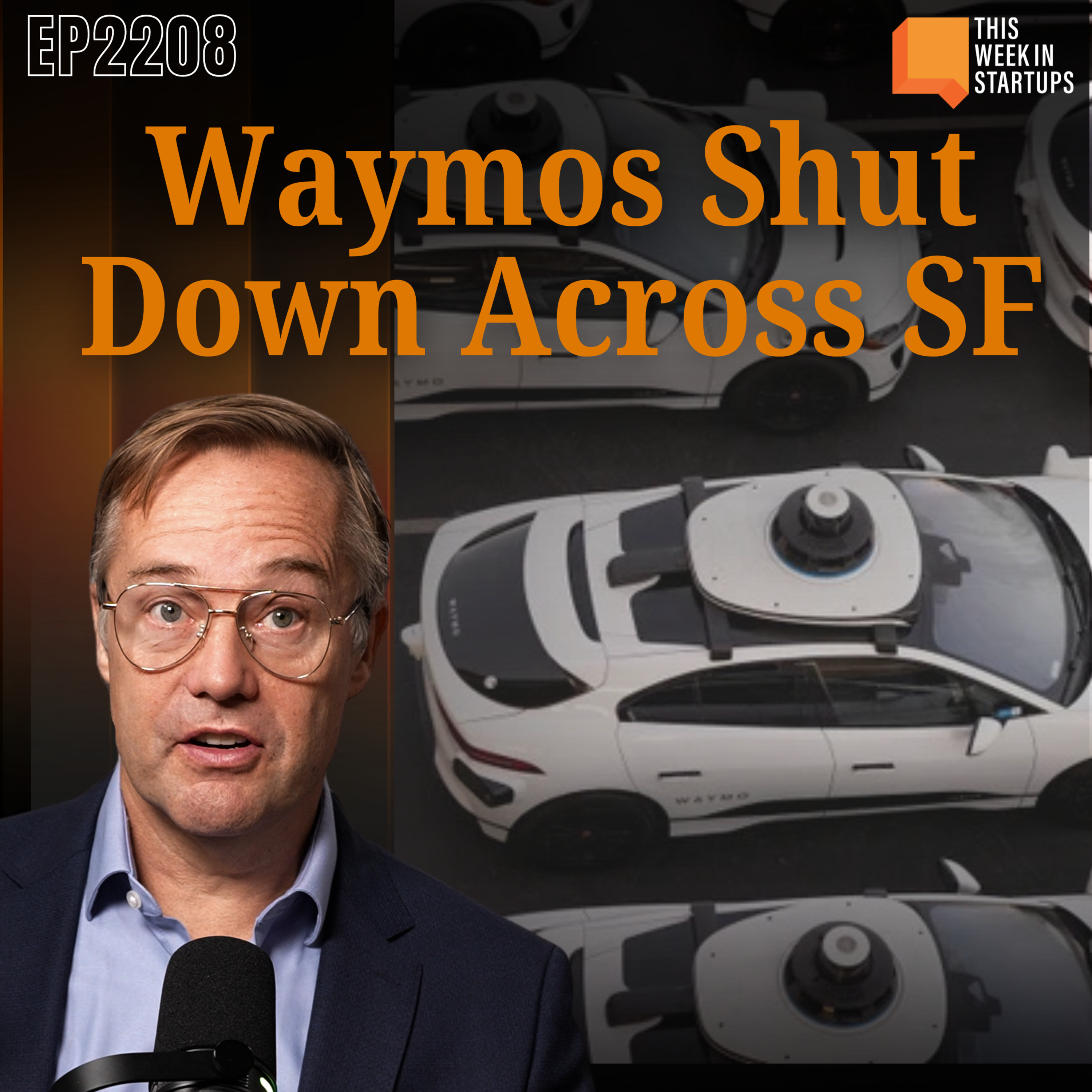
After a fatal accident with its own AV program, Uber pivoted. Instead of building cars, its long-term strategy is to be the essential demand-generation platform for every AV manufacturer, aiming to maximize the utilization and revenue of any "box with wheels" from any company.

Autonomous vehicle technology will likely become a commodity layer, with most manufacturers providing their cars to existing ride-sharing networks like Uber and Lyft. Only a few companies like Tesla have the brand and scale to pursue a vertically-integrated, closed-network strategy.
While many see autonomous vehicles as a threat to Uber's ride-hailing, its delivery segment may be more important and defensible. Automating last-mile delivery of goods from varied locations is significantly more complex and less economical than automating passenger transport, providing a durable moat.
Contrary to displacement fears, driverless taxis like Waymo are carving out a new, expensive market segment. They cater to a different customer base—likely former private car users—thereby increasing overall demand for ride services rather than just cannibalizing the traditional taxi market.

The market's bear case on Uber centers on the threat from autonomous vehicles (AVs). The contrarian view is that Uber will thrive by becoming the essential hybrid network. AV fleets alone won't be able to satisfy peak demand, forcing them to partner with Uber's existing driver network to provide a complete service.

ARK Invest projects an $8-10 trillion market for autonomous ride-hailing, dwarfing the current ~$60B market of Uber and Lyft. This isn't just about replacing drivers; it's about a 4x cost reduction per mile (from ~$1.10 to $0.25). This dramatic price drop will absorb the entire transportation market, not just the existing ride-hailing segment.

The transition to AVs won't be a sudden replacement of human drivers. Uber's CEO argues that for the next two decades, a hybrid network where humans and AVs coexist will be a more efficient and effective solution, allowing for a responsible transition while serving diverse customer preferences.
CEO David Risher claims data refutes the idea that AVs displace human drivers. Instead, Lyft's growth is faster in cities with AVs like San Francisco and Phoenix. He suggests AVs "oxygenate the market," expanding overall demand for ridesharing rather than just cannibalizing existing rides.

AV companies naturally start in dense, wealthy areas. Uber sees an opportunity to solve this inequality by leveraging its existing supply and demand data in underserved areas. This allows it to make AV operations economically viable in transportation deserts, accelerating equitable access to the technology.