Get your free personalized podcast brief
We scan new podcasts and send you the top 5 insights daily.
The British-led Joint Expeditionary Force (JEF) is considered the most viable, immediate alternative to a US-led NATO. As an existing coalition with a ready headquarters, it can act quickly without the unanimous consent required from all NATO members, sidestepping a key institutional weakness.

Related Insights
European military officials are secretly developing contingency plans for a US-less NATO but are deliberately quashing public discussion. They fear that any open talk of European self-reliance would provide political justification for a US president to accelerate a withdrawal from the alliance.
Even though a US law requires Senate approval for a formal NATO withdrawal, a president can effectively neutralize the alliance's operational capacity by unilaterally denying funds, withdrawing American troops, and removing the US commander, thus rendering it powerless without officially leaving.
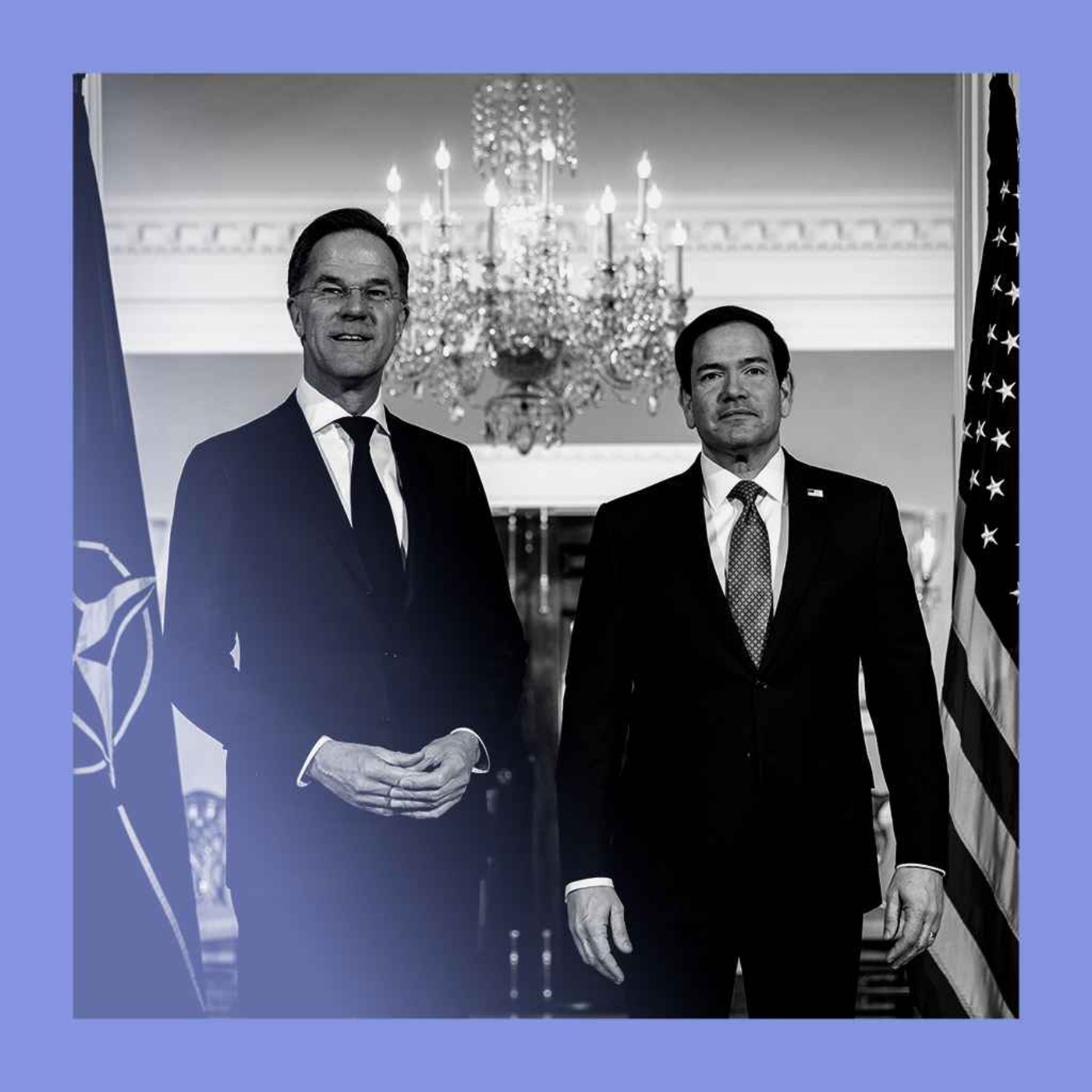
NATO's structure relies on allies following an American general's command under Article 5. After witnessing the "horrible, catastrophic failure" of US strategy in Iran, European nations will no longer entrust their militaries to US leadership, making the alliance functionally obsolete.

Due to perceived US instability, traditional allies in Europe and Canada are proactively diversifying their partnerships. They are creating alternative trade and security networks (e.g., EU-India, Canada-EU) to reduce their dependence on the United States.

With the U.S. stepping back from its traditional leadership role, European countries are creating new, direct alliances to ensure their own security. A notable example is the emerging UK-Scandinavia-Baltic-Poland axis, which signals a fundamental shift in the continent's geopolitical architecture away from a singular reliance on Washington.

Beyond providing military capabilities, America's most crucial role in NATO is as a unifying leader that prevents historical rivals like France and Germany from squabbling over command. A US withdrawal threatens this operational harmony far more than the simple loss of resources.
President Macron is shifting French doctrine by inviting countries like Germany and Poland into strategic nuclear discussions. This is not a rival to NATO, but a parallel security arrangement designed as a hedge against uncertainty over America's commitment to European defense.

The backbone of NATO is not just US military might, but European trust in it. A dispute initiated by the US against allies is more existentially dangerous than past internal conflicts or external threats because it directly undermines the core assumption of mutual defense.

The real consequence of the diplomatic friction between the German Chancellor and the US President is not the physical withdrawal of troops, but the erosion of perceived dependability. An alliance lacking coherence and consistency loses its deterrent value, making military assets like troops and missiles less effective because the credibility behind them is weakened.

The core of U.S. global power relative to its adversaries is not its standalone might, but its network of alliances. The U.S. is stronger than China because of its East Asian allies and stronger than Russia because of NATO. Eroding the trust within these alliances is a self-inflicted strategic wound.
