Get your free personalized podcast brief
We scan new podcasts and send you the top 5 insights daily.
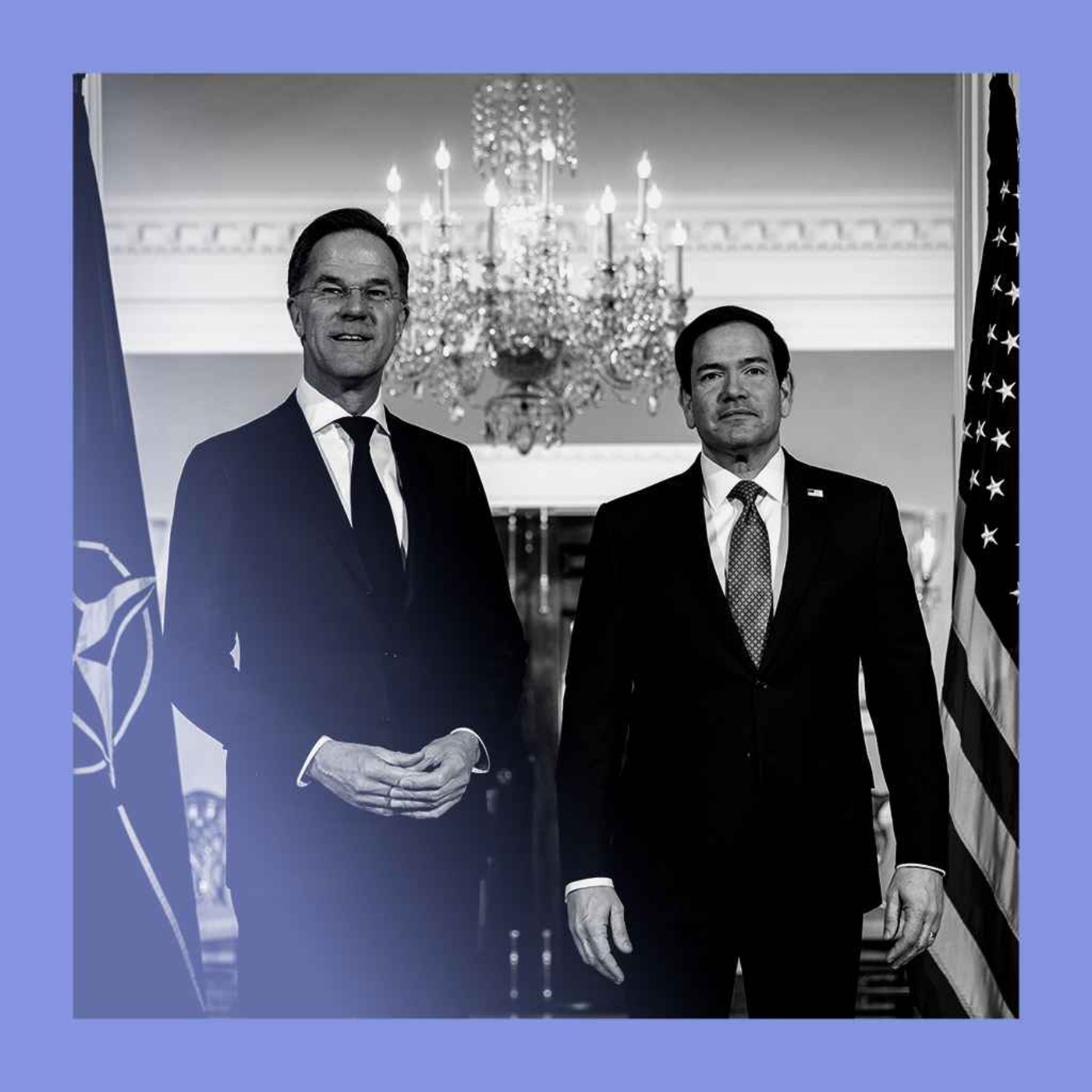
NATO's structure relies on allies following an American general's command under Article 5. After witnessing the "horrible, catastrophic failure" of US strategy in Iran, European nations will no longer entrust their militaries to US leadership, making the alliance functionally obsolete.

Related Insights
Even though a US law requires Senate approval for a formal NATO withdrawal, a president can effectively neutralize the alliance's operational capacity by unilaterally denying funds, withdrawing American troops, and removing the US commander, thus rendering it powerless without officially leaving.
Iran's strategy is not purely defensive. It is actively trying to escalate the conflict and draw in more countries by targeting other nations, such as firing a missile towards Turkey, a NATO member. This tactic aims to increase the political and military cost for the United States.

With the U.S. stepping back from its traditional leadership role, European countries are creating new, direct alliances to ensure their own security. A notable example is the emerging UK-Scandinavia-Baltic-Poland axis, which signals a fundamental shift in the continent's geopolitical architecture away from a singular reliance on Washington.

The US administration believed it could decapitate Iran's leadership and install a friendly faction, replicating its 'Venezuela model.' This strategy collapsed in the opening hours of the war because the potential successors the US counted on were killed alongside the Supreme Leader.

President Macron is shifting French doctrine by inviting countries like Germany and Poland into strategic nuclear discussions. This is not a rival to NATO, but a parallel security arrangement designed as a hedge against uncertainty over America's commitment to European defense.
The U.S. military is succeeding in tactical objectives, like damaging Iranian vessels. However, the overarching strategy is failing due to a lack of allied support and unclear long-term goals. Attacking oil infrastructure, for instance, signals an implicit abandonment of regime change as a viable outcome.
If a leader concludes that historic allies are acting against their nation's interests (e.g., prolonging a war), they may see those alliances as effectively void. This perception of betrayal becomes the internal justification for dramatic, unilateral actions like dismantling NATO or seizing strategic assets.

By forgoing a coalition, unlike past presidents, Trump's administration forces the U.S. to bear the entire financial and diplomatic cost of the Iran conflict. Allies, feeling unconsulted, are refusing to help, leaving America isolated to 'own' the problem it created.
The backbone of NATO is not just US military might, but European trust in it. A dispute initiated by the US against allies is more existentially dangerous than past internal conflicts or external threats because it directly undermines the core assumption of mutual defense.

The Trump administration's unilateral approach, demanding help from allies it has previously bullied, has backfired in the Iran conflict. Unlike past wars where coalitions shared the financial and military burden, the U.S. is now isolated and facing a "global raspberry," demonstrating the failure of transactional diplomacy.
