Get your free personalized podcast brief
We scan new podcasts and send you the top 5 insights daily.
Unlike static tools, agents like Clawdbot can autonomously write and integrate new code. When faced with a new challenge, such as needing a voice interface or GUI control, it can build the required functionality itself, compounding its abilities over time.

Related Insights
AI agents built for coding are being used for general knowledge work like creating slide decks or analyzing health data. These agents autonomously write scripts to crawl websites, bypass bot protection, and analyze information, making them a superpower for any computer-based professional, not just developers.

The power of Clawdbot validates the "AI overhang" theory: underlying models are far more capable than standard interfaces suggest. By giving an LLM persistent memory and direct computer control, these agentic frameworks "unleash" latent abilities that were previously constrained by a simple chat window.
In an extreme example of recursive development, Block's team uses their open-source AI agent, Goose, to write most of the new code for the Goose project itself. The ultimate goal is for the agent to become completely autonomous, rewriting itself from scratch for each release.

Unlike other AI models, OpenClaw can be tasked to figure out how to interact with a new service (like email) and write a reusable "skill" for it. This self-learning capability allows it to continuously expand its own functionality without manual coding.

A new software paradigm, "agent-native architecture," treats AI as a core component, not an add-on. This progresses in levels: the agent can do any UI action, trigger any backend code, and finally, perform any developer task like writing and deploying new code, enabling user-driven app customization.

The next evolution for AI agents is recursive learning: programming them to run tasks on a schedule to update their own knowledge. For example, an agent could study the latest YouTube thumbnail trends daily to improve its own thumbnail generation skill.

An "expert agent creator" can learn a new, undocumented technology by reading source code, writing test programs, and learning from failures. It then compiles this experience to create a specialized, highly competent sub-agent, demonstrating autonomous skill acquisition.

Instead of integrating with existing SaaS tools, AI agents can be instructed on a high-level goal (e.g., 'track my relationships'). The agent can then determine the need for a CRM, write the code for it, and deploy it itself.
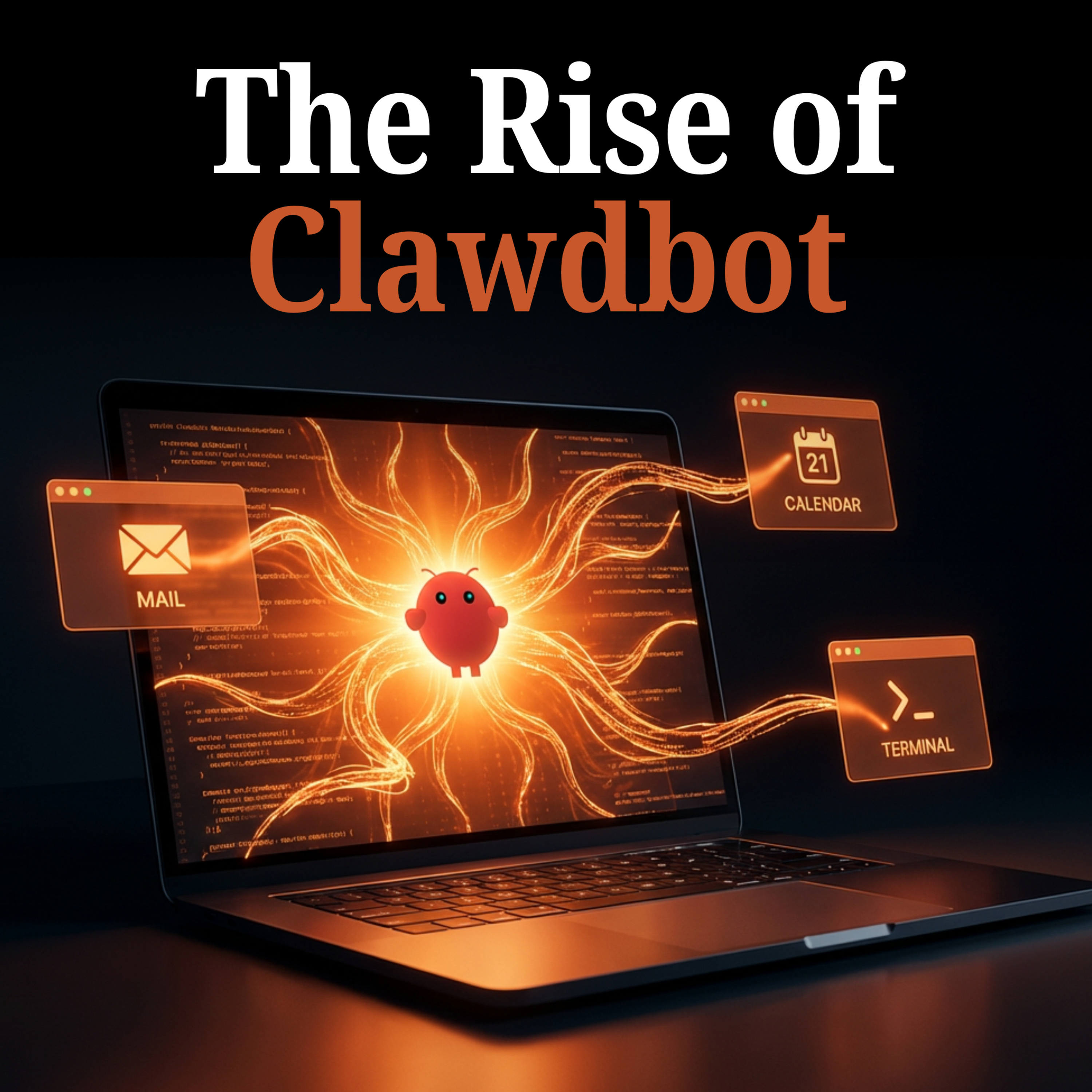
Instead of a standard package install, providing a manual installation from a Git repository allows an AI agent to access and modify its own source code. This unique setup empowers the agent to reconfigure its functionality, restart, and gain new capabilities dynamically.

The "Claudebot" system represents a new paradigm where users run a persistent, open-source AI agent on their own local hardware. The agent's key feature is its ability to self-improve by writing new skills on command, effectively becoming a 24/7 digital employee that continually expands its capabilities.
