Get your free personalized podcast brief
We scan new podcasts and send you the top 5 insights daily.
Instead of a standard package install, providing a manual installation from a Git repository allows an AI agent to access and modify its own source code. This unique setup empowers the agent to reconfigure its functionality, restart, and gain new capabilities dynamically.

Related Insights
A cutting-edge pattern involves AI agents using a CLI to pull their own runtime failure traces from monitoring tools like Langsmith. The agent can then analyze these traces to diagnose errors and modify its own codebase or instructions to prevent future failures, creating a powerful, human-supervised self-improvement loop.
To prevent an AI agent from repeating mistakes across coding sessions, create 'agents.md' files in your codebase. These act as a persistent memory, providing context and instructions specific to a folder or the entire repo. The agent reads these files before working, allowing it to learn from past iterations and improve over time.

Instead of complex SDKs or custom code, users can extend tools like Cowork by writing simple Markdown files called "Skills." These files guide the AI's behavior, making customization accessible to a broader audience and proving highly effective with powerful models.

Tools like Git were designed for human-paced development. AI agents, which can make thousands of changes in parallel, require a new infrastructure layer—real-time repositories, coordination mechanisms, and shared memory—that traditional systems cannot support.

Instead of being stuck with rigid software, a future powered by decentralized AI could allow users to modify their tools directly. For example, a doctor frustrated with an electronic medical record system could use natural language to instantly change the software to fit their workflow, reclaiming control over their digital environment.

Daniel Miessler's PAI includes an 'upgrade skill' that allows the system to improve itself. It can ingest new information from engineering blogs or platform changelogs, then recommend and implement upgrades to its own skills and hooks to incorporate new features and knowledge.

Instead of designing tools for human usability, the creator built command-line interfaces (CLIs) that align with how AI models process information. This "agentic-driven" approach allows an AI to easily understand and scale its capabilities across numerous small, single-purpose programs on a user's machine.
A new software paradigm, "agent-native architecture," treats AI as a core component, not an add-on. This progresses in levels: the agent can do any UI action, trigger any backend code, and finally, perform any developer task like writing and deploying new code, enabling user-driven app customization.
Instead of integrating with existing SaaS tools, AI agents can be instructed on a high-level goal (e.g., 'track my relationships'). The agent can then determine the need for a CRM, write the code for it, and deploy it itself.
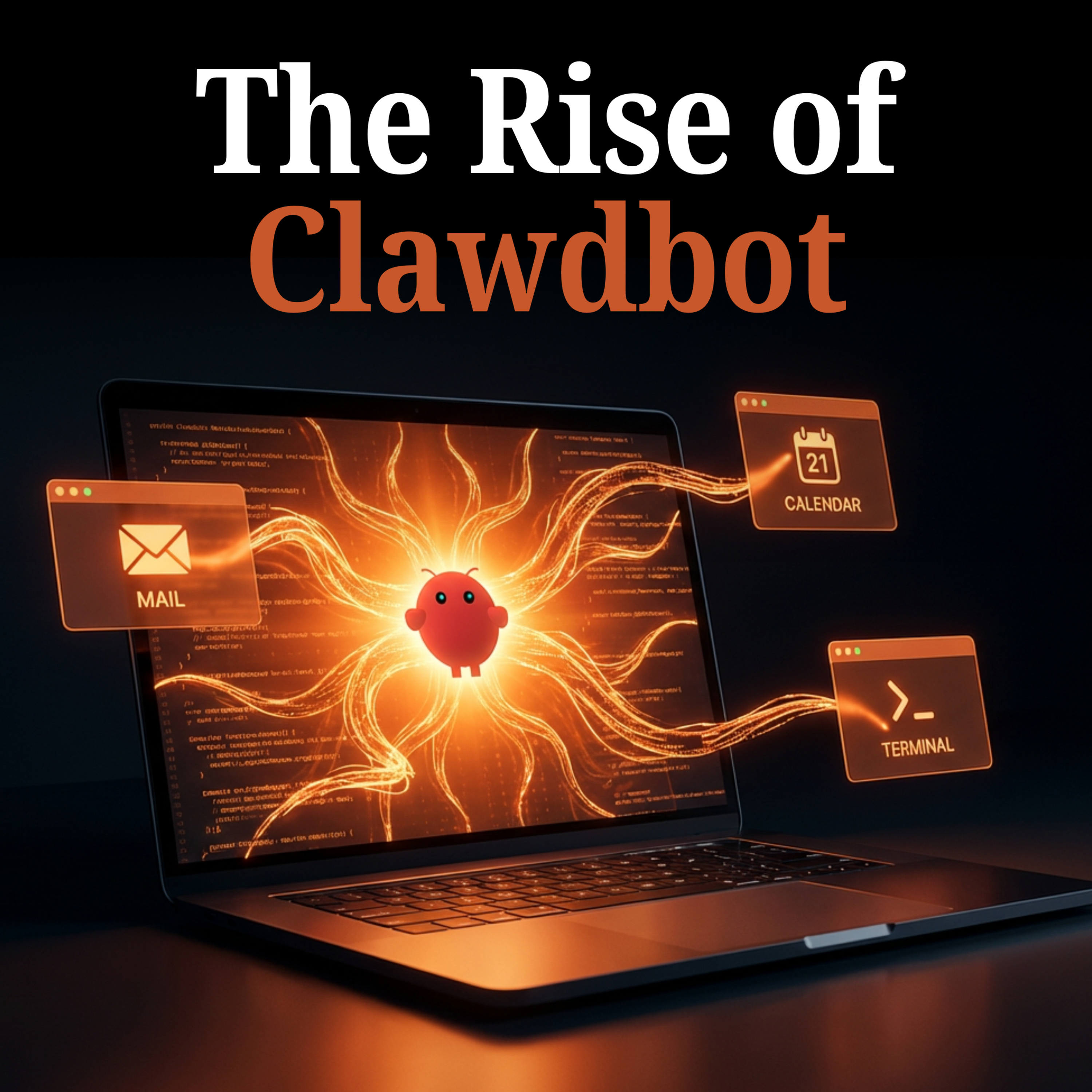
The "Claudebot" system represents a new paradigm where users run a persistent, open-source AI agent on their own local hardware. The agent's key feature is its ability to self-improve by writing new skills on command, effectively becoming a 24/7 digital employee that continually expands its capabilities.
