Get your free personalized podcast brief
We scan new podcasts and send you the top 5 insights daily.
Accessible tools like Open Claw are making "Dead Internet Theory" a reality by allowing individuals to automate their social media presence. Users deploy bots to generate and comment on content, creating a world where AI agents increasingly interact with each other, degrading the authenticity of online platforms.

Related Insights
The "Dead Internet" theory posits that AI will fill social networks with lifeless content. A more accurate model is the "Zombie Internet," where AI-generated content is not just passive slop but actively responds and interacts with users, creating a simultaneously dead and alive experience.

The 'dead internet' theory suggested AI would fill the web with lifeless content. Moltbook inspires the 'zombie internet' theory: this AI-generated 'slop' is now interactive and responsive. It's not just dead text; it's an undead entity that engages back, creating a more unsettling, horrific experience.

The internet's value stems from an economy of unique human creations. AI-generated content, or "slop," replaces this with low-quality, soulless output, breaking the internet's economic engine. This trend now appears in VC pitches, with founders presenting AI-generated ideas they don't truly understand.
Tools like Moltbot make complex web automation trivial for anyone, not just engineers. This dramatic drop in the barrier to entry will flood the internet with bot traffic for content scraping and social manipulation, ultimately destroying the economic viability of traditional websites.
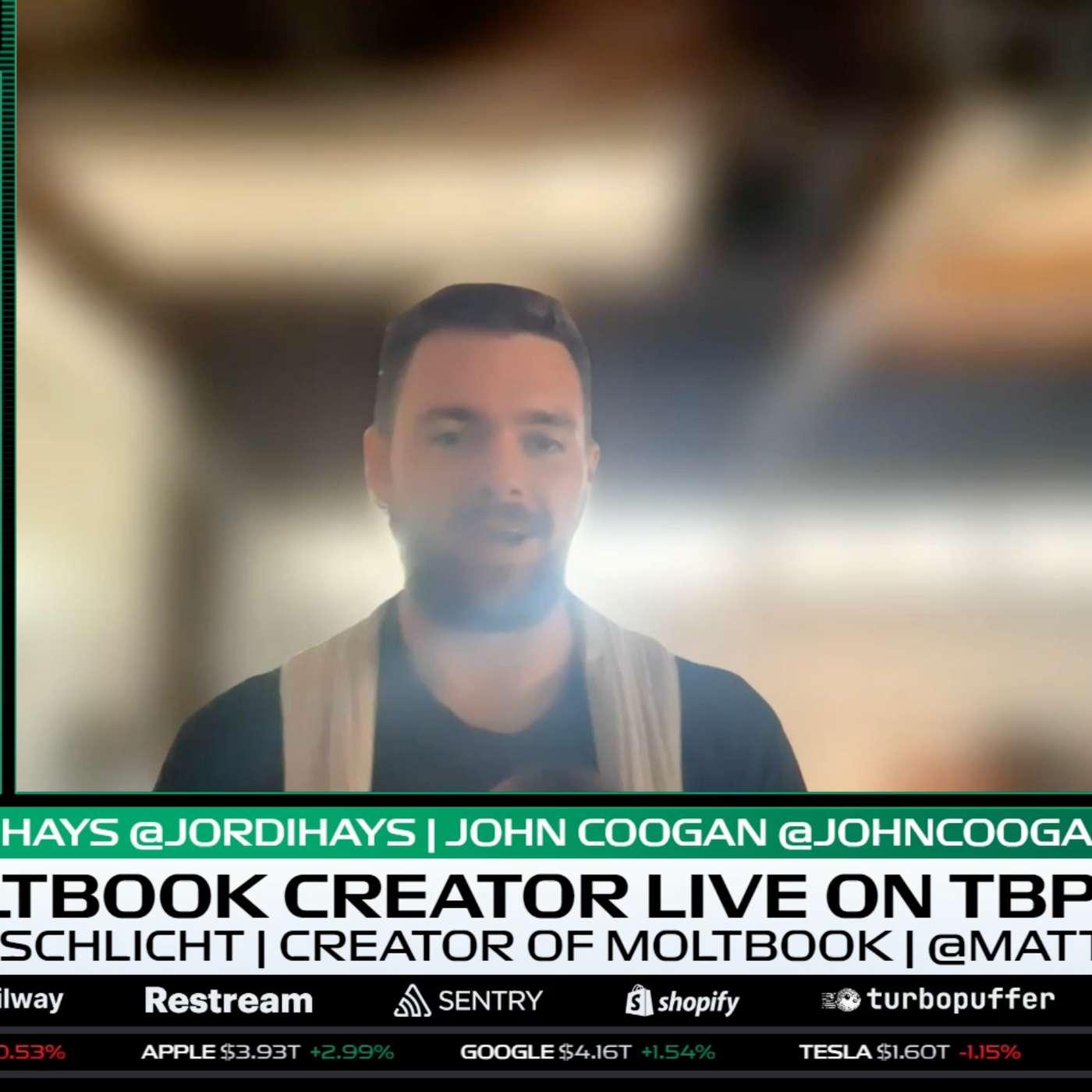
Moltbook, a social network exclusively for AI agents that has attracted over 1.5 million users, represents the emergence of digital spaces where non-human entities create content and interact. This points to a future where marketing and analysis may need to target autonomous AI, not just humans.

Tools that automate community engagement create a feedback loop where AI generates content and then other AI comments on it. This erodes the human value of online communities, leading to a dystopian 'dead internet' scenario where real users disengage completely.

Traditional social platforms often fail when initial users lose interest and stop posting. Moltbook demonstrates that AI agents, unlike humans, will persistently interact, comment, and generate content, ensuring the platform remains active and solving the classic "cold start" problem for new networks.
The online world, particularly platforms like the former Twitter, is not a true reflection of the real world. A small percentage of users, many of whom are bots, generate the vast majority of content. This creates a distorted and often overly negative perception of public sentiment that does not represent the majority view.

The proliferation of AI agents will erode trust in mainstream social media, rendering it 'dead' for authentic connection. This will drive users toward smaller, intimate spaces where humanity is verifiable. A 'gradient of trust' may emerge, where social graphs are weighted by provable, real-world geofenced interactions, creating a new standard for online identity.

According to WorldCoin's Alex Blania, the fundamental business model of social media relies on facilitating human-to-human interaction. The ultimate threat from AI agents isn't merely spam or slop, but the point at which users become so annoyed with inauthentic interactions that the core value proposition of the platform collapses entirely.