Get your free personalized podcast brief
We scan new podcasts and send you the top 5 insights daily.
The internet's value stems from an economy of unique human creations. AI-generated content, or "slop," replaces this with low-quality, soulless output, breaking the internet's economic engine. This trend now appears in VC pitches, with founders presenting AI-generated ideas they don't truly understand.

Related Insights
The problem with bad AI-generated work ('slop') isn't just poor writing. It's that subtle inaccuracies or context loss can derail meetings and create long, energy-wasting debates. This cognitive overload makes it difficult for teams to sense-make and ultimately costs more in human time than it saves.
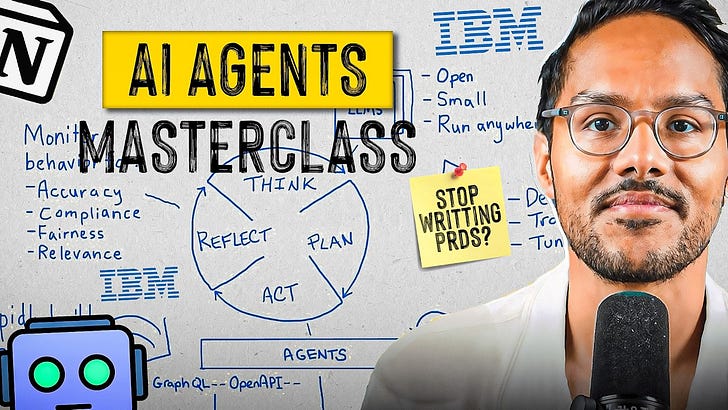
While AI tools once gave creators an edge, they now risk producing democratized, undifferentiated output. IBM's AI VP, who grew to 200k followers, now uses AI less. The new edge is spending more time on unique human thinking and using AI only for initial ideation, not final writing.
Users are dissatisfied with purely AI-generated creative outputs like interior design, calling it "slop." This creates an opportunity for platforms that blend AI's efficiency with a human's taste and curation, for which consumers are willing to pay a premium.
In the age of AI, the new standard for value is the "GPT Test." If a person's public statements, writing, or ideas could have been generated by a large language model, they will fail to stand out. This places an immense premium on true originality, deep insight, and an authentic voice—the very things AI struggles to replicate.

As AI drives the cost of content creation to zero, the world floods with 'average' material. In this environment, the most valuable and scarce skill becomes 'taste'—the ability to identify, curate, and champion high-quality, commercially viable work. This elevates the role of human curators over pure creators.
![Ari Emanuel - The Anti-AI Bet - [Invest Like the Best, EP.448] thumbnail](https://megaphone.imgix.net/podcasts/c5910280-c4dd-11f0-94be-ab6a7a5865b0/image/1e5a2263eb62fcde200846919e24419a.jpg?ixlib=rails-4.3.1&max-w=3000&max-h=3000&fit=crop&auto=format,compress)
Generative AI allows any marketer to quickly produce mediocre content. This saturation makes buyers more discerning and creates a significant opportunity for brands that invest in genuinely excellent, insightful content to stand out and build trust. Quality, not quantity, becomes the key differentiator.

AI services crawl web content but present answers directly, breaking the traditional model where creators earn revenue from traffic. Without compensation, the incentive to produce quality content diminishes, putting the web's business model at risk.

Professionals are using AI to write detailed reports, while their managers use AI to summarize them. This creates a feedback loop where AI generates content for other AIs to consume, with humans acting merely as conduits. This "AI slop" replaces deep thought with inefficient, automated communication.

An AI CEO predicts that within two years, AI tools will make content creation instantaneous and nearly free. This will destroy traditional moats like audience loyalty and production quality, as anyone can generate photorealistic content. The market will shift focus from the creator to the individual content piece.

The ease of generating AI summaries is creating low-quality 'slop.' This imposes a hidden productivity cost, as collaborators must waste time clarifying ambiguous or incorrect AI-generated points, derailing work and leading to lengthy, unnecessary corrections.