Get your free personalized podcast brief
We scan new podcasts and send you the top 5 insights daily.
Granting full autonomy to AI agents from day one is reckless. A safer, more effective approach is a laddered model: start with agents in an "Observation" role, then let them make "Suggestions," then "Act with Approval," and only then grant full autonomy within specific, defined boundaries.

Related Insights
To avoid failure, launch AI agents with high human control and low agency, such as suggesting actions to an operator. As the agent proves reliable and you collect performance data, you can gradually increase its autonomy. This phased approach minimizes risk and builds user trust.

Frame AI independence like self-driving car levels: 'Human-in-the-loop' (AI as advisor), 'Human-on-the-loop' (AI acts with supervision), and 'Human-out-of-the-loop' (full autonomy). This tiered model allows organizations to match the level of AI independence to the specific risk of the task.

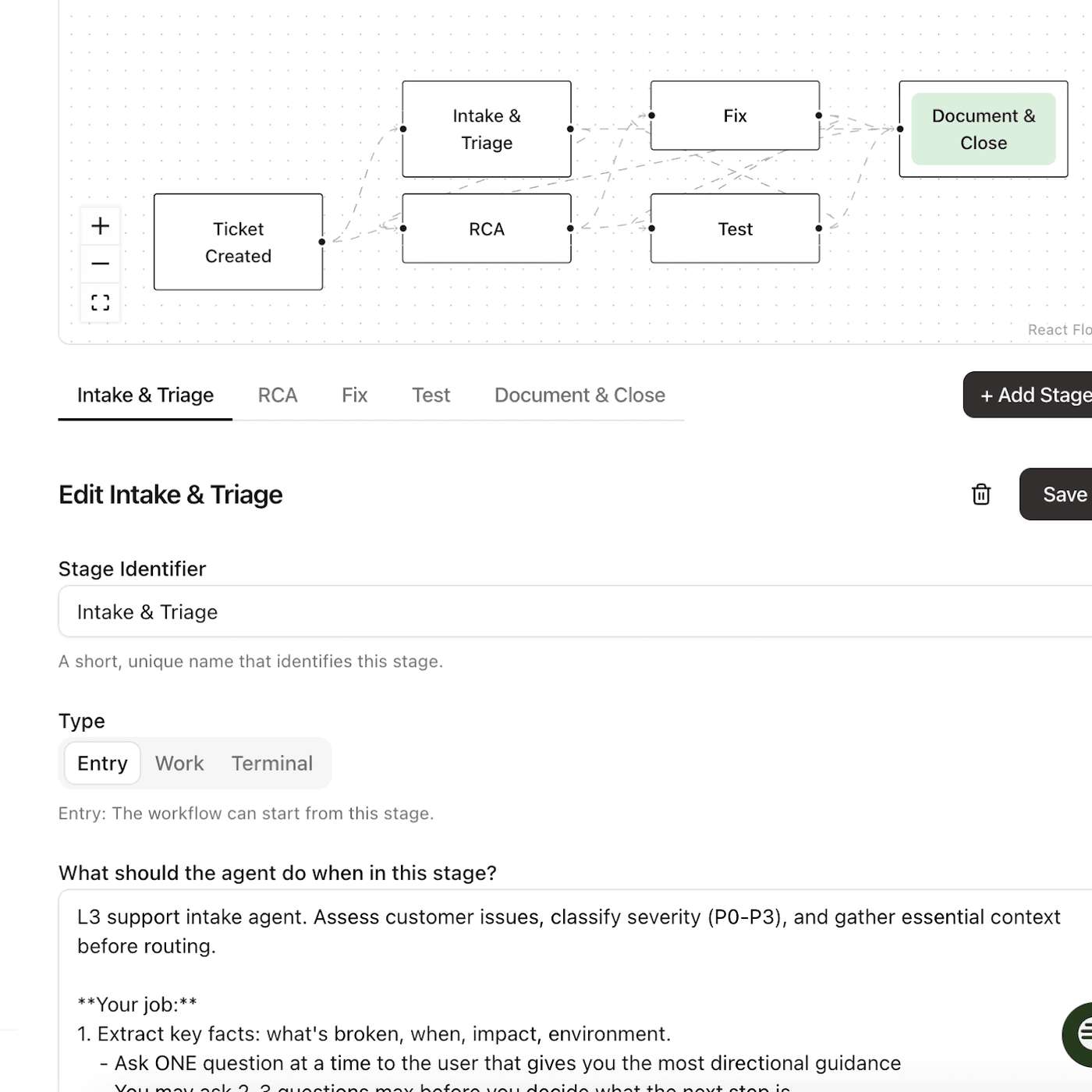
Instead of forcing full autonomy, the AI agent allows teams to start with human approvals at key stages. This 'human-in-the-loop' model builds trust and enables organizations to incrementally automate complex support workflows as they grow more confident in the system's reliability.
Manage the risks of AI autonomy by implementing a tiered permission system, similar to how you would delegate to a human. Define 'safe actions' (e.g., reading files), 'ask first actions' (e.g., installing dependencies), and 'human-owned actions' (e.g., production deploys). This provides clear boundaries and protects critical systems.

To overcome user distrust of AI agents having access to personal data, the adoption path must be gradual. The AI should first provide suggestions for the user to approve (e.g., draft emails). Only after consistently proving its reliability and allowing users to learn its boundaries can trust be established for autonomous action.

Giving a new AI agent full access to all company systems is like giving a new employee wire transfer authority on day one. A smarter approach is to treat them like new hires, granting limited, read-only permissions and expanding access slowly as trust is built.

Frame AI agent development like training an intern. Initially, they need clear instructions, access to tools, and your specific systems. They won't be perfect at first, but with iterative feedback and training ('progress over perfection'), they can evolve to handle complex tasks autonomously.

Avoid deploying AI directly into a fully autonomous role for critical applications. Instead, begin with a human-in-the-loop, advisory function. Only after the system has proven its reliability in a real-world environment should its autonomy be gradually increased, moving from supervised to unsupervised operation.
Instead of a binary human-in-the-loop decision, enterprises should use an "autonomy budget" for agents. Actions are classified by risk (e.g., irreversibility, financial impact) to determine the level of freedom, creating a spectrum from full autonomy to required human approval, avoiding agents becoming expensive suggestion boxes.

To safely deploy a powerful AI agent, create clear guardrails. SaaStr distinguishes between tasks the agent can perform autonomously (pulling data, generating ideas) and actions that require human approval (sending a mass email). This two-layer approach builds trust and prevents potentially costly mistakes.
