Get your free personalized podcast brief
We scan new podcasts and send you the top 5 insights daily.
MCP is not a universal solution. For single-purpose agents with a fixed, small toolset, the protocol's overhead adds unnecessary complexity. Direct, handcrafted integrations are more efficient for such focused projects, reserving MCP for multi-agent ecosystems or reusable tooling platforms where its value is maximized.

Related Insights
Instead of giving an AI agent general access to a tool's full API, build a specific adapter. This intermediary layer exposes only the necessary functions for a given task, preventing the agent from 'wandering' through traces or using APIs inefficiently. This makes tool integration more precise and reliable.
Instead of building one monolithic AI application, this architecture promotes creating smaller, specialized AI services. The Model Context Protocol (MCP) allows an AI agent to discover and use these tools on the fly, treating them like microservices rather than hardcoded functions, which enhances flexibility and scalability.
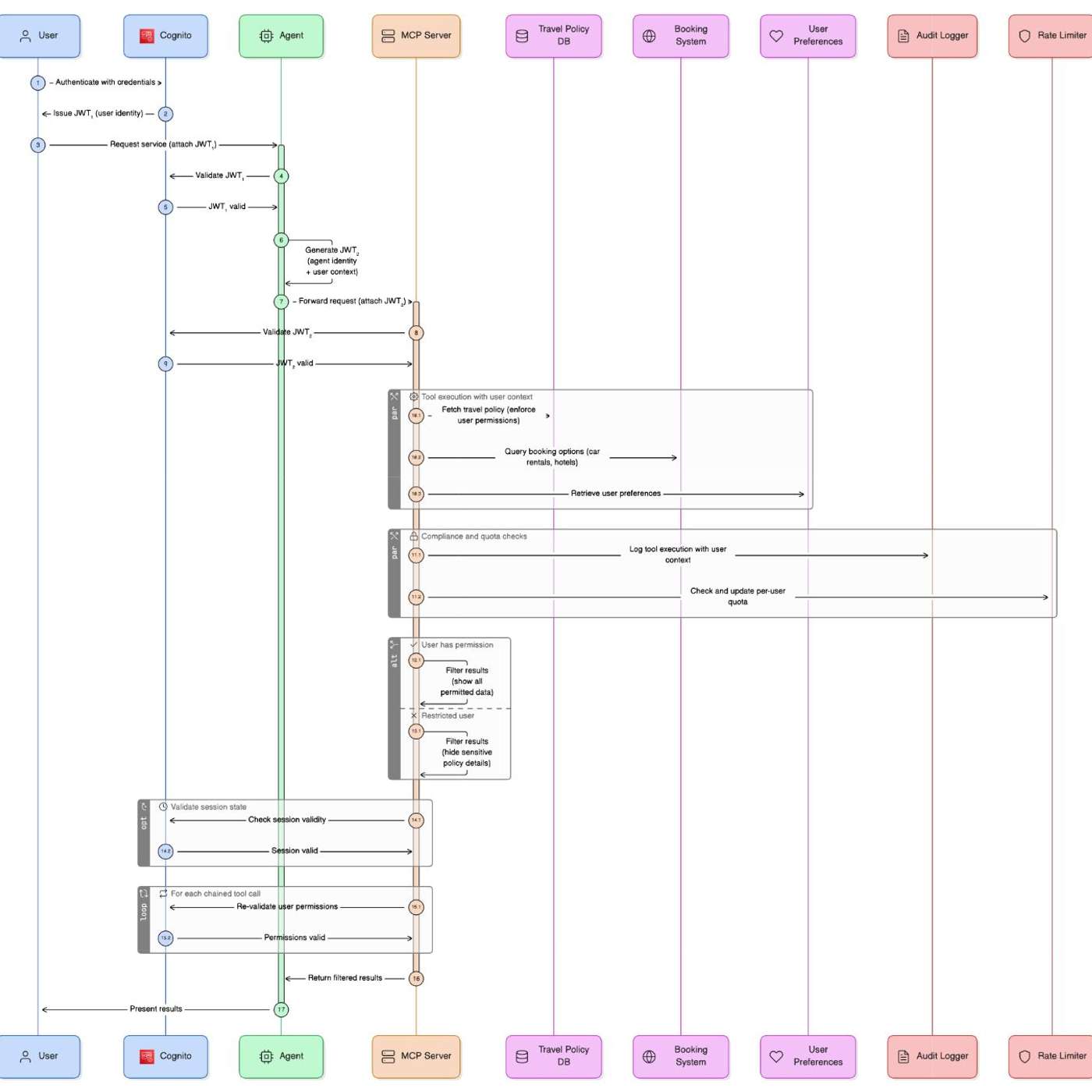
Effective MCP tools abstract complexity by mapping to a complete user task, not a single API call. Create a high-level tool like "look_up_order_status" that joins data server-side, rather than exposing multiple low-level endpoints for the AI to orchestrate.
MCP doesn't replace core agent patterns like RAG or the "LLM + tools" loop. Instead, it serves a specific function: standardizing the "tools" component. This makes tools composable and reusable across agents, acting as the interoperability layer that allows complex, multi-agent systems to share capabilities efficiently.
MCP standardizes agent-tool connections, but its method of advertising all tools at startup can consume enormous token counts (e.g., 50,000 tokens for "Hello"). This creates a significant, often overlooked, context bloat issue that requires mitigation via patterns like loading agent skills on demand.
Notion sees value in both agent protocols. CLIs are powerful because agents can debug and extend their own tools within the same terminal environment. However, MCPs are better for narrow use cases requiring a strong, simple permission model where the agent can only call predefined tools.
Building a bespoke communication layer for multiple AI agents is a complex "scaffolding" problem. A simpler, more direct solution is to treat agents as digital coworkers, assigning them accounts on existing platforms like Slack or Google Docs, enabling them to interact using established human workflows.
Using a composable, 'plug and play' architecture allows teams to build specialized AI agents faster and with less overhead than integrating a monolithic third-party tool. This approach enables the creation of lightweight, tailored solutions for niche use cases without the complexity of external API integrations, containing the entire workflow within one platform.

Tasklet's experience shows AI agents can be more effective directly calling HTTP APIs using scraped documentation than using the specialized MCP framework. This "direct API" approach is so reliable that users prefer it over official MCP integrations, challenging the assumption that structured protocols are superior.

Exposing a full API via the Model Context Protocol (MCP) overwhelms an LLM's context window and reasoning. This forces developers to abandon exposing their entire service and instead manually craft a few highly specific tools, limiting the AI's capabilities and defeating the "do anything" vision of agents.
