Get your free personalized podcast brief
We scan new podcasts and send you the top 5 insights daily.
MCP doesn't replace core agent patterns like RAG or the "LLM + tools" loop. Instead, it serves a specific function: standardizing the "tools" component. This makes tools composable and reusable across agents, acting as the interoperability layer that allows complex, multi-agent systems to share capabilities efficiently.

Related Insights
Model-Context Protocol (MCP) is a standardized layer that allows an LLM to communicate with various software tools without needing custom integrations for each. It acts like a universal translator, enabling the LLM to 'speak English' while the MCP handles communication with each tool's unique API.

A comprehensive AI management system requires more than just an LLM router. It needs three distinct gateways: a Model Gateway for controlling LLM access, an MCP Gateway for secure tool and data interaction, and an Agent Gateway to govern communication between different autonomous agents and provide a "kill switch."

Agent Skills and the Model Context Protocol (MCP) are complementary, not redundant. Skills package internal, repeatable workflows for 'doing the thing,' while MCP provides the open standard for connecting to external systems like databases and APIs for 'reaching the thing.'
Instead of building one monolithic AI application, this architecture promotes creating smaller, specialized AI services. The Model Context Protocol (MCP) allows an AI agent to discover and use these tools on the fly, treating them like microservices rather than hardcoded functions, which enhances flexibility and scalability.
For agents to become truly powerful, they need an open ecosystem similar to the internet. Kevin Scott highlights protocols like MCP and NLweb as foundational layers that serve the same purpose as HTTP and HTML, enabling interoperability and allowing agents to take action across diverse systems.

MCP acts as a universal translator, allowing different AI models and platforms to share context and data. This prevents "AI amnesia" where customer interactions start from scratch, creating a continuous, intelligent experience by giving AI a persistent, shared memory.

The technical term "MCP" (Model Component Provider) is confusing. It's simpler and more accurate to think of them as connectors that give AI tools access to knowledge within your other apps and the ability to perform actions in them.
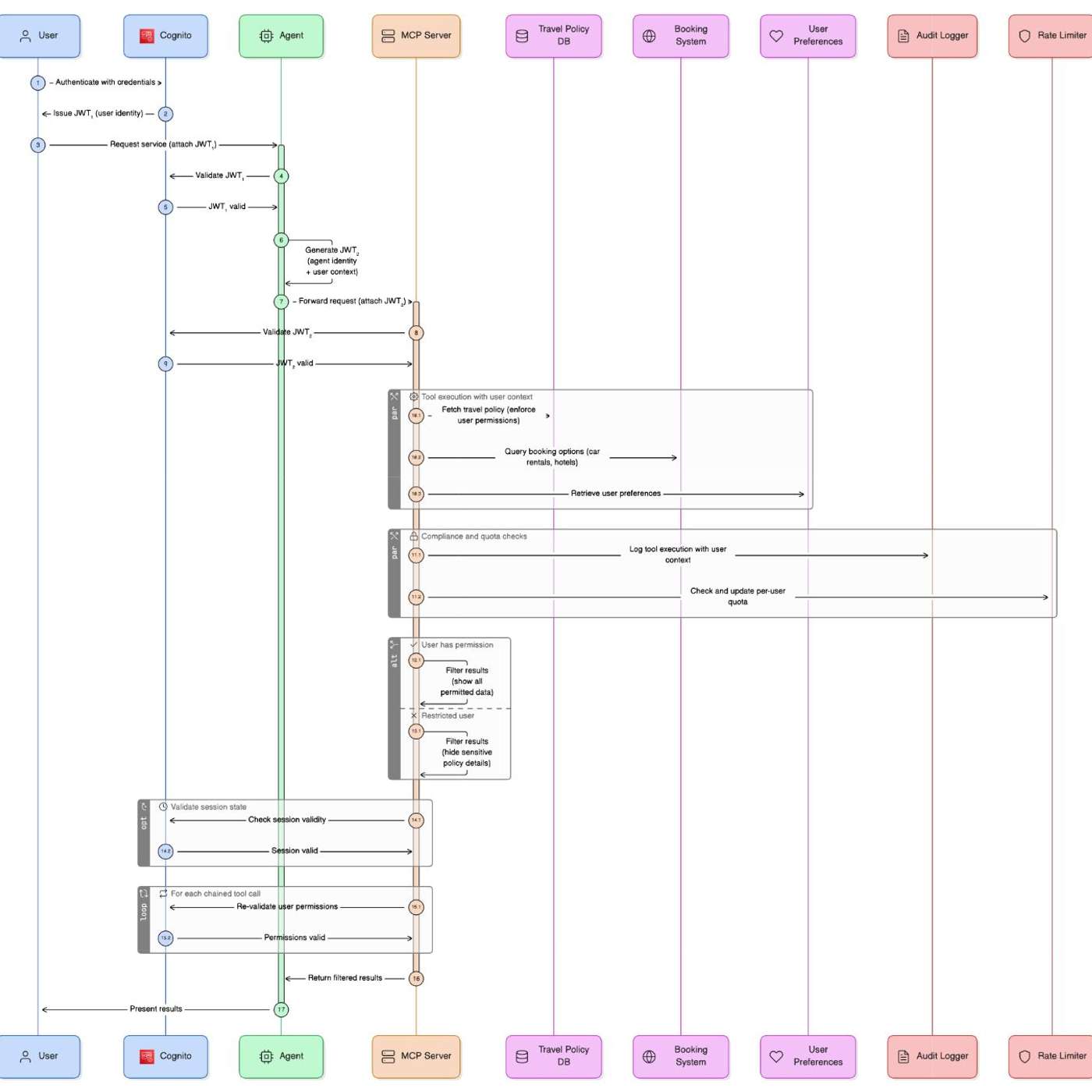
Move beyond a simple agent-tool interaction by allowing tool servers (MCP servers) to call one another. This creates sophisticated tool hierarchies for complex tasks. For instance, a primary 'booking' tool can sequentially call separate tools for policy checks, pricing, and availability, orchestrating a multi-step workflow.
MCP is a specialized layer for AI agents to consume services, translating traditional APIs (like REST) into a format Large Language Models can better utilize. It doesn't replace existing APIs but rather wraps them, acting as an adapter for a new type of consumer.
MCP provides a standardized way to connect AI models with external tools, actions, and data. It functions like an API layer, enabling agents in environments like Claude Code or Cursor to pull analytics data from Amplitude, file tickets in Linear, or perform other external actions seamlessly.
