Get your free personalized podcast brief
We scan new podcasts and send you the top 5 insights daily.
Effective MCP tools abstract complexity by mapping to a complete user task, not a single API call. Create a high-level tool like "look_up_order_status" that joins data server-side, rather than exposing multiple low-level endpoints for the AI to orchestrate.

Related Insights
Instead of giving an AI agent general access to a tool's full API, build a specific adapter. This intermediary layer exposes only the necessary functions for a given task, preventing the agent from 'wandering' through traces or using APIs inefficiently. This makes tool integration more precise and reliable.
Instead of building one monolithic AI application, this architecture promotes creating smaller, specialized AI services. The Model Context Protocol (MCP) allows an AI agent to discover and use these tools on the fly, treating them like microservices rather than hardcoded functions, which enhances flexibility and scalability.
The vision for Model Context Protocol (MCP) is to let AIs perform complex, multi-app tasks. However, translating a full API like Stripe's into MCP tools overwhelms current models' context windows, making them confused and ineffective. This forces developers to handcraft a small subset of tools.

MCP shouldn't be thought of as just another developer API like REST. Its true purpose is to enable seamless, consumer-focused pluggability. In a successful future, a user's mom wouldn't know what MCP is; her AI application would just connect to the right services automatically to get tasks done.

Instead of direct API calls, build Model-Controlled Program (MCP) servers. They act as better guardrails for the AI, allowing it to interact with external data more effectively and even suggest novel use cases based on API documentation.

Users often fail with MCP by expecting it to handle complex workflows instead of simple tool interactions. A key mistake is connecting too many irrelevant servers, which pollutes the AI's context window with unused tool descriptions and degrades performance. Keep the toolset minimal and relevant to the task.
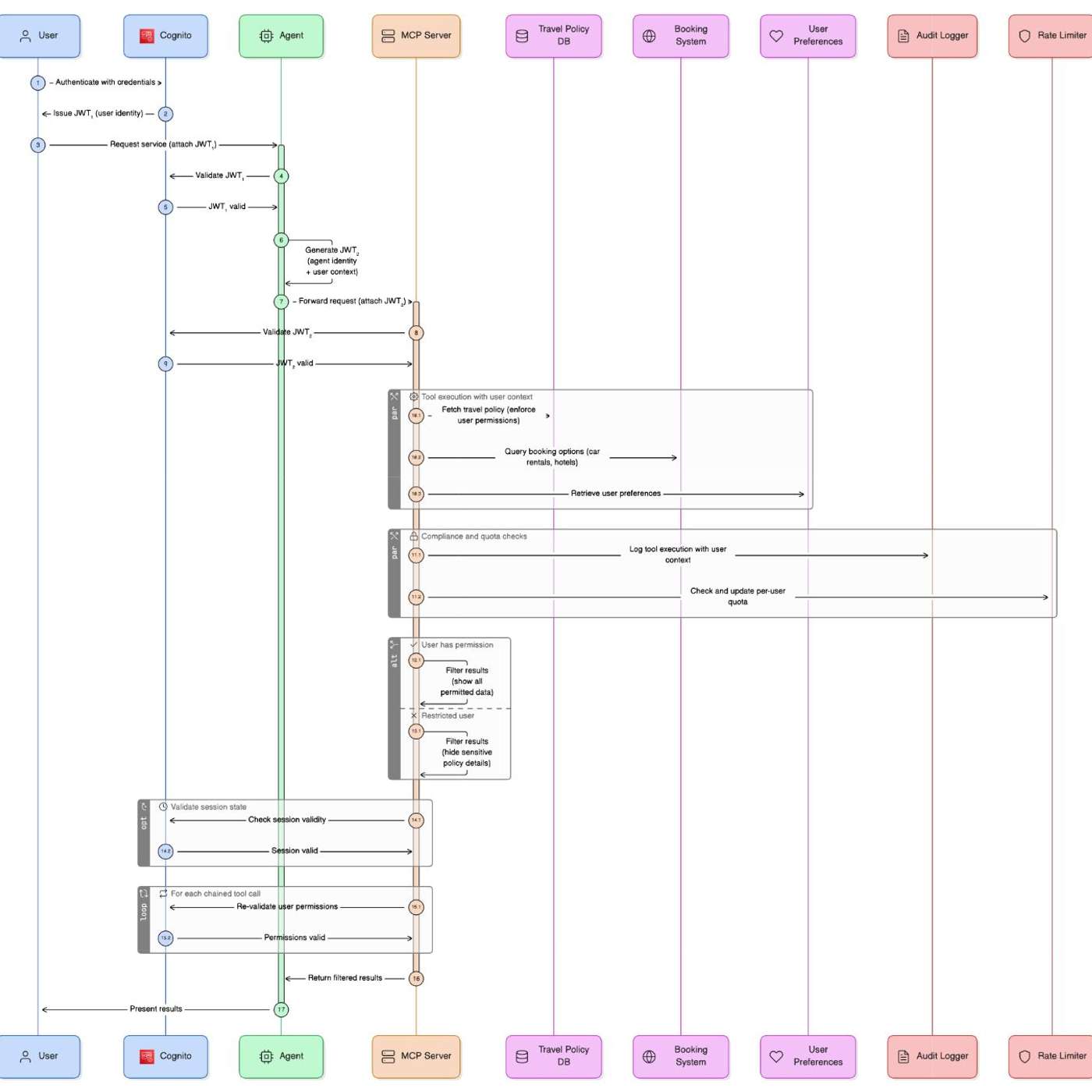
Move beyond a simple agent-tool interaction by allowing tool servers (MCP servers) to call one another. This creates sophisticated tool hierarchies for complex tasks. For instance, a primary 'booking' tool can sequentially call separate tools for policy checks, pricing, and availability, orchestrating a multi-step workflow.
MCP is a specialized layer for AI agents to consume services, translating traditional APIs (like REST) into a format Large Language Models can better utilize. It doesn't replace existing APIs but rather wraps them, acting as an adapter for a new type of consumer.
Exposing a full API via the Model Context Protocol (MCP) overwhelms an LLM's context window and reasoning. This forces developers to abandon exposing their entire service and instead manually craft a few highly specific tools, limiting the AI's capabilities and defeating the "do anything" vision of agents.

MCP provides a standardized way to connect AI models with external tools, actions, and data. It functions like an API layer, enabling agents in environments like Claude Code or Cursor to pull analytics data from Amplitude, file tickets in Linear, or perform other external actions seamlessly.