Get your free personalized podcast brief
We scan new podcasts and send you the top 5 insights daily.
Northwood Space offers an end-to-end ground station service, handling everything from hardware and land leases to software APIs and network backhaul. This "ground-as-a-service" model frees satellite operators from the complex, time-consuming, and non-core task of building and managing their own global communications infrastructure.

Related Insights
The next wave of space companies is moving away from the vertically integrated "SpaceX model" where everything is built in-house. Instead, a new ecosystem is emerging where companies specialize in specific parts of the stack, such as satellite buses or ground stations. This unbundling creates efficiency and lowers barriers to entry for new players.

Starlink's satellite beams are too broad to effectively serve dense cities. Its business model is complementary to ground-based cellular, focusing on rural and underserved areas where building fiber or cell towers is economically inefficient.

Following predictions from Jeff Bezos and investments from Eric Schmidt, Elon Musk has entered the space-based data center race. He stated that SpaceX will leverage its existing Starlink V3 satellites, which already have high-speed laser links, to create an orbital cloud infrastructure, posing a significant challenge to startups in the sector.

By integrating Starlink satellite connectivity directly into its cars, Tesla can solve for internet outages that cripple competitors. This creates a powerful moat, ensuring its fleet remains operational and potentially creating a new licensable mesh network for other vehicles.
The new wave of space startups is moving away from the SpaceX "build everything yourself" model. Instead, companies like Apex Space are unbundling the stack, specializing in one component like satellite buses. This allows for faster development cycles and creates a more robust, collaborative industry.

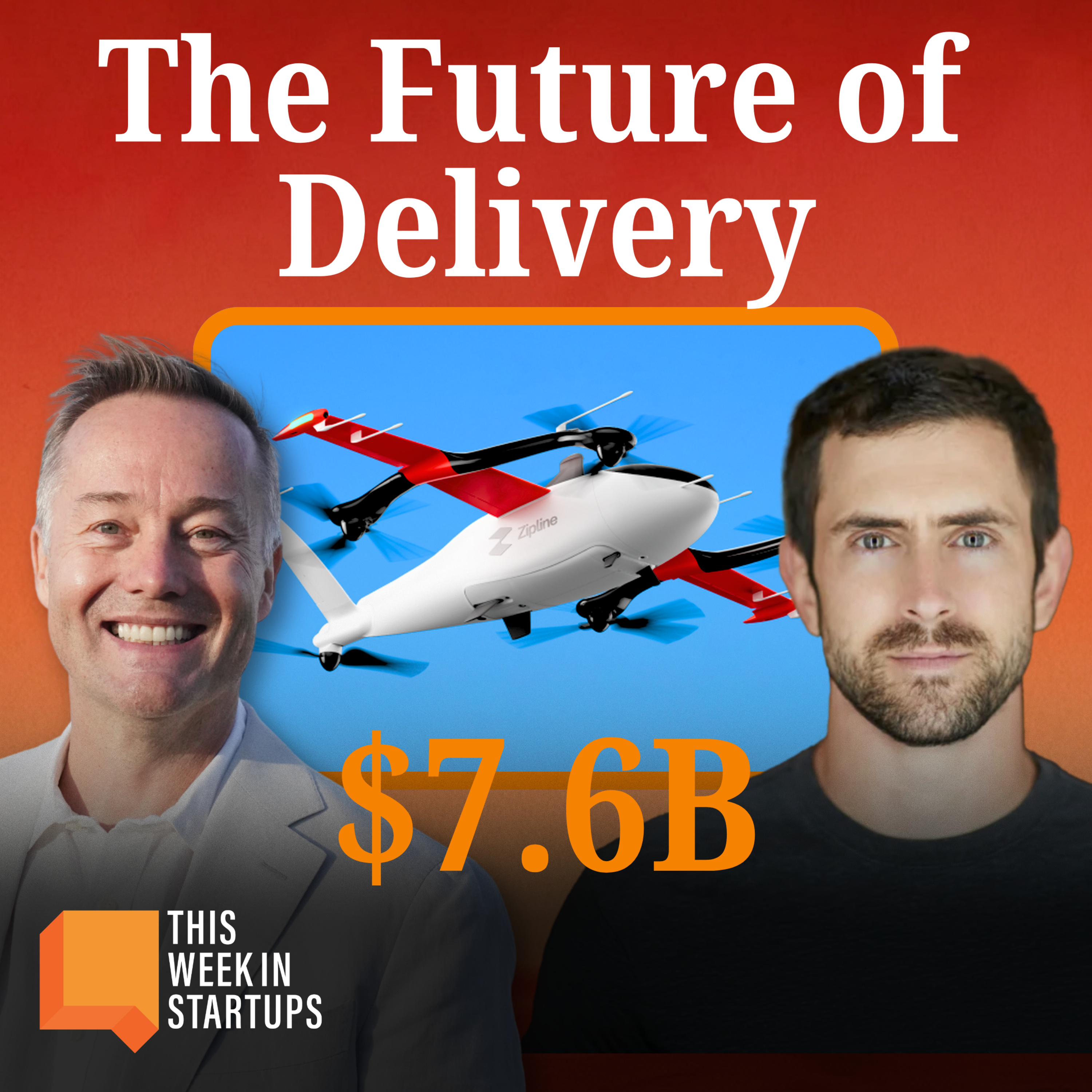
Zipline's CEO reveals the aircraft is a small part of their solution. The real challenge and value lie in the vertically integrated network: ground infrastructure, traffic management, regulatory approval, and customer-facing apps.
K2 Space, now a major player in space infrastructure, began with the contrarian goal of building large telescopes, bucking the small-satellite trend. This focus forced them to solve for high power and large structures, creating a versatile platform that is now perfectly positioned for communications and compute applications.

Despite building large physical systems like drones, Anduril's co-founder states their core competency and original vision is software. They are a "software-defined and hardware-enabled" company, which fundamentally differentiates their approach from traditional defense contractors who are the opposite.
Cooling data centers in space is more manageable than on Earth. Earth’s environment is unpredictable (temperature, humidity, weather). In orbit, you can choose a consistent thermal environment, sunshade cycle, and radiation angle, making the entire system programmable and stable.

The Arctic is a critical geopolitical region, but its polar orbit is poorly served by satellite constellations like Starlink, creating significant connectivity challenges. This gap presents a unique market opportunity for companies building localized, distributed, and attributable mesh networks that can operate reliably in the harsh environment without depending on consistent satellite backhaul.