Get your free personalized podcast brief
We scan new podcasts and send you the top 5 insights daily.
By integrating Starlink satellite connectivity directly into its cars, Tesla can solve for internet outages that cripple competitors. This creates a powerful moat, ensuring its fleet remains operational and potentially creating a new licensable mesh network for other vehicles.
Related Insights
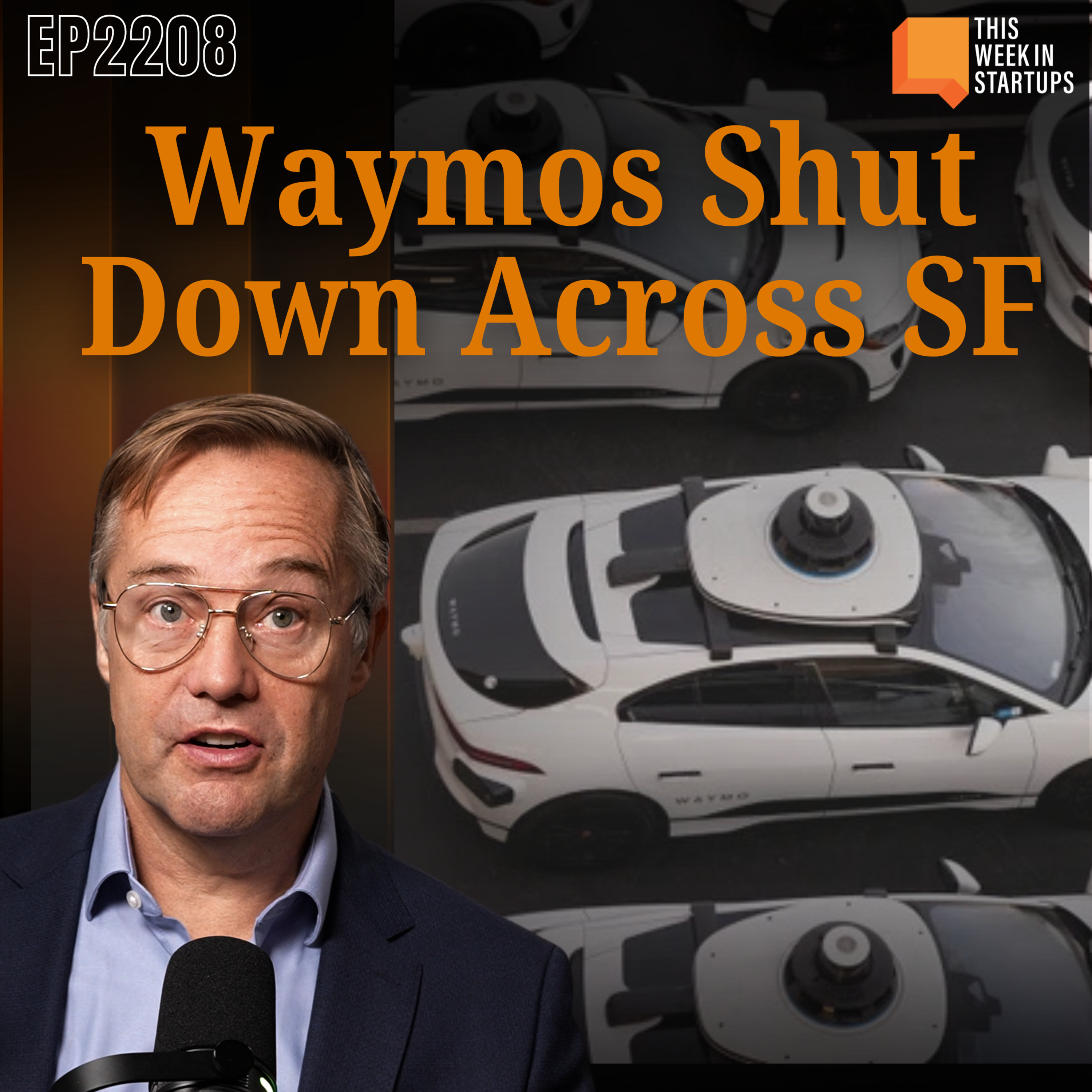
During a San Francisco power outage, Waymo's map-based cars failed while Teslas were reportedly unaffected. This suggests that end-to-end AI systems are less brittle and better at handling novel "edge cases" than more rigid, heuristic-based autonomous driving models.
By owning both the launch capability (SpaceX) and the network (Starlink), Musk could exert ultimate control over internet infrastructure. This creates a scenario where he could deny network access to rivals, like OpenAI, representing a powerful and unprecedented form of vertical integration.

Autonomous vehicle technology will likely become a commodity layer, with most manufacturers providing their cars to existing ride-sharing networks like Uber and Lyft. Only a few companies like Tesla have the brand and scale to pursue a vertically-integrated, closed-network strategy.
Elon Musk's ventures face vastly different competitive landscapes. While Tesla fights in the 'brutally competitive' auto industry, SpaceX enjoys a near-monopoly in space, allowing it to pursue large adjacent opportunities like orbital data centers with far less resistance.
Starlink's satellite beams are too broad to effectively serve dense cities. Its business model is complementary to ground-based cellular, focusing on rural and underserved areas where building fiber or cell towers is economically inefficient.

Incumbent automakers evolved with 100+ separate computer modules, creating a complex system. Newcomers like Rivian and Tesla start with a centralized, "zonal" architecture. This clean-sheet design dramatically simplifies over-the-air updates, reduces costs, and enables more advanced, integrated AI features.

Following predictions from Jeff Bezos and investments from Eric Schmidt, Elon Musk has entered the space-based data center race. He stated that SpaceX will leverage its existing Starlink V3 satellites, which already have high-speed laser links, to create an orbital cloud infrastructure, posing a significant challenge to startups in the sector.

The seamless experience of an autonomous vehicle hides a complex backend. A subsidiary company, FlexDrive, manages a fleet for services like cleaning, charging, maintenance, and teleoperation. This "fleet management" layer represents a significant, often overlooked, part of the AV value chain and business model.
By eschewing expensive LiDAR, Tesla lowers production costs, enabling massive fleet deployment. This scale generates exponentially more real-world driving data than competitors like Waymo, creating a data advantage that will likely lead to market dominance in autonomous intelligence.
As tech giants like Google and Amazon assemble the key components of the autonomy stack (compute, software, connectivity), the real differentiator becomes the ability to manufacture cars at scale. Tesla's established manufacturing prowess is a massive advantage that others must acquire or build to compete.