Get your free personalized podcast brief
We scan new podcasts and send you the top 5 insights daily.
For generational challenges like autonomous driving, underestimating the difficulty is a good thing. The initial optimism provides momentum to start a journey that might seem too daunting if the full complexity were understood from the beginning.

Related Insights
Instead of defaulting to skepticism and looking for reasons why something won't work, the most productive starting point is to imagine how big and impactful a new idea could become. After exploring the optimistic case, you can then systematically address and mitigate the risks.

A full understanding of a complex industry's challenges can be paralyzing. The founder of Buildots admitted he wouldn't have started the company if he knew how hard it would be. Naivety allows founders to tackle enormous problems that experienced operators might avoid entirely.

When Google's Larry Page proposed building a self-driving car for cities, AV expert Sebastian Thrun's initial reaction was that it was impossible. This taught him that experts are often the least likely to believe in radical innovation within their own domain.

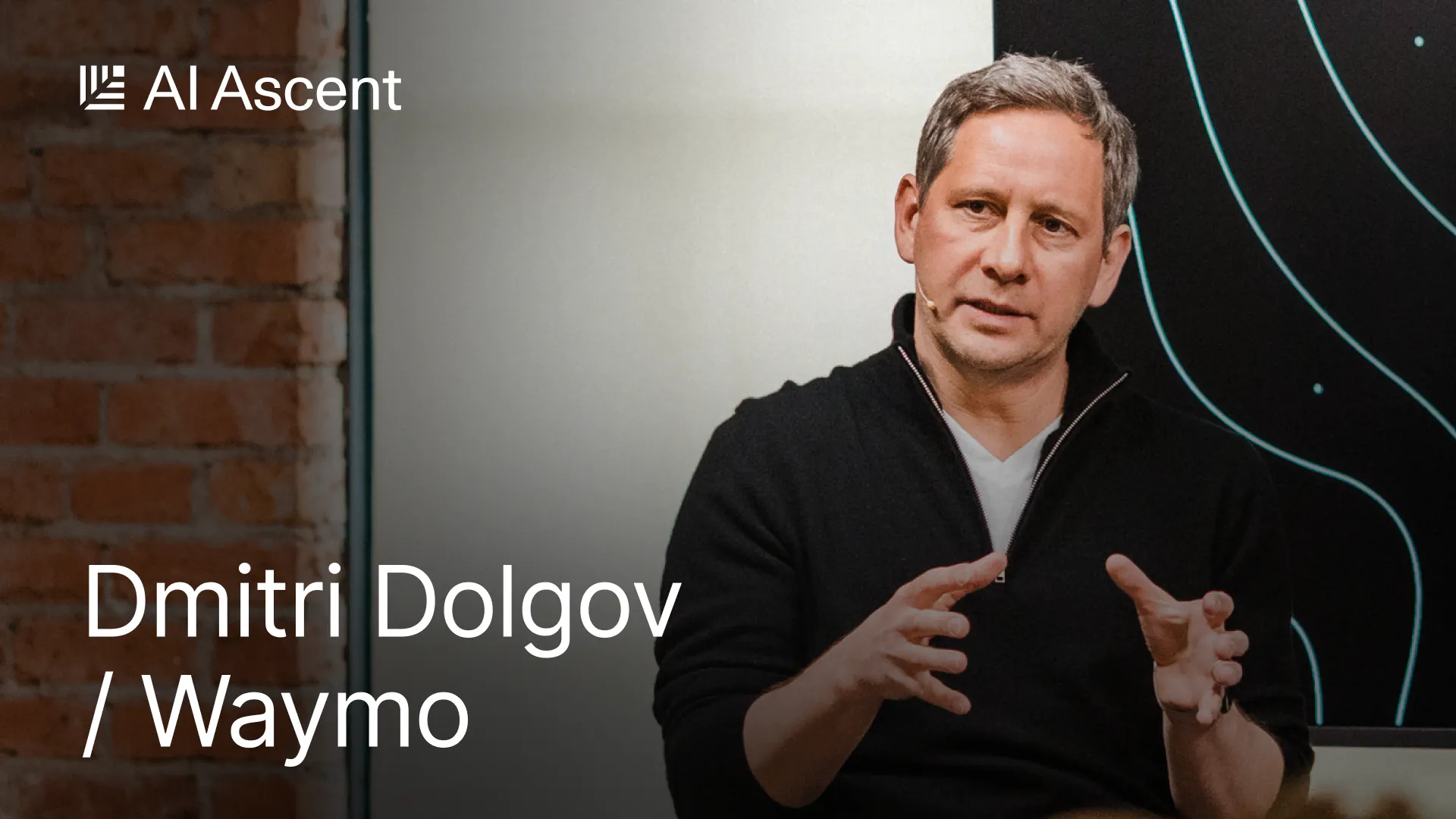
Dmitri Dolgov explains that while AI advancements create hype, they primarily speed up progress on the initial, easier parts of a problem. They don't change the "long tail" of complex, rare edge cases, which remains the core challenge in achieving full, superhuman autonomy.
Founders shouldn't be deterred by their lack of knowledge. Seeing the full scope of future challenges can be overwhelming. A degree of ignorance allows entrepreneurs to focus on immediate problems and maintain the momentum crucial for survival in the early stages.

For first-time founders, ignorance of the immense challenges ahead can be beneficial. This "naivete" prevents paralysis, enabling them to dive in, learn from direct experience, and adapt quickly without being overwhelmed by the full scope of the difficulties from the start.

Zipline's founder admits they had almost no tactical plan at the start. The high-level vision was clear, but the path was unknown and the venture was illegal in their target market. This highlights the necessary naivety to tackle moonshot projects; a full understanding of the difficulty would be paralyzing.

When pioneering a new technology, founders must have the conviction to build for its future state, not its current, often flawed, capabilities. Much like early mobile skeptics, today's AI critics may be proven wrong. Success requires ignoring current limitations and building for what will become possible.

Lacking full knowledge of a startup's immense difficulty can be an advantage for first-time founders. This naivete allows them to commit to ventures they might otherwise avoid if they knew the true challenges ahead, similar to a child fearlessly skiing down a mountain.

To de-risk ambitious projects, identify the most challenging sub-problem. If your team can prove that part is solvable, the rest of the project becomes a manageable operational task. This validates the entire moonshot's feasibility early on.