Get your free personalized podcast brief
We scan new podcasts and send you the top 5 insights daily.
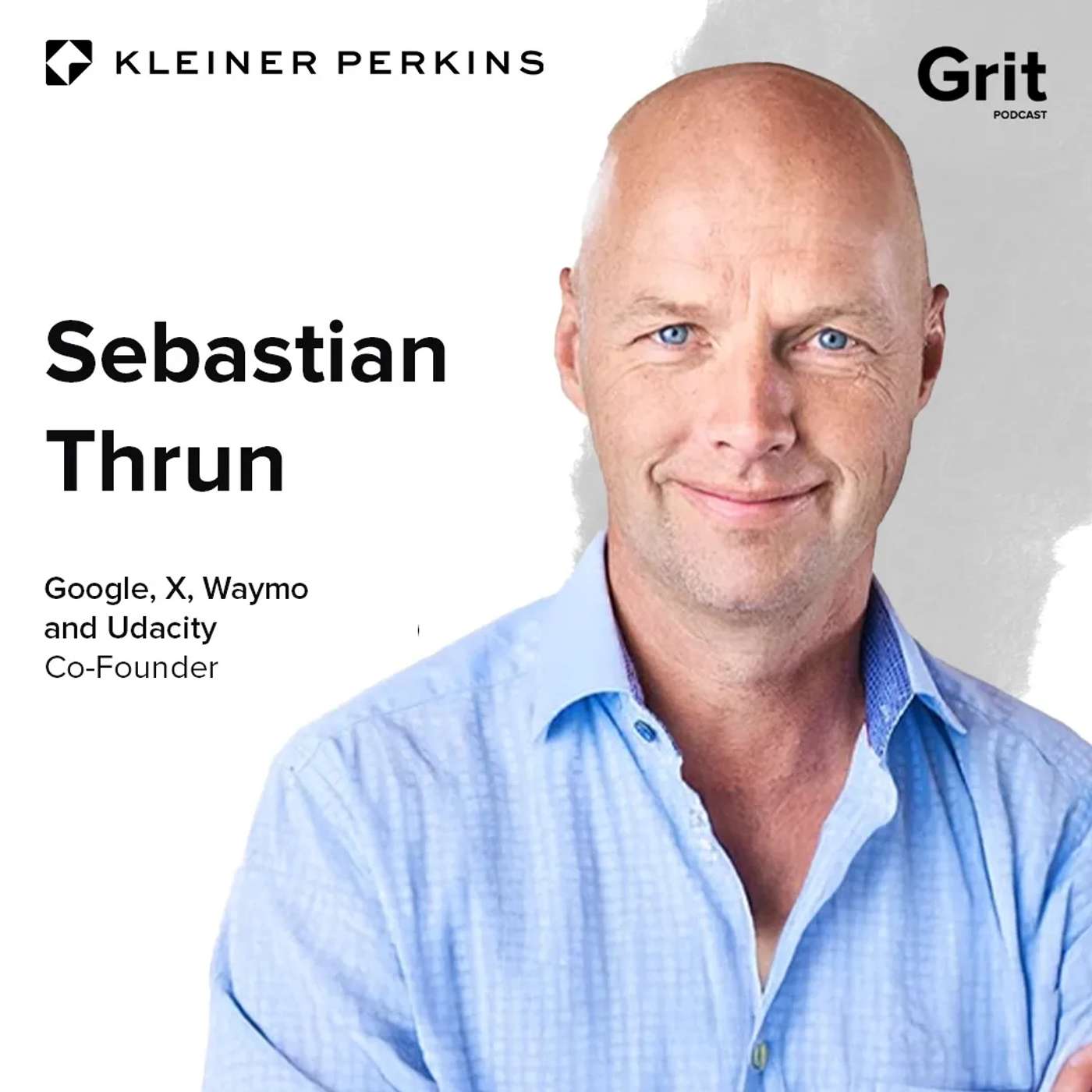
When Google's Larry Page proposed building a self-driving car for cities, AV expert Sebastian Thrun's initial reaction was that it was impossible. This taught him that experts are often the least likely to believe in radical innovation within their own domain.

Related Insights
Sebastian Thrun, a top expert, initially dismissed city-based self-driving cars as impossible. This taught him that experts are often blind to disruptive change, as their knowledge is rooted in past paradigms, making them ill-equipped to envision a radically different future.
While domain experts are great at creating incremental improvements, true exponential disruption often comes from founders outside an industry. Their fresh perspective allows them to challenge core assumptions and apply learnings from other fields.

Shane Legg observes that non-technical people often recognize AI's general intelligence because it already surpasses them in many areas. In contrast, experts in specific fields tend to believe their domain is too unique to be impacted, underestimating the technology's rapid, exponential progress while clinging to outdated experiences.
When building its self-driving car team, Google intentionally hired software engineers over automotive experts. They found industry veterans were so ingrained in the existing paradigm that they couldn't adapt to a software-first approach and ended up firing them. The project's success came from fresh minds.
History is filled with leading scientists being wildly wrong about the timing of their own breakthroughs. Enrico Fermi thought nuclear piles were 50 years away just two years before he built one. This unreliability means any specific AGI timeline should be distrusted.

Contrary to popular belief, becoming a deep expert in a sector can harm your angel investing returns. Experts tend to see all the existing roadblocks and regulations, dismissing breakthrough ideas that a naive but determined outsider might pursue successfully. The expert underwrites the past, not the potential future.

While early teams in the DARPA challenge focused on robust hardware, Stanford's Sebastian Thrun correctly identified the core challenge as software. He prioritized AI to replace the human driver's decision-making, a fundamental shift that led to his team's victory.
Many technical leaders initially dismissed generative AI for its failures on simple logical tasks. However, its rapid, tangible improvement over a short period forces a re-evaluation and a crucial mindset shift towards adoption to avoid being left behind.

Formally trained experts are often constrained by the fear of reputational damage if they propose "crazy" ideas. An outsider or "hacker" without these credentials has the freedom to ask naive but fundamental questions that can challenge core assumptions and unlock new avenues of thinking.

Google's Larry Page taught Sebastian Thrun that radical innovation is often easier than incremental improvement. A moonshot project attracts world-class talent and capital, while an incremental business like a pizza restaurant requires risking personal savings against fierce competition for little recognition.