Get your free personalized podcast brief
We scan new podcasts and send you the top 5 insights daily.
For founders from corporate finance, an accelerator provided more than just funding. Mentors challenged them to think bigger, faster, and more critically about their audience and technology, providing a crucial mental transition from corporate employee to startup founder.

Related Insights
Beyond tactics and networking, YC's greatest value is psychological. Constant exposure to hyper-successful founders and casual conversations about billion-dollar outcomes normalizes massive success, fundamentally expanding a founder's own definition of what is possible and instilling greater ambition.

Before starting Toast, the founders were tasked with building the mobile e-commerce business at their employer, Endeca. This 'intrapreneurial' experience of finding product-market fit and scaling a new venture within a larger company served as a crucial, lower-risk training ground for their future startup.

Beyond capital and advice, the core value of a batch-based accelerator is combating the profound isolation founders feel. Stepping off the traditional career path creates deep-seated stress and doubt. Being in a room with peers on the same journey provides crucial validation and the psychological fuel to continue.

Beyond capital, a VC's network and operational support serve a key psychological function. By providing access to key hires, customers, and government officials, the firm builds a founder's confidence, putting them in a 'virtuous cycle' to make faster, better decisions and transition from inventor to CEO.

The distinction between a 'big company' and 'small company' person is irrelevant. A founder's mindset—hustling to bring new ideas to life and driving outcomes—is equally applicable and valuable in a large corporation as it is in a startup.

For StatusGator, joining the TinySeed accelerator was less about capital and more about external validation. This expert approval boosted the founders' confidence after eight years and, crucially, convinced their spouses that the long-running venture had significant potential.

A founder credited his accelerator's grueling schedule—pitching to 20 investors weekly with harsh feedback—as a transformative experience. This intense repetition wasn't just for fundraising; it was a powerful training ground that polished his core sales and communication skills for all future business dealings.

Executives from large companies often fail at startups. Lindsey Scrase succeeded in her move from Google to Checkr because her experience at Google Cloud was akin to a resource-constrained startup, building from scratch without established systems like Rev Ops or enablement.

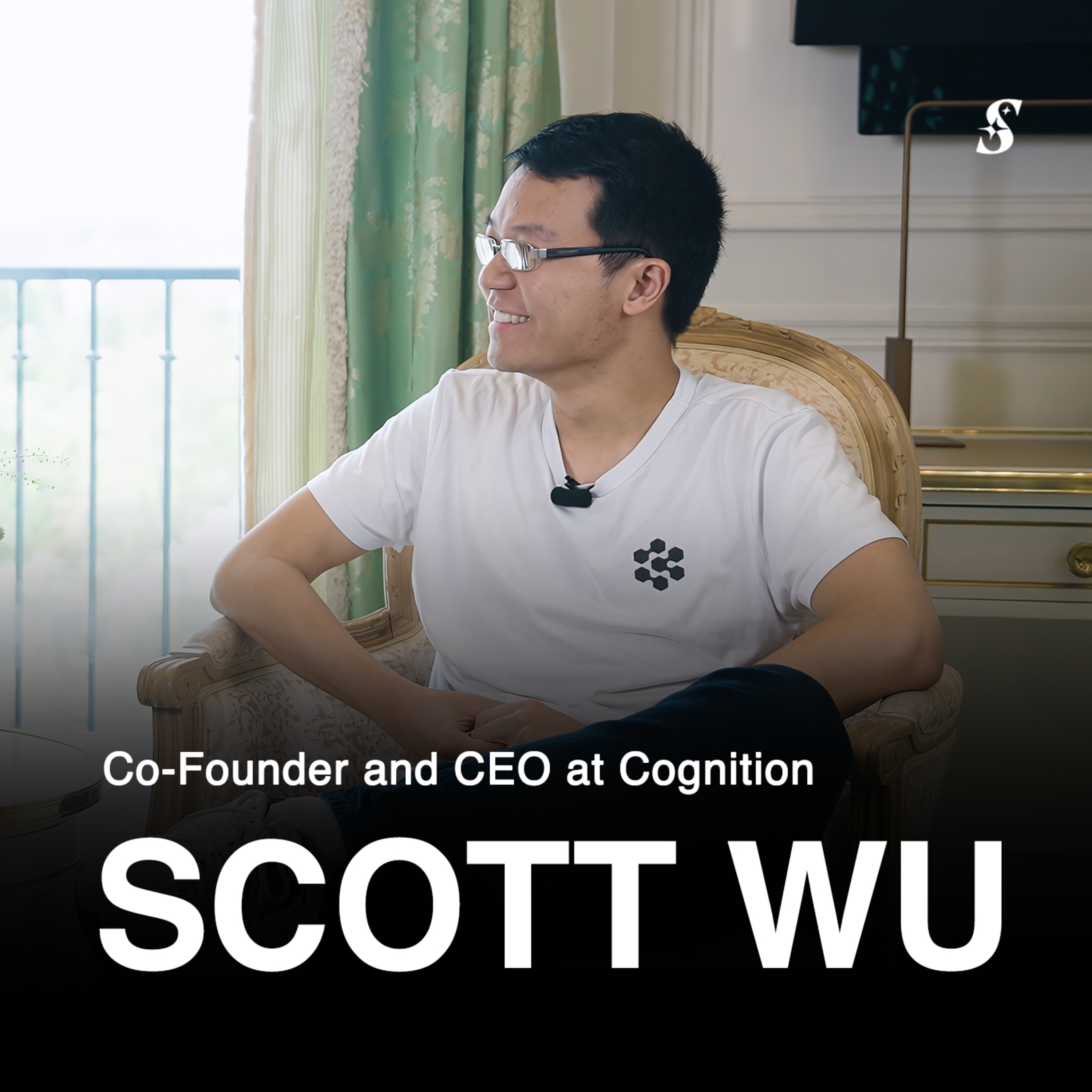
Cognition's early hiring strategy deliberately targeted former founders, resulting in over half its initial team having prior startup experience. This created a culture of ambition, entrepreneurial spirit, and first-principles thinking, which was crucial for tackling complex challenges like M&A and rapid scaling.
The firm's structure is a psychological tool. It gives founders access to an otherwise inaccessible network, creating small wins that build confidence. This prevents the 'vicious confidence spiral' caused by bad advice and slow progress, enabling faster, bolder decision-making.