Get your free personalized podcast brief
We scan new podcasts and send you the top 5 insights daily.
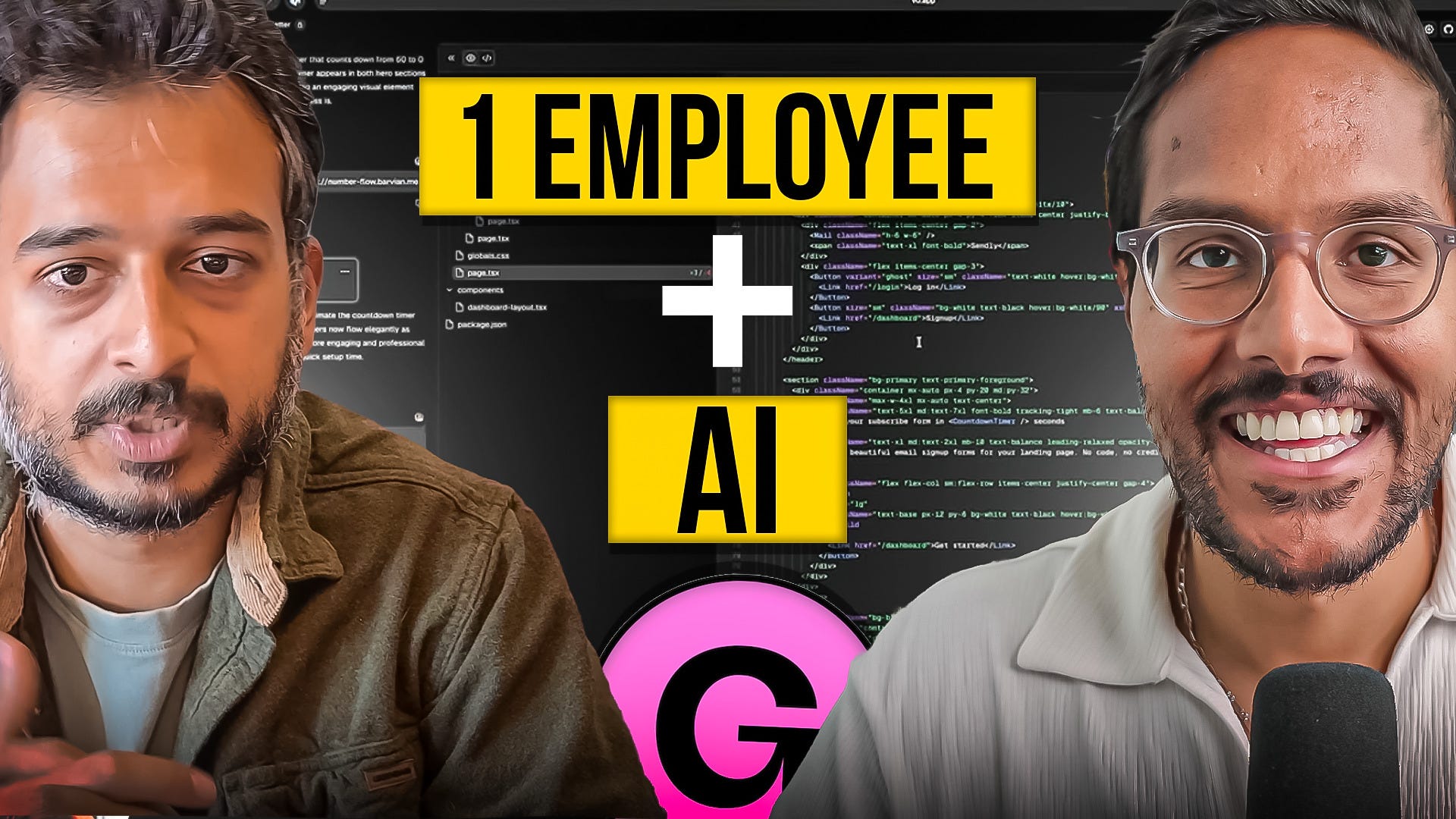
A founder grew his SaaS to $1.5M ARR solo, using a custom AI to automate operations and bug fixes. He is now hiring because a one-person, operator-led company is not a sellable business. A human team is needed to scale and build transferable equity.
Related Insights
Founders optimizing for personal profit by avoiding hires create significant key-person risk, making their business less valuable and harder to sell. An acquirer will pay more for a de-risked company with a team in place, even if it's less profitable, because the asset is more likely to survive the transition.

While AI can replicate the functionality of a SaaS tool, it doesn't replicate the company infrastructure: sales, customer support, trust, and brand. With venture funding for new SaaS startups drying up, it's harder than ever for new entrants to reach critical mass, thus protecting established incumbents.

Wilkinson built "Deep Personality," a SaaS app, and automates its operations using AI agents. These agents handle customer support tickets (even fixing bugs and deploying code), manage ad campaigns on Meta and Reddit, and assist with development, showcasing a new model for lean startups.

A solo founder runs his $1.5M ARR SaaS with an in-house "AI brain" that does more than customer support. It connects to the database and codebase to identify, fix, and deploy solutions for bugs automatically, creating a self-healing system that operates 24/7.
The idea of a solo founder running a billion-dollar company is more a marketing gimmick than a future reality. While technologically feasible with AI, individuals won't want to handle all the associated operational burdens like bookkeeping and taxes. The logical endpoint of AI automation isn't a one-person company, but a zero-person, fully automated business.
A company called Pulsia, run by a sole founder, is using AI agents to operate and grow its business, reportedly jumping from $100k to $700k ARR in a week. This points to a future of highly automated, capital-efficient companies that may not require traditional VC.

AI is predicted to reduce engineering costs to near-zero, enabling individuals with strong product taste to build, launch, and market SaaS companies alone. The critical skill will shift from coding to user testing and product insight, functions that AI cannot yet fully replace.
Don't outsource these core skills before reaching $1.5M-$2M ARR. If your founding team has a gap, the best path is to learn the missing skill or intentionally limit your business scope, not to hire an agency or junior employee.

The narrative of tiny teams running billion-dollar AI companies is a mirage. Founders of lean, fast-growing companies quickly discover that scale creates new problems AI can't solve (support, strategy, architecture) and become desperate to hire. Competition will force reinvestment of productivity gains into growth.

Blueprint Equity built its ops team to solve the common challenges of companies at the $2-5M ARR stage: recruiting director-level talent, institutionalizing go-to-market, and AI strategy. By hiring specialists for these recurring problems, they provide targeted, high-impact support.
