Get your free personalized podcast brief
We scan new podcasts and send you the top 5 insights daily.
A solo founder runs his $1.5M ARR SaaS with an in-house "AI brain" that does more than customer support. It connects to the database and codebase to identify, fix, and deploy solutions for bugs automatically, creating a self-healing system that operates 24/7.

Related Insights
The most advanced loop connects an AI agent to user feedback channels like support tickets, analytics (e.g., PostHog), and error logs (e.g., Sentry). The agent can then identify pain points, prioritize tasks, and implement solutions, creating a self-improving product.

An AI agent monitors a support inbox, identifies a bug report, cross-references it with the GitHub codebase to find the issue, suggests probable causes, and then passes the task to another AI to write the fix. This automates the entire debugging lifecycle.

A powerful and immediately valuable application for background AI agents is in Site Reliability Engineering (SRE). Agents can be configured to automatically act as a 'first responder' to production alerts, triaging issues by gathering logs and context, and often submitting a fix via pull request before a human engineer is even paged.

Frame your relationship with AI agents like Clawdbot as an employer-employee dynamic. Set expectations for proactivity, and it will autonomously identify opportunities and build solutions for your business, such as adding new features to your SaaS based on market trends while you sleep.
Supreme Ecom's founder created an AI agent that runs constantly on his laptop. It autonomously manages ads, replies to customer emails, and communicates with him via text for approvals, effectively acting as a full-time business operator even when he is unavailable.

Wilkinson built "Deep Personality," a SaaS app, and automates its operations using AI agents. These agents handle customer support tickets (even fixing bugs and deploying code), manage ad campaigns on Meta and Reddit, and assist with development, showcasing a new model for lean startups.
Instead of integrating with existing SaaS tools, AI agents can be instructed on a high-level goal (e.g., 'track my relationships'). The agent can then determine the need for a CRM, write the code for it, and deploy it itself.
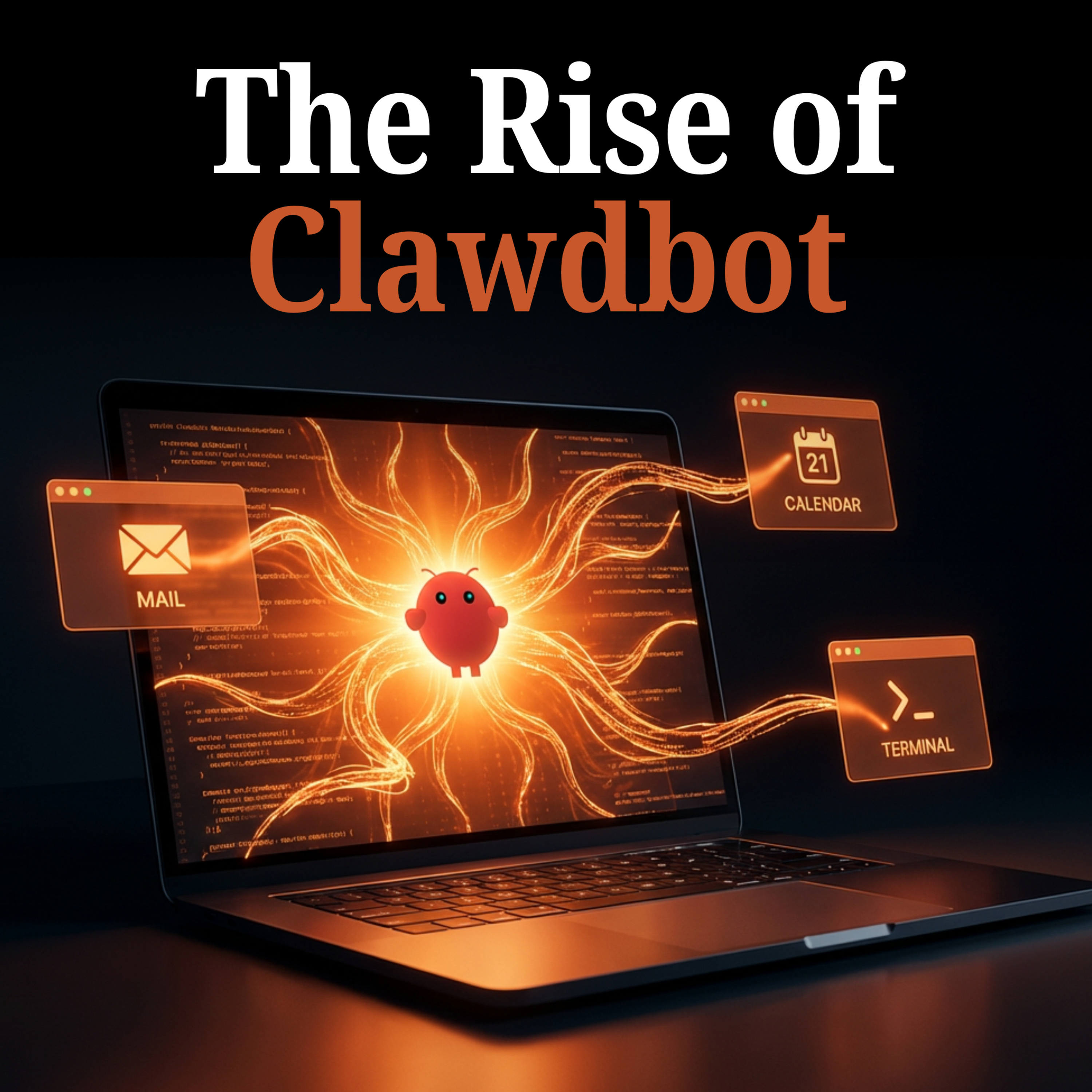
A founder grew his SaaS to $1.5M ARR solo, using a custom AI to automate operations and bug fixes. He is now hiring because a one-person, operator-led company is not a sellable business. A human team is needed to scale and build transferable equity.
Linear believes AI coding agents remove any excuse for having bugs in a product. They implement a 'zero bugs' policy with a one-week fix SLA. AI agents can now perform the initial triage and even attempt a fix, then tag an engineer for review, dramatically accelerating bug resolution.

To automate bug fixing, connect an AI agent to your error reporting (Sentry), database (Supabase), and log drains (Acxiom). When a bug is reported, the agent can autonomously replay events from logs, diagnose the root cause of the failure, and eventually fix it, creating a powerful self-healing loop for your application.