Get your free personalized podcast brief
We scan new podcasts and send you the top 5 insights daily.
Wall Street believes AI is 'eating' software, causing stocks for giants like Salesforce and Oracle to plummet. AI tools like Anthropic's Claude Code, which can create software from simple prompts, threaten to undercut the value proposition of traditional Software-as-a-Service (SaaS) companies by democratizing and simplifying software creation.

Related Insights
Companies are now rejecting expensive SaaS contracts because their internal teams can build equivalent custom solutions in days using AI coding tools. This trend signals a fundamental threat to the traditional SaaS business model, as the 'build vs. buy' calculation has dramatically shifted.

AI tools enable users to create bespoke applications tailored to their needs. This shift towards personalized software challenges the one-size-fits-all SaaS model, potentially rendering many subscription products obsolete and causing market underperformance, as seen in the Morgan Stanley SAS index.

AI is becoming the new UI, allowing users to generate bespoke interfaces for specific workflows on the fly. This fundamentally threatens the core value proposition of many SaaS companies, which is essentially selling a complex UX built on a database. The entire ecosystem will need to adapt.
For decades, buying generalized SaaS was more efficient than building custom software. AI coding agents reverse this. Now, companies can build hyper-specific, more effective tools internally for less cost than a bloated SaaS subscription, because they only need to solve their unique problem.

AI is making core software functionality nearly free, creating an existential crisis for traditional SaaS companies. The old model of 90%+ gross margins is disappearing. The future will be dominated by a few large AI players with lower margins, alongside a strategic shift towards monetizing high-value services.

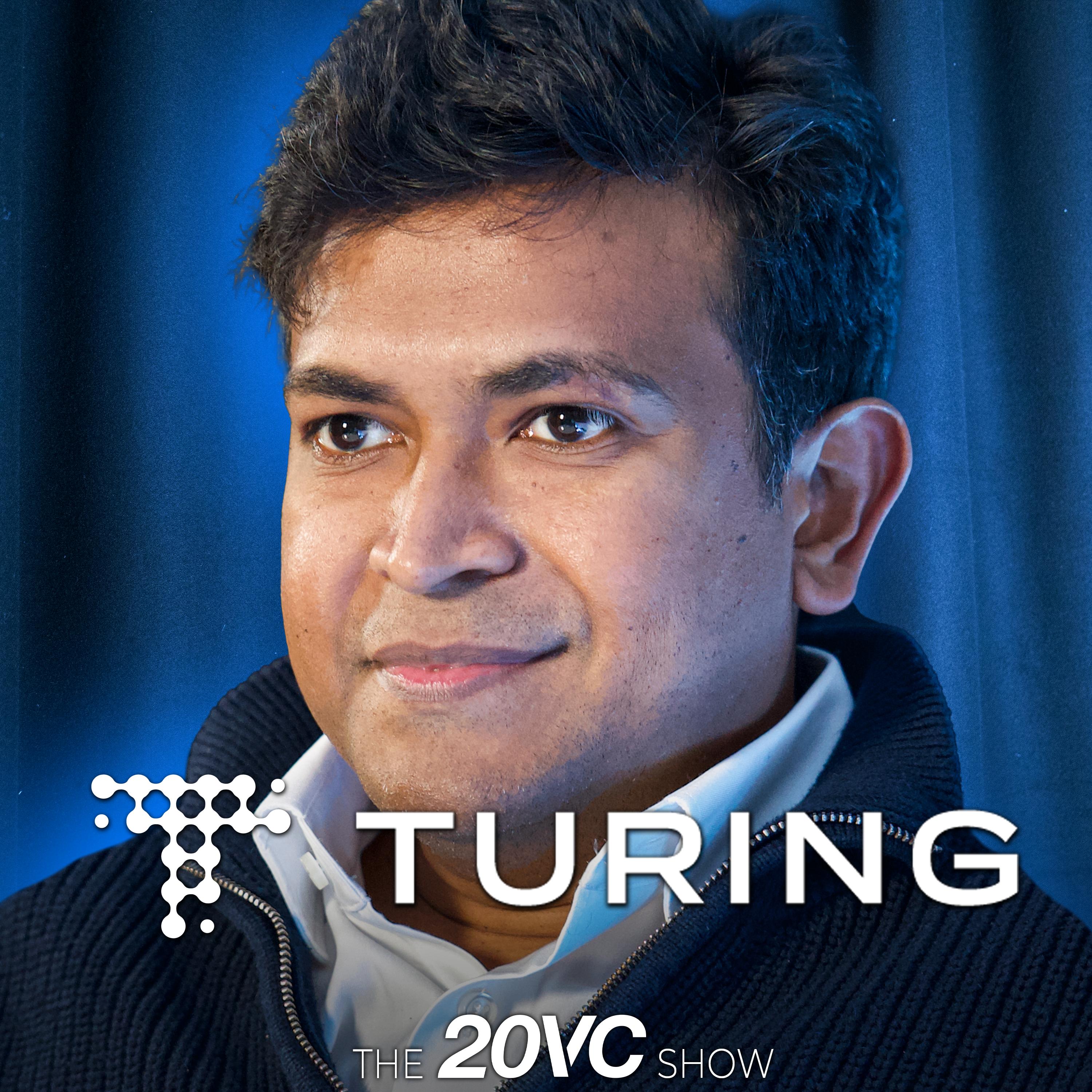
Turing's CEO claims SaaS is dead for two reasons. First, powerful foundation models drastically lower the cost of building custom software internally. Second, existing SaaS products are built for human interaction via GUIs, not for AI agents that will increasingly use APIs and tool-calling functions directly.

The ease of building applications on top of powerful LLMs will lead companies to create their own custom software instead of buying third-party SaaS products. This shift, combined with the risk of foundation models moving up the stack, signals the end of the traditional SaaS era.
Ben Thompson's analysis suggests the era of siloed SaaS growth is over. With AI enabling infinite software creation, companies will be forced to attack adjacent business functions to grow. This shifts the market from collaborative expansion to a competitive battle for existing customer spend, with AI model providers as the key "arms dealers."

The lucrative maintenance and migration revenue streams for enterprise SaaS, which constitute up to 90% of software dollars, are under threat. AI agents and new systems are poised to aggressively shrink this market, severely impacting public SaaS companies' incremental revenue.
Advanced AI tools have made writing software trivially easy, erasing the traditional moat of technical execution. The new differentiators for businesses are non-technical assets like brand trust, distribution networks, and community, as the software itself has become instantly replicable.