Get your free personalized podcast brief
We scan new podcasts and send you the top 5 insights daily.
Top engineers and designers waste significant time on coordination tasks like updating project management tools and attending stand-ups. Owner built an internal agent that listens to GitHub, Slack, and meetings to automate this alignment work, freeing up talent to focus on building.

Related Insights
Combat the administrative burden of project management by using AI as a central coordinator. An AI agent can read Slack channels, call transcripts from Fathom, and task updates in ClickUp to suggest new tasks, update statuses, and draft weekly client reports, condensing hours of PM work into minutes.

Notion uses a custom AI agent that runs daily, compiling a pre-read from various sources like Slack, tasks, and pull requests. This eliminates manual prep, reduces status reporting, and focuses meetings on strategic problem-solving.

Ramp's internal tool, "Inspect," allows non-technical roles like PMs and designers to generate and merge production-ready code. This dramatically accelerates development for quality-of-life improvements and minor features, activating the entire company as builders, not just the engineering team.

Overwhelmed by Slack messages and internal documents? Build a Zapier agent connected to your company's knowledge base. Feed it your job description and current projects, and the agent can proactively scan all communications and deliver a weekly summary of only the updates relevant to your specific role.
Walmart builds "orchestrator" AIs that act as project managers for other task-based agents (e.g., writing user stories). This system automates the product development lifecycle, from discovery to developer handoff, only alerting the human PM for key decisions or anomalies, dramatically boosting efficiency.

Vercel builds internal AI agents and tools, like an Open Graph image generator, to automate tasks that were previously bottlenecks. This not only increases efficiency but also serves as a critical dogfooding process, allowing them to innovate on their core platform by building the tools their own teams need.

Use AI agent platforms to build a digital chief of staff that manages priorities, filters messages, and tracks projects. This automates the administrative and strategic legwork traditionally handled by a human assistant, freeing up executive time for high-value decisions.

Technical operations teams can waste up to 70% of their time manually collecting data. Deploying specialized AI agents to autonomously parse unstructured engineering logs, financial databases, and project updates automates this process, eliminating this 'operational tax' and freeing up teams for higher-value strategic work.

The AI agent is designed to act like a human team member within existing systems. It performs bi-directional updates in tools like Jira or Linear—adding comments, changing statuses, and assigning tickets. This seamless integration ensures human teams maintain visibility and that established processes aren't disrupted.
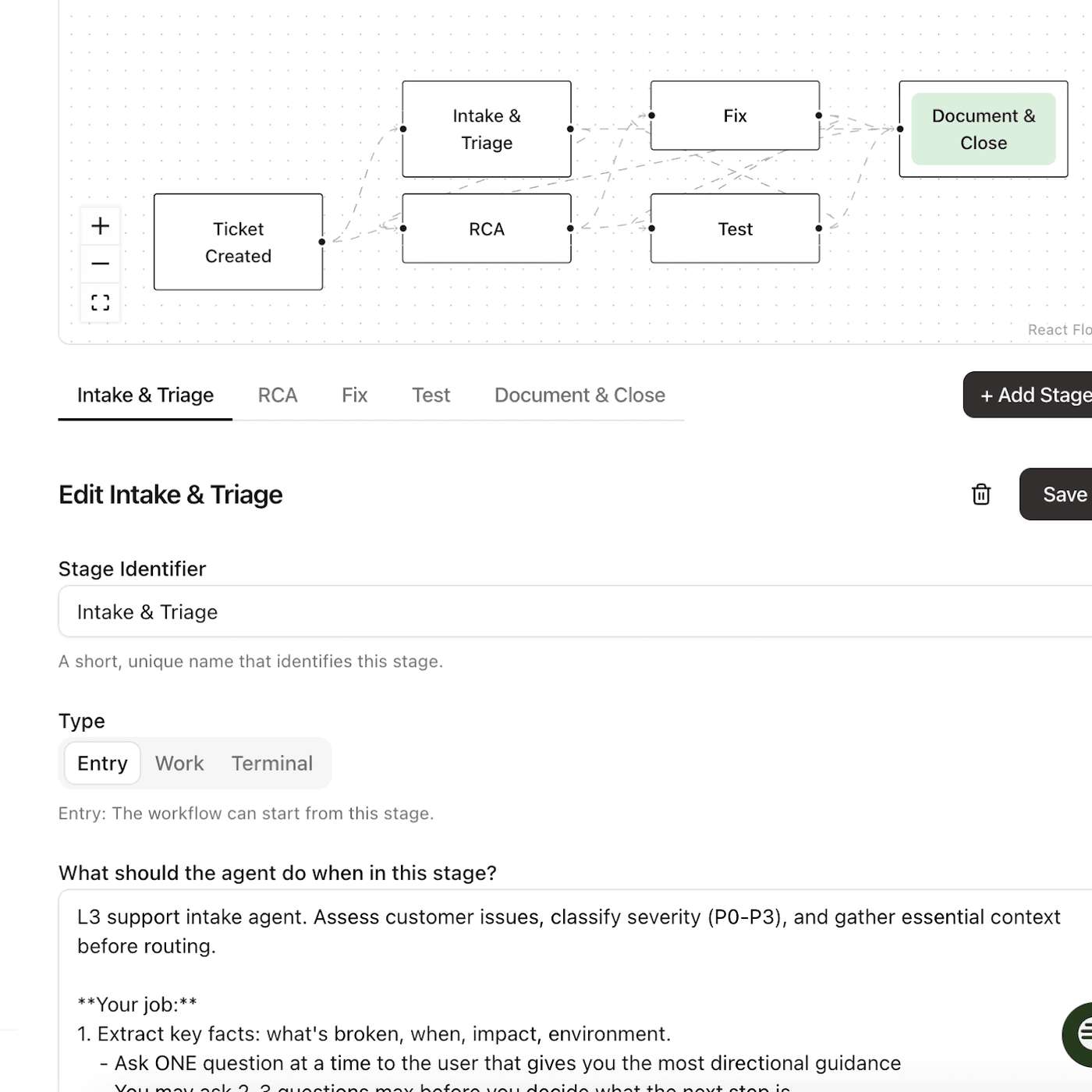
Use AI to manage its own development tasks. After a brain dump of project goals, have the AI create tickets in a tool like Linear. Then, let the AI work through the tickets and update its own statuses, significantly reducing your mental load and freeing you up for higher-level review.
