Get your free personalized podcast brief
We scan new podcasts and send you the top 5 insights daily.
Knowing they cannot win a conventional war, Venezuela's military doctrine relies on asymmetrical warfare. Their key leverage is the credible threat to unleash chaos via guerrillas and gangs, making the country ungovernable for any occupying force.

Related Insights
The removal of Maduro was a technological showcase, employing cyber tools to knock out power and air defenses, communications jamming, and suicide drones. This demonstrates a significant evolution in U.S. military capabilities beyond conventional special operations.

The public justification for the U.S. operation in Venezuela focused on drugs and oil, but the larger, under-discussed strategic threat is the presence of American adversaries in the Western Hemisphere. China controls Venezuelan mining, Iran operates drone facilities, and Russia provides radar systems, creating a significant geopolitical challenge in America's 'backyard' that the official narrative ignores.

Authoritarian leaders who publicly mock or dismiss threats risk triggering a military response driven by personal pride. Venezuelan President Maduro's televised dancing was reportedly perceived by the Trump administration as calling their bluff, demonstrating how avoiding the appearance of being a 'chump' can become a primary motivator for military action.
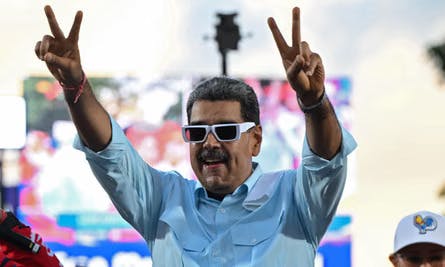
Venezuela's remaining leadership can adopt a strategy of "playing for time." By appearing cooperative while delaying substantive changes, they can wait for events like the US midterms to increase domestic political pressure on the administration, making sustained intervention unpopular and difficult to maintain. The weaker state's best defense is the superpower's internal clock.
The "absolutely clinical" US raid to capture Venezuela's president is lauded as a military success. However, historical precedents from Afghanistan in 2001 and Iraq in 2003 show that initial military prowess in toppling a regime is no guarantee of long-term strategic success, which depends on far more complex political factors.
The public narrative of fighting narco-terrorism in Venezuela is a red herring. The true strategic goal is to justify a U.S. military presence in the Caribbean to counter China's growing economic and military investments in the region, including control of key shipping routes and military partnerships.
The US troop buildup near Venezuela isn't just about oil; it's a strategic move to counter China's growing economic influence in South America. China is establishing a gold-backed currency network, and the US is using military leverage on Venezuelan allies to disrupt this challenge to its hemispheric dominance.

The conflict is not primarily about oil or drugs, but a strategic move to reassert U.S. dominance in the Western Hemisphere. As China solidifies its influence in the East, the U.S. is 'drawing a line' to counter China's partnerships (like with Venezuela) in its own sphere of influence.

The US action to remove Maduro was not a traditional regime change. The goal was to eliminate the leader personally while leaving his party and government apparatus largely intact, suggesting a strategic choice to avoid the instability of a full power vacuum.
The "narco-state" narrative is misleading. While officials profit from drug trafficking, the state's primary income is oil. Disrupting the drug trade angers corrupt generals but doesn't threaten the government's core financial stability.